

Key Takeaways
Why Container Gardening Works
Container gardening removes the two biggest barriers most people face: a lack of ground space and unpredictable soil quality. Whether you have a fourth-floor balcony, a concrete patio, or a shaded backyard with clay-heavy soil, containers let you define exactly where growing happens and what goes into the growing medium.
The approach also offers flexibility. You can move pots to follow sunlight, bring tender plants indoors before a frost, and arrange containers to suit changing seasons or aesthetics. For anyone curious about comparing this method against other garden setups, our raised beds vs. in-ground growing guide breaks down the trade-offs in detail.
Container gardens also tend to have fewer weed problems and can be easier on your back — raised containers reduce the need to kneel or bend for extended periods.
80%
Of vegetables suitable for container growing
Horticultural extension programs note that the vast majority of common vegetable crops can be grown successfully in containers with the right pot size and care.
2x
Faster soil dry-out vs. in-ground beds
Container growing media can lose moisture twice as quickly as garden soil, particularly in warm, sunny, or breezy conditions.
5 gallons
Minimum pot size for most tomato varieties
University cooperative extension guidelines commonly recommend at least a 5-gallon container to support healthy tomato root development and fruit production.
Choosing the Right Containers
Container size is the single most consequential decision you'll make. Undersized pots restrict root growth, dry out within hours on a warm day, and ultimately limit yield. As a practical guide:
- Herbs and lettuce: 6–8 inch diameter pots work well for individual plants; a window box suits a row of herbs.
- Peppers, bush beans, and compact flowers: At least a 12-inch diameter pot with similar depth.
- Tomatoes, squash, and cucumbers: Plan for at least a 5-gallon container; 10-gallon or larger produces noticeably better results.
Material matters too. Terracotta is breathable and attractive but dries out quickly. Plastic and resin retain moisture longer and weigh less — a real advantage on balconies with weight limits. Fabric grow bags offer excellent aeration for root health. Whatever you choose, confirm there are adequate drainage holes before filling.
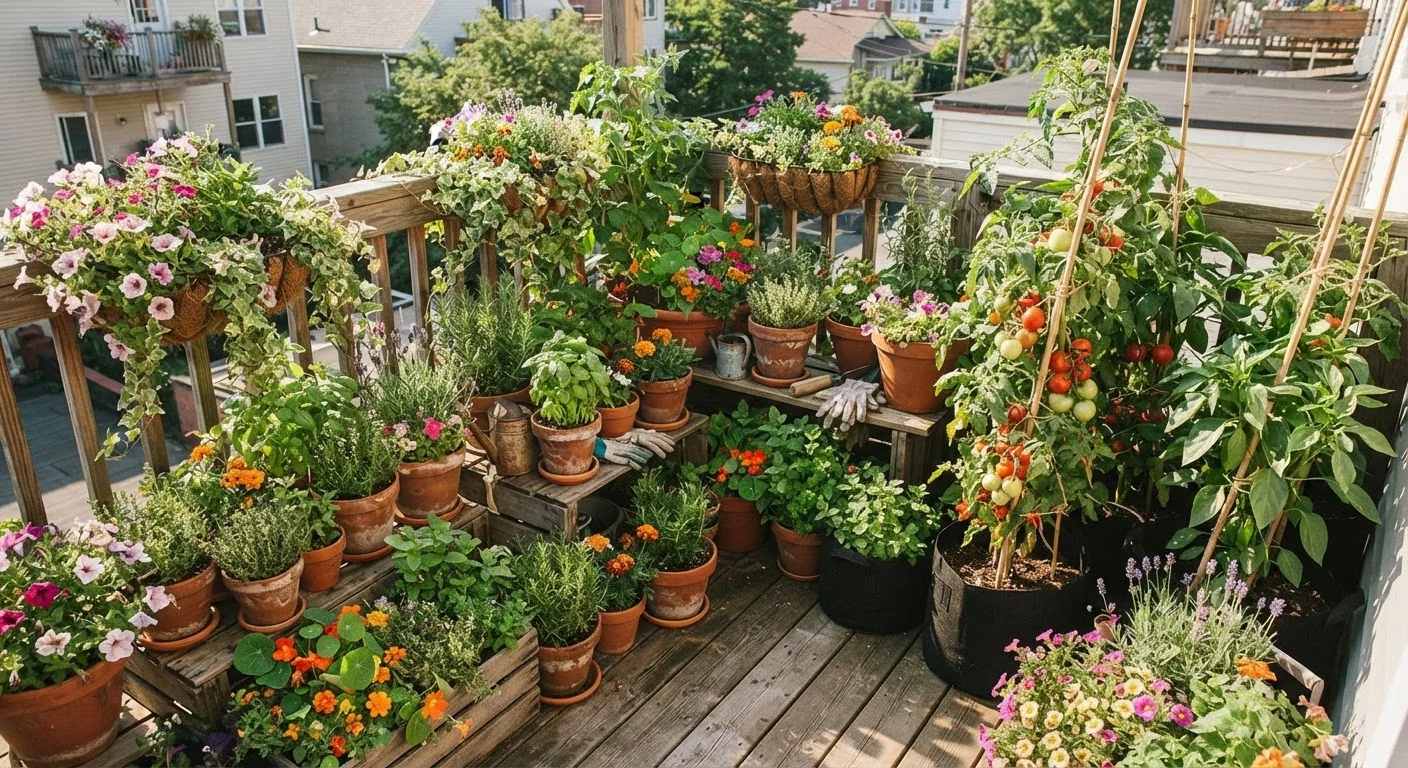
Group your containers together rather than spacing them widely apart. Clustered pots create a slightly more humid microclimate and dry out less quickly, which reduces your daily watering burden.
Evaporation from individual exposed containers accounts for a significant share of moisture loss — grouping reduces exposed surface area and moderates temperature around the root zone.
Use dark-colored containers in cooler climates to absorb warmth, and lighter-colored pots in hot regions to reflect heat and protect roots from overheating.
Root zone temperature directly influences plant health and productivity; soil in black pots in full sun can reach temperatures that stress or damage roots during summer heat.
Soil and Drainage: The Foundation of Success
Never fill containers with garden soil taken from the ground. It compacts in pots, drains poorly, and can introduce pests or disease. Instead, use a quality potting mix formulated for containers — these blends typically include materials like perlite or vermiculite that keep the mix loose and well-aerated.
For vegetables and fruiting plants, look for potting mixes that include slow-release fertilizer or compost to give plants a nutritional head start. You can also make your own compost at home and blend a small amount into commercial potting mix to boost organic matter.
Elevate pots slightly off flat surfaces to prevent drainage holes from becoming blocked. Pot feet, bricks, or even a few small stones under each container allow water to escape freely and reduce root rot risk.
What Grows Well in Containers
The list of container-friendly plants is longer than most beginners expect. Reliable producers include:
- Herbs: Basil, parsley, chives, mint (best contained on its own — it spreads aggressively), thyme, and cilantro are among the easiest starts.
- Salad greens: Lettuce, arugula, and spinach grow quickly in shallow containers and can be harvested cut-and-come-again style.
- Tomatoes: Compact or dwarf varieties perform better than large indeterminate types, though any variety can work with a large enough pot and sturdy support.
- Peppers and eggplant: Both are naturally compact and fruit reliably in containers given enough sun.
- Radishes, beets, and carrots: Shorter carrot varieties do well in deep pots; radishes mature quickly, making them ideal for beginners.
- Flowers: Marigolds, nasturtiums, and petunias add color and can even deter certain pests when grouped with edibles.
For a deeper look at planning which plants to grow across seasons, our annual vs. perennial plants guide explains the trade-offs between one-season bloomers and long-term returning plants.
Watering and Feeding Container Plants
Containers dry out far faster than in-ground beds, especially in warm or windy conditions. During summer, many containers need watering once or even twice daily. The simplest test: push your finger an inch into the soil — if it feels dry at that depth, water thoroughly until it drains freely from the bottom holes.
Consistent moisture matters more than frequency. Irregular watering — alternating between bone dry and waterlogged — stresses plants and can cause problems like blossom end rot in tomatoes or splitting in root crops.
Because watering also gradually flushes nutrients from the potting mix, container plants need regular feeding. A balanced liquid fertilizer applied every one to two weeks during the growing season generally keeps plants producing well. Slow-release granular fertilizers worked into the top layer of soil at planting time can also reduce the frequency of liquid feeding.
If you want to coordinate container care with the broader gardening calendar, the seasonal garden tasks guide offers a month-by-month reference for feeding, watering adjustments, and other upkeep.
Troubleshooting Common Container Problems
Even well-maintained containers run into issues. Here are the most common problems and how to address them:
- Yellowing leaves
- Often a sign of nutrient deficiency, particularly nitrogen. Resume or increase liquid feeding. Yellow leaves on overwatered plants will typically also feel soft or limp.
- Wilting despite moist soil
- This usually signals root rot caused by poor drainage or overwatering. Check that drainage holes are clear, reduce watering frequency, and consider repotting with fresh mix if roots appear brown and mushy.
- Leggy or weak seedlings
- Insufficient light is the primary cause. Move containers to a sunnier spot. Our guide on seedling problems covers additional causes in depth.
- Pest damage
- Aphids, spider mites, and fungus gnats are common container culprits. Inspect plants regularly, remove affected growth by hand where possible, and consider natural pest control approaches before reaching for chemical sprays.
Starting with just a few containers and expanding once you're comfortable with the rhythm of watering and feeding is a reliable path to success. Container gardening rewards consistent attention more than any special skill or equipment.