

Key Takeaways
Why Natural Pest Control Makes Sense
Reaching for a chemical pesticide can feel like the fastest fix when aphids carpet your kale or slugs carve through your lettuce overnight. But many conventional treatments also harm the beneficial insects, soil microbes, and birds that keep your garden in balance — and some require careful handling to avoid unintended exposure to people and pets.
Natural pest management works differently. Rather than eliminating everything in sight, it aims to reduce pest pressure to a level your plants can tolerate while keeping the broader garden ecosystem intact. For beginning and casual gardeners, these methods are also typically safer to apply, lower in cost, and easier to integrate into your regular garden routine.
The approaches below are widely practiced and grounded in established horticultural guidance. None of them replaces good garden hygiene — removing diseased leaves, rotating crops, and maintaining healthy, compost-enriched soil — but used together, they give you a solid, chemical-free defense strategy.
Use Companion Planting Strategically
Companion planting is the practice of growing certain plants near each other because one benefits the other — including by repelling pests. Some of the most reliable combinations include:
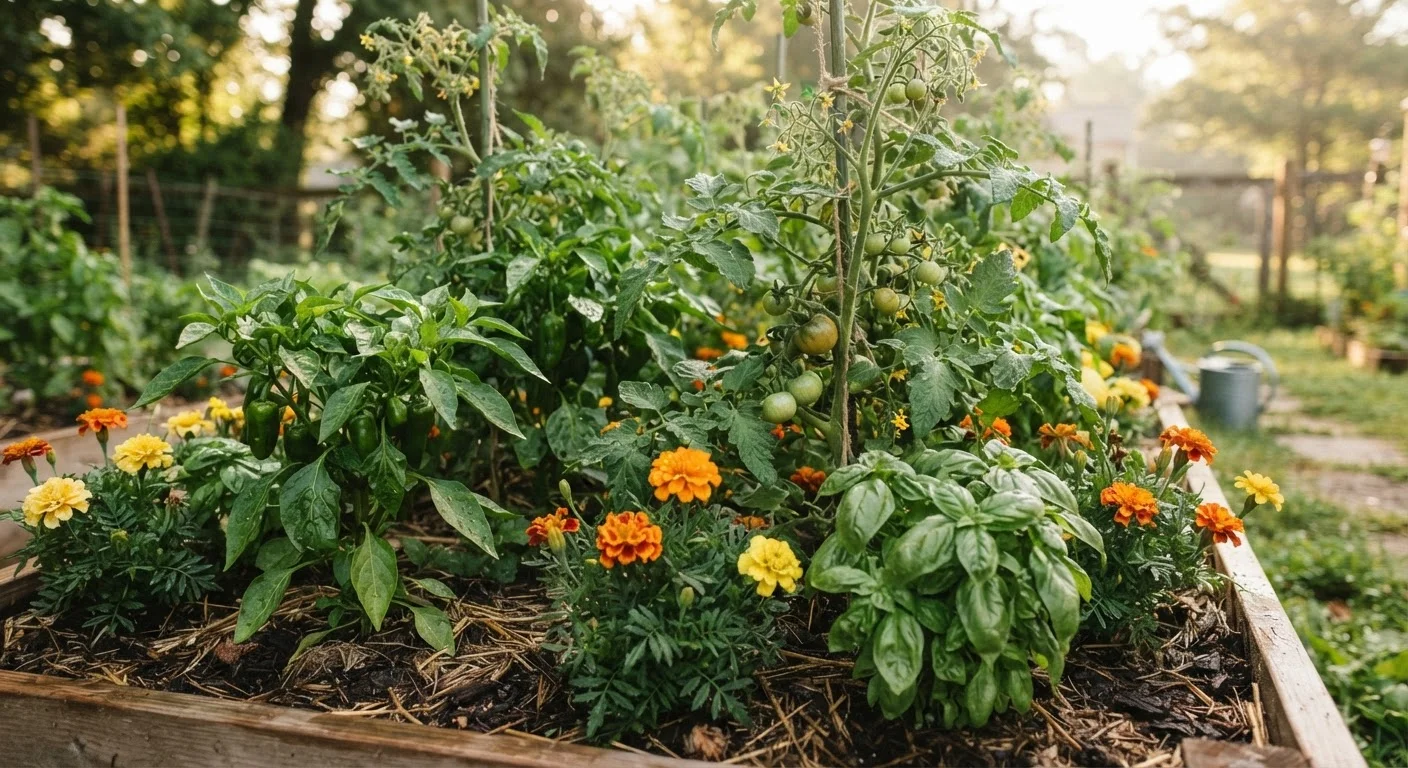
- Marigolds near tomatoes and squash — their scent is widely considered to deter aphids, whiteflies, and nematodes.
- Basil near peppers and tomatoes — anecdotally repels thrips and aphids, and many gardeners find it improves overall plant vigor.
- Nasturtiums as a trap crop — aphids are strongly attracted to nasturtiums, drawing them away from more valuable plants so you can remove the infested stems easily.
Companion planting works best when you plan your garden layout in early spring before planting begins, giving these relationships time to establish.
Marigolds and nasturtiums can redirect pests away from your most valuable crops.
Install Physical Barriers
A barrier that physically blocks pests is one of the most reliable protections available, because it doesn't depend on any chemistry or ecology — it simply prevents access.
- Floating row covers (lightweight fabric) draped over seedlings block moths, beetles, and flies from laying eggs on young plants. Secure the edges with soil or stakes, and remove covers on flowering crops that need pollinator access.
- Copper tape around raised bed edges or container rims is commonly used against slugs and snails; contact with copper is thought to produce a mild deterrent effect, though results can vary.
- Collars around transplants — a section of cardboard tube pressed into the soil around each seedling stem — prevent cutworms from severing plants at the base overnight.
Floating row covers block pest access entirely, making them one of the most reliable protections available.
Attract and Protect Beneficial Insects
Not all insects are enemies. Ladybugs, lacewings, ground beetles, and parasitic wasps are predators or parasites of common garden pests, and maintaining habitat for them is a form of passive, ongoing pest control.
To encourage beneficial insects:
- Plant small-flowered herbs like dill, fennel, cilantro, and yarrow, which provide nectar and pollen that many beneficial insects need as adults.
- Avoid broad-spectrum pesticide applications, which can wipe out predator populations along with pests — often leading to pest rebounds that are harder to manage.
- Leave some leaf litter or a small undisturbed area in your garden where ground beetles and other beneficial insects can overwinter.
Planting dill and fennel feeds the adult beneficial insects that prey on your garden's worst pests.
Apply Targeted Homemade Sprays
For active infestations that need immediate attention, a few simple sprays can reduce pest numbers without broad collateral damage:
- Insecticidal soap spray — a diluted solution of pure liquid castile soap and water (roughly 1–2 teaspoons per quart) coats and suffocates soft-bodied insects like aphids, mites, and whiteflies on contact. Apply directly to affected areas, covering leaf undersides. Test on a small leaf section first, as some plants are sensitive to soap.
- Neem oil solution — derived from the neem tree, neem oil disrupts insect feeding and reproduction. Follow label dilution guidelines carefully. It works best as a preventive or early-intervention tool; it is less effective against heavy infestations.
Apply either spray in the early morning or evening to reduce the risk of leaf scorch and avoid harming foraging bees.
Spray in early morning or evening to protect foraging bees and prevent leaf scorch.
Practice Consistent Garden Hygiene
Many pest problems gain their foothold in debris, weak plants, and crowded beds. Simple, consistent hygiene habits cut off those entry points:
- Remove spent or diseased plant material promptly — decaying leaves and stems harbor eggs, fungal spores, and overwintering pests.
- Thin seedlings and space plants properly — overcrowded plants compete for light and airflow, creating humid microclimates where fungal diseases and certain pests thrive.
- Inspect plants weekly — catching an aphid cluster or a handful of caterpillar eggs early, when you can remove them by hand, is far easier than dealing with a full infestation. Check leaf undersides, stem joints, and soil surfaces near the base of each plant.
Enriching your soil with finished compost also helps by supporting vigorous plant growth — and healthy, unstressed plants simply attract fewer pests.
Catching a small infestation early, by hand, is always easier than treating a widespread problem later.
Putting It All Together
No single method will eliminate every pest, and that's actually fine. The goal of natural pest control is a resilient garden that can absorb some damage without losing productivity. Combining two or three of these approaches — say, companion planting with physical barriers and a weekly inspection routine — gives you layered protection that's far more effective than any one tactic alone.
Start with One or Two Methods
If natural pest control is new to you, resist the urge to implement every technique at once. Pick one companion planting pairing and one physical barrier relevant to your most common pest problem. Observe the results through the season, then expand from there. A focused approach is easier to manage and helps you learn what actually works in your specific growing conditions.
Keep notes on which pests appear, when, and on which plants. Over a season or two, you'll spot patterns that let you intervene earlier and more precisely. Pair this awareness with a monthly garden task calendar so pest prevention becomes part of your natural rhythm rather than a reaction to a crisis.
Container gardeners shouldn't feel left out — most of these methods scale down beautifully. See our guide to container gardening for ideas on adapting companion planting and physical barriers to pots and raised beds on patios or balconies.