

Key Takeaways
Why Seedling Failure Is So Common
Starting plants from seed feels rewarding — until the tray of promising sprouts turns into a graveyard of collapsed stems and yellowed leaves. The frustrating truth is that most seedling failures trace back to a small handful of very predictable mistakes. Understanding what's actually going wrong is the fastest way to change your results.
If you're also planning the broader setup for your first grow, our beginner's vegetable garden guide covers how to get the whole plot ready before seeds even go in the ground.
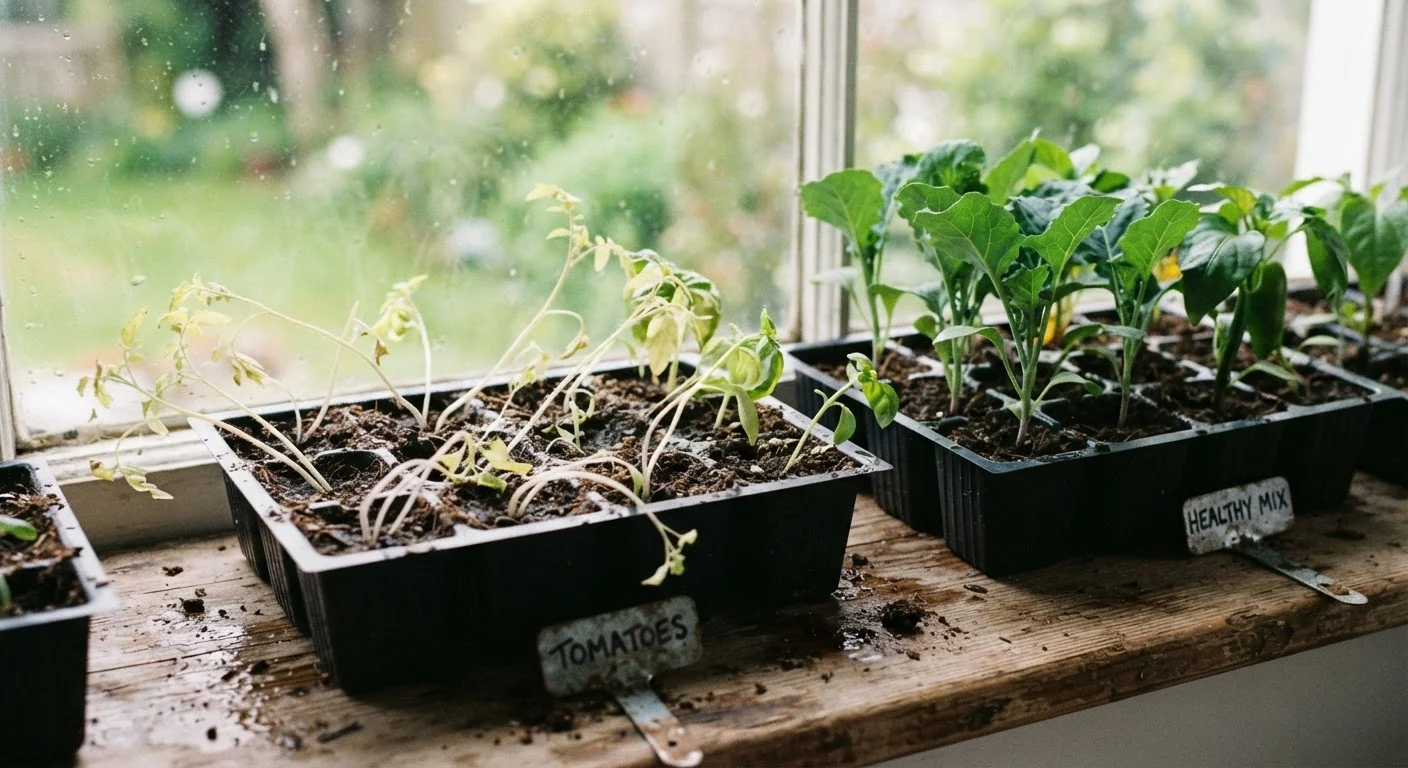
Overwatering seedlings, leading to stem rot or "damping off."
Why it happens: New growers assume more water means more growth, and it's easy to mistake dry surface soil for a plant in distress.
Placing seedlings in insufficient light, producing tall, spindly growth.
Why it happens: A bright window looks adequate, but most indoor windows — especially in winter or early spring — deliver far less usable light than plants need to build sturdy stems.
Starting seeds too early indoors, so plants outgrow their space before it's safe to transplant.
Why it happens: Enthusiasm is hard to contain in late winter, and seed packets sometimes give broad planting windows that don't account for local conditions.
Skipping hardening off before moving seedlings outdoors.
Why it happens: After weeks of careful indoor tending, growers are eager to get plants in the ground and underestimate how dramatically outdoor conditions differ from a sheltered interior.
Sowing seeds at the wrong depth — either too shallow or too deep.
Why it happens: Seed packet instructions vary, and many gardeners estimate depth by eye rather than measuring, especially with very small seeds.
Getting Seedlings to the Finish Line
Avoiding the mistakes above handles the majority of seedling losses, but a few final practices make the difference between plants that merely survive and plants that thrive.
80%
Seedling failures linked to watering errors
Horticulture educators commonly cite improper watering — both over and under — as the cause of the vast majority of indoor seedling losses.
14–16 hrs
Daily light needed for healthy seedlings
University extension programs generally recommend 14 to 16 hours of bright light per day for most vegetable and annual flower seedlings started indoors.
Use seed-starting mix, not garden soil. A quality seed-starting medium is finely textured, drains well, and is nearly sterile — all qualities that heavy outdoor soil lacks. Soilless mixes also make it easier to maintain the even moisture seedlings need without waterlogging roots.
Label everything and keep records. It sounds trivial, but knowing a seedling's exact sow date tells you whether it's on track developmentally or running behind. A simple notebook or phone photo with a date goes a long way.
Don't rush transplanting. Wait until true leaves (the second set after the initial seed leaves) are well established and nighttime temperatures are consistently safe for your crop. Consult a planting calendar for your USDA hardiness zone if you're unsure of timing.
Don't Skip the Hardening-Off Window
Moving seedlings directly from indoors to full outdoor sun — even on a mild day — can cause leaf scorch, wilting, or death within 24 hours. Wind alone can desiccate tender leaves faster than roots can compensate. Always allow at least a week of gradual outdoor exposure before leaving plants unattended outside.
For growers short on outdoor space, many of these principles apply just as well to container growing — see our guide on container gardening in small spaces for adapted techniques. And once your seedlings are safely in the ground, our garden watering myths article can help you avoid irrigation habits that undermine even healthy transplants.