

Key Takeaways
Option A
Caulk
The permanent, flexible filler for stationary gaps.
Best for: Sealing fixed cracks and gaps where two surfaces meet and do not move, such as window frames against siding or baseboards against walls.
Option B
Weatherstripping
The compressible seal for moving parts.
Best for: Closing air gaps around operable doors and windows that open, close, and flex with use every day.
If you are sealing the gap between a window frame and exterior siding
Caulk
This is a fixed, non-moving joint that requires a durable, paintable filler. Caulk bonds directly to both surfaces and won't interfere with the window's operation.
If you are stopping cold air coming in around an exterior door
Weatherstripping
Door edges compress and release every time the door is used. Weatherstripping flexes with this movement, maintaining a consistent seal that rigid caulk cannot provide.
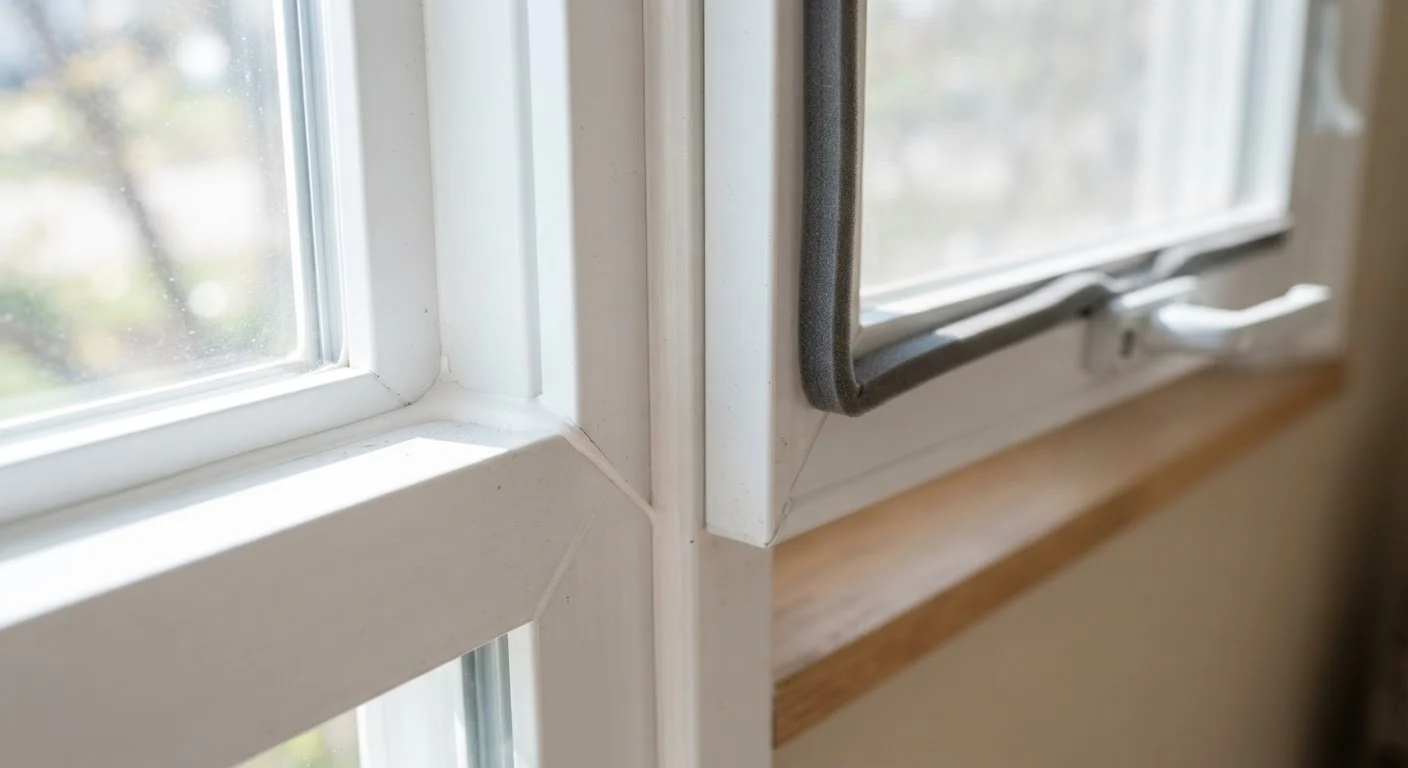
If you want to seal a casement or double-hung window that you open regularly
Weatherstripping
Applying caulk to an operable window will either crack from movement or inadvertently seal the window shut. Weatherstripping compresses on closure without bonding surfaces together.
If you are dealing with interior gaps at baseboards, trim, or around pipes
Caulk
Interior trim gaps are stationary and benefit from a neat, paintable caulk bead that blends with the finish and stops conditioned air from escaping into wall cavities.
Why the Distinction Matters
Draught-proofing a home sounds straightforward until you reach for the wrong product. Applying caulk around an operable door frame, or pressing adhesive foam tape into a crack beside a window sill, might look like a fix — but both are likely to fail quickly and leave the air leak unresolved.
The core rule is simple: caulk seals stationary gaps; weatherstripping seals moving gaps. Every gap in your home falls into one of those two categories, and matching the right product to the right gap is what makes the repair last.
Air leaks through gaps around windows and doors are among the most common sources of energy loss in US homes. Addressing them with the correct method is one of the most accessible maintenance tasks a homeowner can tackle — and it complements deeper measures like upgrading insulation. See our guide to home insulation types for a broader look at thermal performance strategies.
| Criterion | Caulk | Weatherstripping |
|---|---|---|
| Best application | Stationary, fixed joints | Moving, operable parts |
| Typical locations | Window frames, trim, pipe gaps | Door edges, operable window sashes |
| Bonding method | Adheres and cures in place | Compresses on closure; does not bond |
| Flexibility under movement | Limited — cracks if joints flex | Designed for repeated compression |
| Common materials | Silicone, latex, siliconized latex | Foam, V-strip, rubber, door sweeps |
| Typical lifespan | 5–10+ years when correctly applied | 1–5 years depending on type and use |
| Paintable | Yes (latex); silicone typically no | Generally no |
Where Caulk Excels — and Where It Fails
Caulk is a pliable sealant applied as a bead and left to cure into a semi-flexible solid. It bonds to both surfaces across a joint, making it ideal for places where two materials meet and stay put: window frames against brick or siding, door casings against interior walls, around pipe penetrations, and along baseboards.
For exterior use, silicone or siliconized latex caulk is generally preferred because it resists moisture and handles temperature swings better than pure latex. Interior trim work is well served by paintable latex caulk, which is easier to tool and clean up.
Caulk fails when applied to joints that flex. A door frame compresses slightly every time the door closes; a window sash shifts seasonally as frames expand and contract. In these locations, a rigid caulk bead cracks within weeks and may even bond surfaces that need to move freely. This is a surprisingly common mistake — one worth understanding alongside other home maintenance myths that lead to costly mistakes.
Before applying fresh caulk, always remove old, cracked caulk completely with a utility knife or caulk remover tool. Applying new caulk over failed old caulk shortens the repair's lifespan significantly.
25–30%
Home heating/cooling loss from air leaks
The U.S. Department of Energy estimates that air leaks through gaps, cracks, and openings can account for 25–30% of residential heating and cooling energy use.
$0–$50
Typical material cost for a door or window seal
Basic weatherstripping and caulk materials for a single door or window are generally low-cost, making draught-sealing one of the more accessible home maintenance tasks.
Weatherstripping: Types and Where Each Belongs
Weatherstripping is a compressible material installed along the edges of operable doors and windows. Unlike caulk, it does not bond two surfaces — it creates a seal through compression when the door or window closes, then relaxes when it opens. This makes it resilient to repeated use.
The main types you will encounter include:
- Foam tape: Self-adhesive and inexpensive, foam tape works on window sashes and less-trafficked doors. It compresses well but wears faster than other options and may need replacement every year or two.
- V-strip (tension seal): A durable folded strip of plastic or metal fitted into the channel of a sliding or double-hung window, or along door stops. It springs outward to fill gaps and lasts considerably longer than foam.
- Door sweeps: Attached to the bottom of an exterior door, a door sweep closes the gap between the door bottom and the threshold — a major source of draught and moisture infiltration.
- Rubber or EPDM compression strips: Bonded or tacked to door stops around entry doors, these provide a firm, durable seal and are a good choice for high-traffic exterior doors.
Choosing the right type depends on the gap width, how often the door or window is used, and whether the location is exposed to weather. For a detailed look at how different window frame materials affect sealing requirements, see our article on window maintenance across different frame materials.
Applying Both Correctly: Practical Guidance
Most homes benefit from both products applied in complementary locations. A well-sealed exterior door, for example, may have a door sweep at the bottom, rubber weatherstripping around the frame, and a bead of caulk where the door casing meets the exterior siding — three different interventions addressing three different types of gap.
When applying caulk, hold the tube at a 45-degree angle, move steadily, and smooth the bead immediately with a wet finger or caulk tool. Avoid gaps or bubbles in the bead. For weatherstripping, clean the surface thoroughly before applying adhesive-backed products — any dust or old adhesive residue will cause early failure. Test the fit by closing the door or window and checking for light gaps before cutting strips to final length.
Neither product requires permits or professional licensing for standard residential use, but take care with any task involving removal of exterior cladding or work near electrical components. When in doubt about what lies behind a surface, consult a qualified contractor before proceeding.