

Key Takeaways
Summary
22 items · 20–45 minutes
Why a Monthly Check-In Is Worth the Time
Most budgets don't fail because the numbers were wrong on day one — they slip because life changes and the budget doesn't. A monthly health check is a short, structured pause to see where your money actually went and whether your current plan still reflects your real life.
This isn't about judging yourself. It's about gathering information so you can make small corrections before small problems grow into larger ones. Think of it the way you might think of checking your car's fuel gauge — a quick look now prevents a bigger problem later.
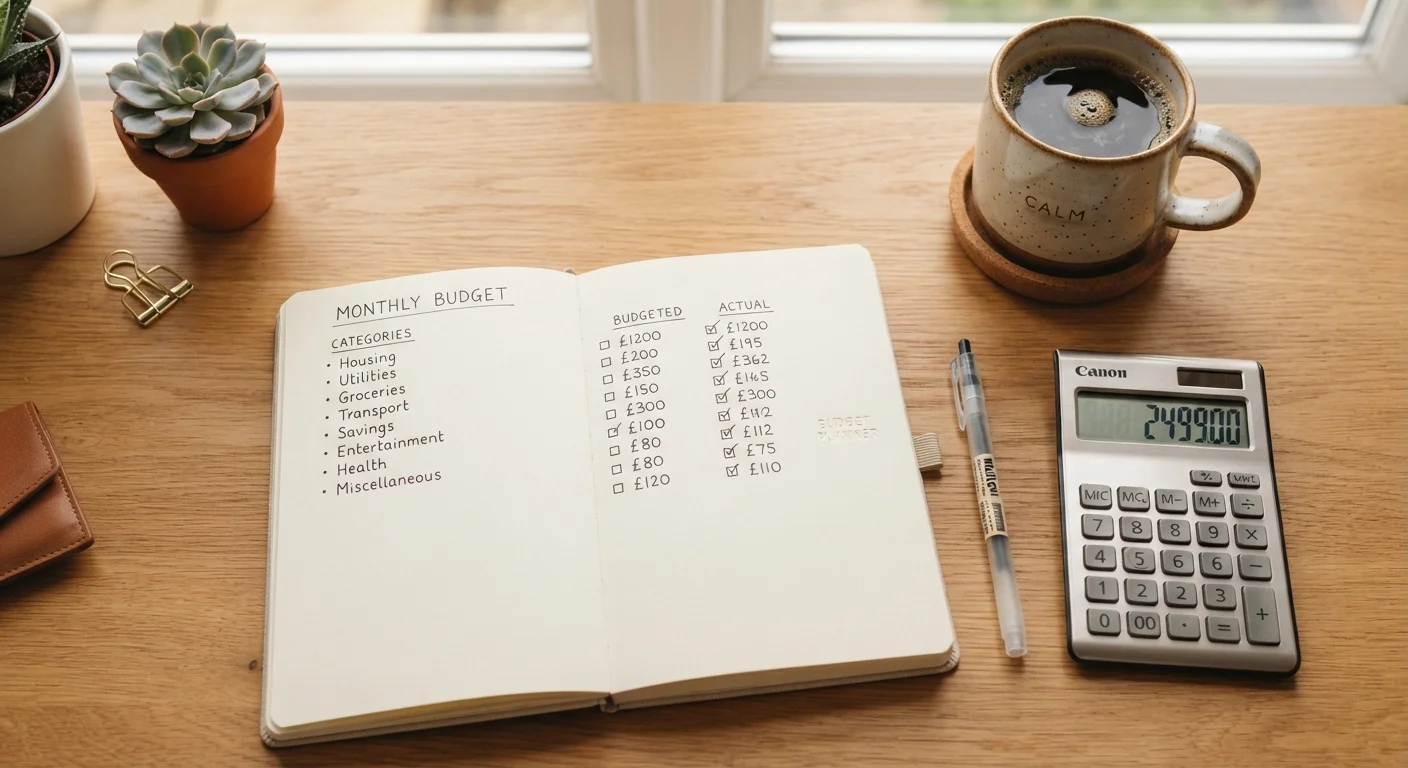
This checklist walks you through the core questions to ask at the end of each month. Keep a copy somewhere you'll actually use it — a notebook, a notes app, or a simple spreadsheet works fine.
Bank or credit union statements
Provides the actual transaction record needed to compare real spending against your budget.
Spreadsheet or budgeting notebook
Used to record planned vs. actual amounts for each spending category during your review.
Credit card statements
Captures any spending that didn't go through your main bank account, including recurring charges.
Budgeting app (any general-purpose one)
Can automate transaction categorization and make month-over-month comparison easier to see at a glance.
Your Monthly Budget Health Check Checklist
Work through these questions in order. Some will take thirty seconds; others might prompt a longer look at your accounts. Either way, the goal is honest reflection, not perfection.
Income Review
Spending vs. Plan
Recurring and Subscription Costs
Savings and Goals Progress
Debt and Bill Check
Budget Adjustments for Next Month
If you notice your subscriptions are quietly piling up, our guide on tracking forgotten recurring costs walks through how to audit and trim them. And if you want a deeper look at overall outgoings, the monthly spending audit checklist is a strong companion resource.
Don't Skip Months — Gaps Compound
Skipping even one monthly review makes the next one harder because you're working with two months of unexamined data. Patterns become harder to spot, and adjustments get larger. A 20-minute check done consistently is far more effective than a marathon session every few months.
What to Do With What You Find
Once you've worked through the questions, you'll likely land in one of three places: your budget is roughly on track, one or two categories are consistently off, or something structural needs to change.
If you're roughly on track: Note what's working. Carry those habits into the next month and make only small tweaks where needed.
If certain categories keep running over: That's a signal the original number was too low — or that spending in that area has genuinely increased. Adjust the budget to reflect reality, or make a deliberate plan to bring spending down. If your income varies month to month, budgeting around an irregular income offers a framework that handles the uncertainty more gracefully.
If you're consistently short before month's end: Look at whether large, infrequent expenses are disrupting your plan. Setting up sinking funds for predictable large expenses can smooth those out considerably.
The goal isn't a perfect month every time. It's a budget that gets a little more accurate — and a little more useful — each time you sit down with it.
This article is for general informational and educational purposes only and does not constitute personalized financial advice. For guidance specific to your situation, consider speaking with a qualified financial professional.