

Key Takeaways
Option A
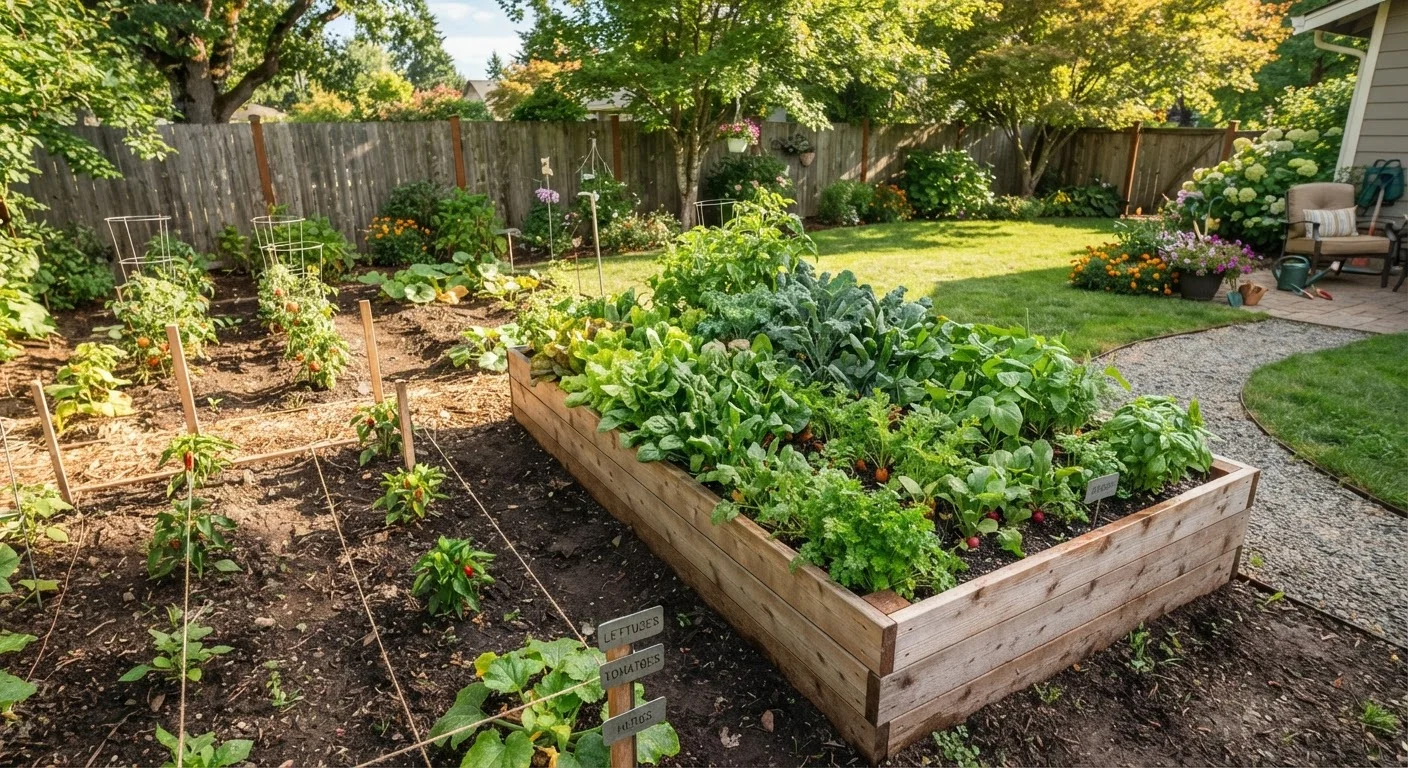
Raised Beds
The controlled, beginner-friendly growing environment.
Best for: Gardeners dealing with poor native soil, limited mobility, or small defined spaces who want fast results.
Option B
In-Ground Growing
The traditional, low-cost approach with room to expand.
Best for: Growers with decent native soil and larger planting areas who want a lower setup investment.
If your native soil is clay-heavy, compacted, or contaminated
Raised Beds
Raised beds let you fill with a custom soil mix, bypassing poor ground conditions entirely and giving plants an immediate healthy root environment.
If you're gardening on a tight budget and have a large area to plant
In-Ground Growing
In-ground plots require no lumber or bulk soil purchases — just amendments — making them far more economical to establish at scale.
If you have mobility challenges or find bending difficult
Raised Beds
Built at a comfortable height, raised beds reduce bending and kneeling significantly, making gardening more accessible and sustainable long-term.
If you want to grow large sprawling crops like pumpkins or sweet corn
In-Ground Growing
These crops need extensive horizontal and vertical root space that in-ground beds provide naturally and inexpensively.
If you're a beginner who wants reliable, early results
Raised Beds
Starting with controlled, quality-mixed soil removes many common beginner variables, leading to more predictable early harvests.
How Each Method Works
Raised beds are enclosed growing structures — typically framed with wood, galvanized metal, or stone — filled with a custom soil mix sitting above the native ground. In-ground growing means working directly with the existing earth in your yard, amending it as needed to support plant growth.
The fundamental difference is control. With raised beds, you define the growing medium from the start. With in-ground growing, you work with what's already there, improving it over time. Neither approach is inherently superior — the better fit depends almost entirely on your yard's conditions, your budget, and what you plan to grow.
Before committing to either method, it's worth understanding what's already beneath your feet. Our article on soil types and what they mean for your garden explains how clay, loam, sand, and silt each behave — and that knowledge directly shapes which growing method will serve you better.
Drainage, Soil Quality, and Root Space
Drainage is where raised beds often win decisively. Because the growing medium sits elevated and is usually a loose, well-aerated mix, water moves through it efficiently. This matters most in regions with heavy rainfall or yards with naturally poor drainage. Waterlogged roots are a leading cause of plant failure, and raised beds reduce that risk substantially.
In-ground gardens depend on native soil drainage, which can range from excellent to problematic. Sandy soils drain fast — sometimes too fast — while clay soils can stay soggy for days after rain. However, amending in-ground soil with compost over several seasons genuinely transforms its structure. The investment is time rather than money.
For root space, in-ground plots have a natural advantage for large, deep-rooting crops. Tomatoes, squash, and root vegetables like parsnips prefer unobstructed downward growth. A raised bed that's only 10 to 12 inches deep can restrict those roots, though deeper beds (18 inches or more) help considerably.
| Criterion | Raised Beds | In-Ground Growing |
|---|---|---|
| Setup Cost | Moderate to high | Low |
| Drainage Control | Excellent — custom mix | Variable — depends on native soil |
| Soil Quality | Defined from the start | Improved gradually over time |
| Season Start | Earlier — soil warms faster | Later in colder climates |
| Weed Pressure | Lower | Higher initially |
| Root Space | Limited by bed depth | Unrestricted downward growth |
| Scalability | Costly to expand | Easy and inexpensive to expand |
| Accessibility | Excellent at raised height | Requires bending or kneeling |
Cost, Setup, and Long-Term Maintenance
Setup cost is often the deciding factor for new gardeners. In-ground growing requires minimal upfront investment — primarily compost, a few basic tools, and your time. Raised beds carry real material costs: lumber or metal for frames, bulk soil or a custom soil mix to fill them, and hardware if you're building yourself. A single 4×8-foot raised bed can cost anywhere from $50 to several hundred dollars depending on materials and fill volume.
Over time, however, raised beds can reduce certain ongoing maintenance burdens. Weed pressure is typically lower because you're not working with seed-laden native soil. Pest barriers (like row cover or hardware cloth on the base) are easier to install. And because the soil isn't walked on, compaction is minimal — meaning less tilling over the seasons.
In-ground gardens require more consistent soil care but reward patience. Annual additions of compost and organic matter gradually build a productive, living soil ecosystem. Pairing good soil management with thoughtful plant selection — including understanding annual vs. perennial planting strategies — can make in-ground plots increasingly productive with relatively little annual cost.
10–12"
Minimum recommended raised bed depth
Most extension gardening programs suggest at least 10 to 12 inches of depth for the majority of vegetable crops to root effectively.
2–3 weeks
Earlier planting advantage in raised beds
Raised bed soil can warm significantly faster in spring than ground-level soil, particularly in USDA hardiness zones 5 and below.
3–5 years
Time to build healthy in-ground soil with amendments
Consistent annual additions of compost and organic matter can substantially transform even poor native soil within a few growing seasons.
Season Length, Yields, and What to Grow Where
Raised beds warm up faster in spring because the elevated soil mass absorbs heat more readily than ground-level earth. This can give you a two-to-three-week head start on planting warm-season crops in cooler climates — a meaningful advantage for short growing seasons.
For compact, high-yield crops — lettuce, herbs, radishes, bush beans, and peppers — raised beds shine. Dense planting in quality soil tends to produce impressive harvests from small footprints. If space is a genuine constraint, our guide to container gardening for small spaces is another option worth exploring alongside raised beds.
In-ground plots handle sprawling crops far more naturally. Corn, melons, winter squash, and asparagus all benefit from the unrestricted space and established root depth that native soil provides. Perennial plants — fruit bushes, asparagus, rhubarb — are also generally better suited to in-ground planting, where their roots can develop without the boundary of a frame.
Whatever method you choose, feeding your plants well is part of the equation. Understanding the trade-offs between organic and synthetic fertilisers will help you make informed decisions about how to maintain soil fertility in either system.