

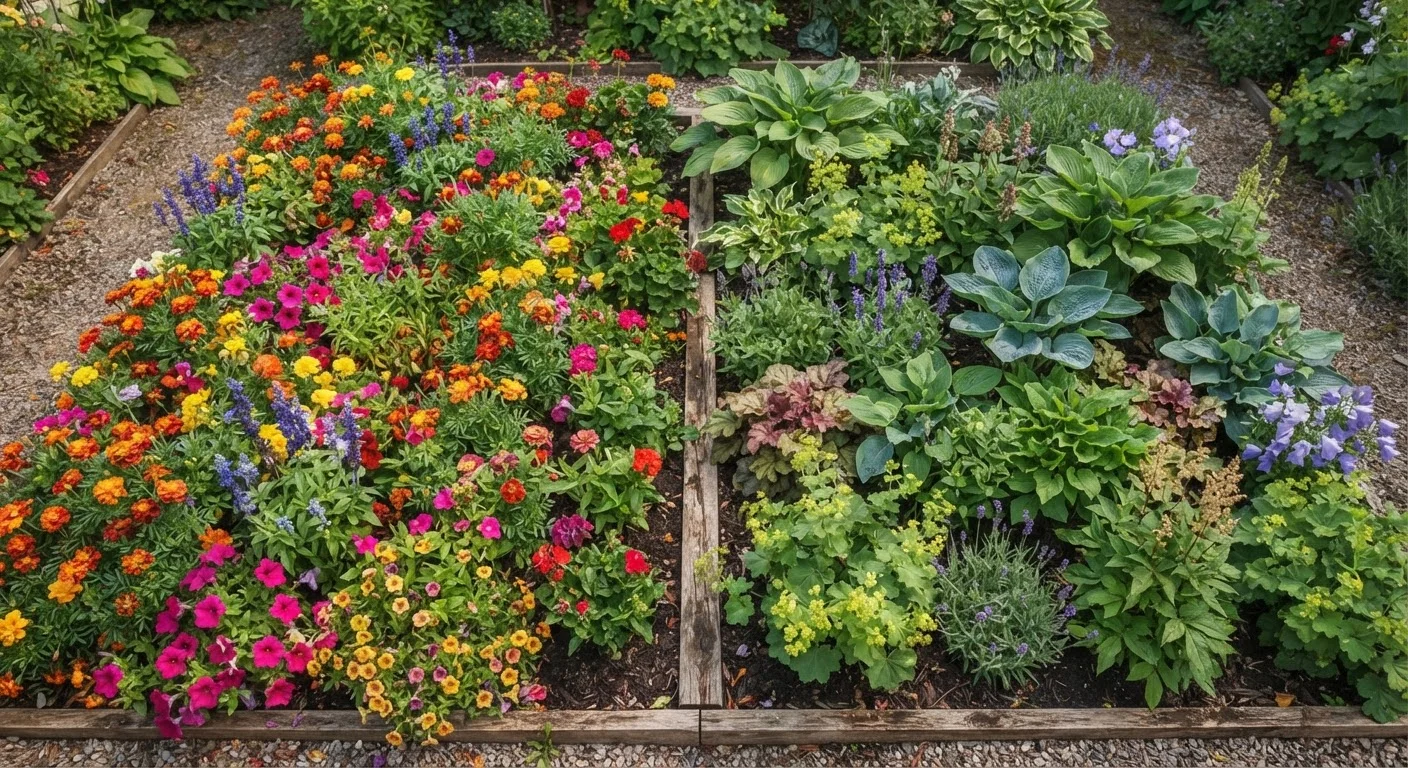
Key Takeaways
Option A
Annual Plants
The high-impact, one-season performer.
Best for: Gardeners who want maximum color and flexibility each year without long-term commitments to plant placement.
Option B
Perennial Plants
The reliable, long-term backbone of the garden.
Best for: Gardeners who want a low-maintenance framework that returns and expands year after year with less replanting effort.
If you want bold, season-long color and flexibility to change your design each year
Annual Plants
Annuals bloom prolifically from planting until frost, and starting fresh each year lets you experiment with new layouts and varieties without any long-term commitment.
If you want to reduce replanting effort and build a garden that grows more established over time
Perennial Plants
Perennials spread and self-sustain across seasons, gradually filling in beds and reducing both labor and yearly plant costs.
If you're a beginner building your first garden bed
Annual Plants
Annuals are forgiving of layout mistakes — since you replant every year, there's a natural opportunity to learn and adjust without being locked into plant placement.
If you want to create a naturalistic, low-intervention garden with ecological value
Perennial Plants
Many perennials support pollinators and beneficial insects season after season, and their deep root systems can improve soil health over time.
If you want the best of both worlds in an established bed
Annual Plants
Use perennials as your structural foundation and fill gaps with annuals each spring for continuous color between perennial bloom cycles.
What Makes a Plant Annual or Perennial?
The distinction comes down to life span. An annual germinates, grows, flowers, sets seed, and dies — all within a single growing season. A perennial lives for more than two years, dying back in cold weather but regrowing from its roots each spring.
There's also a middle category worth knowing: biennials (such as foxglove and hollyhock) complete their life cycle over two years, blooming in their second season before dying. Some tender perennials — plants that are perennial in warmer climates but killed by frost in colder ones — are commonly grown as annuals in much of the US.
What About "Hardy" vs. "Tender" Perennials?
A hardy perennial survives winter cold in the ground and returns in spring — reliable in most US growing zones. A tender perennial is frost-sensitive and dies when temperatures drop, so it's commonly sold and treated as an annual outside warmer climates like USDA zones 9–11. Always check the hardiness zone on the plant label before assuming something will overwinter in your area.
Understanding these categories helps you read plant tags at the nursery and make smarter purchasing decisions for your specific USDA hardiness zone.
Comparing the Two Side by Side
Each plant type has clear strengths that suit different gardening goals. Here's a direct look at how they compare across the factors that matter most to home gardeners.
| Criterion | Annual Plants | Perennial Plants |
|---|---|---|
| Life span | One growing season | Three or more years |
| Bloom duration | Often all season long | Typically 2–6 weeks per year |
| Upfront cost | Lower per plant | Higher per plant |
| Long-term cost | Higher — replant every year | Lower — returns each season |
| Maintenance effort | Moderate — regular deadheading | Lower once established |
| Design flexibility | High — redesign every year | Lower — longer-term placement |
| Establishment time | Fast — flowers same season | Slower — may take 2–3 seasons |
| Good for beginners? | Yes — forgiving and quick | Yes — with some patience |
As the table shows, neither type is simply better — they serve different purposes. Annuals excel at immediate visual payoff; perennials reward patience with compounding returns over multiple seasons. If you're planning a new bed, our guide on spring garden preparation walks through how to set beds up correctly before your first plants go in.
How to Build a Garden That Uses Both
The most practical approach for most home gardeners isn't choosing one over the other — it's layering them strategically. Think of perennials as your garden's skeleton and annuals as its seasonal wardrobe.
- Start with perennial anchors. Place larger, long-lived perennials like coneflowers, black-eyed Susans, salvia, or ornamental grasses at the back or center of beds. These provide height, structure, and returning color without annual replanting.
- Fill gaps with annuals. Perennials often bloom for just a few weeks each season. Use annuals like zinnias, marigolds, or impatiens to fill the visual gaps between perennial bloom windows.
- Account for spread. Many perennials expand over time by self-seeding or spreading root clumps. Leave them room to grow so you're not crowding them — or digging them up — after two seasons.
- Rotate your annuals. Since you're replanting annuals each year anyway, this is a built-in opportunity to try new color combinations or respond to what worked and what didn't the previous season.
This layered strategy also works well in containers. See our container gardening guide for tips on combining plant types in pots and planters where space is limited.
For ongoing seasonal tasks — like when to divide perennials or when to pull spent annuals — the month-by-month garden task guide is a useful reference to keep handy throughout the year.