

Key Takeaways
Mise en Place
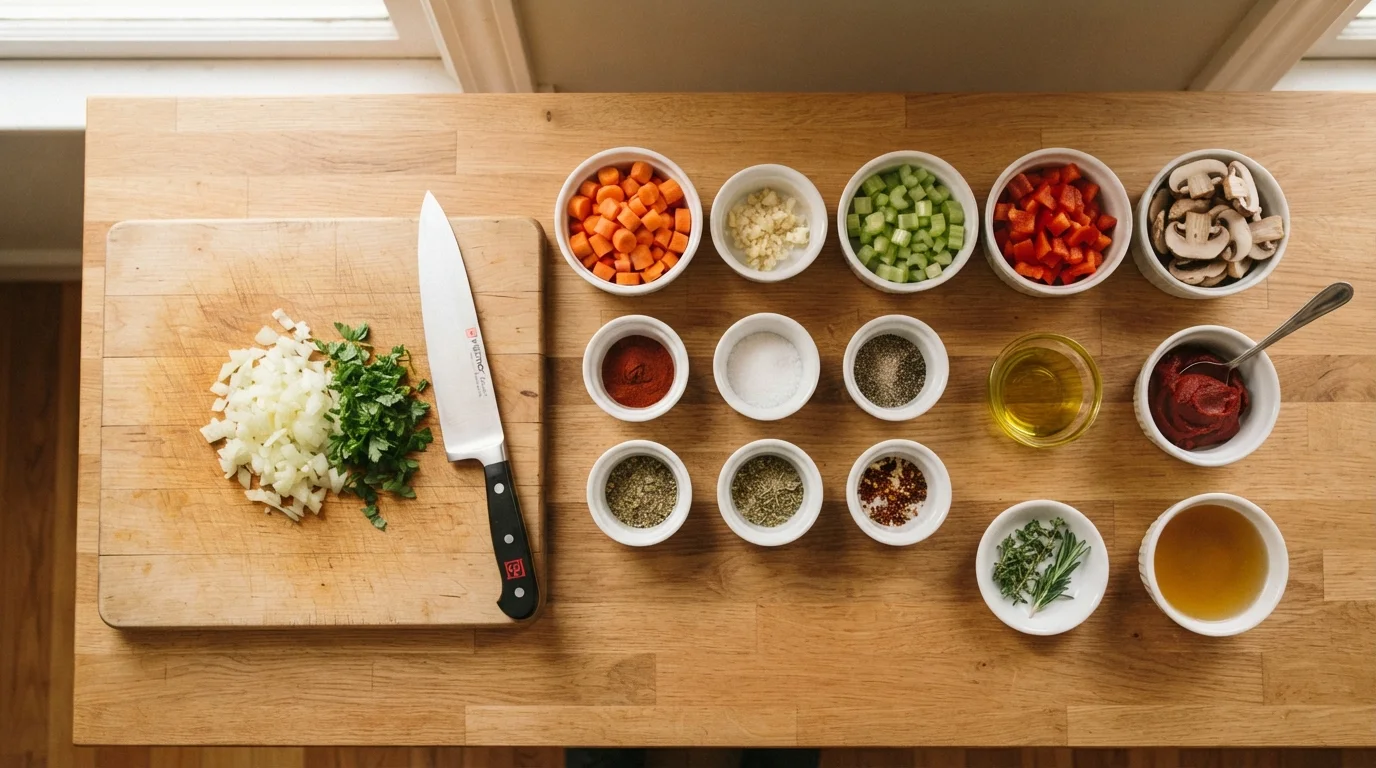
Mise en place (pronounced "meez ahn plahs") is a French culinary phrase meaning "everything in its place." It refers to the practice of measuring, chopping, and organising all ingredients before you begin cooking. By completing prep work upfront, you reduce the chance of mistakes, forgotten steps, or burnt food caused by scrambling mid-cook.
In professional kitchens, mise en place extends beyond ingredients to encompass tools, equipment, and the mental review of a recipe before service begins — a discipline that underpins speed and consistency under pressure.
What Mise en Place Actually Means in Practice
Walk into any professional kitchen before service and you'll see the same thing: ingredients already chopped, sauces portioned, spices pre-measured, tools within arm's reach. That's mise en place — not a philosophy, but a working method.
For home cooks, it translates simply: read the recipe fully, then prep everything before the burner goes on. Dice the onions. Measure the spices into a small bowl. Mince the garlic. Open the canned tomatoes. Once everything is ready in front of you, cooking becomes a matter of assembly rather than improvised multitasking.
This matters because most kitchen mistakes happen during transitions — the moment you turn away from a hot pan to frantically chop something that should have been ready three steps ago. Mise en place eliminates those transitions.
Start Small With One Dish
If mise en place feels like extra work at first, try it with just one recipe this week. Pick something with at least four or five ingredients and prep everything before the burner goes on. The difference in how calm and controlled the cooking feels is usually noticeable immediately.
For a practical walkthrough of how this fits into a larger cooking session, see our guide to setting up your kitchen before a prep session.
Why Professional Kitchens Rely on It
In a restaurant, a cook might execute the same dish dozens of times in a single evening. The only way to do that consistently — and without errors — is to have every component ready before the rush starts. Speed and accuracy under pressure depend on preparation, not talent alone.
“Mise en place is the religion of all good line cooks. The idea is that after years of cooking, you learn that everything worthwhile in the kitchen takes time and effort — and that the discipline of preparation is what makes quality possible.”
— Anthony Bourdain, Chef and author of Kitchen Confidential
Home kitchens don't face the same volume, but the underlying logic is identical. When you're not hunting for the paprika while your garlic is about to burn (a scenario explained well in our article on why garlic burns before the onions are even soft), you can actually pay attention to what's happening in the pan.
~30%
Estimated reduction in active cooking time
Culinary educators commonly observe that students who prep ingredients before cooking spend significantly less time managing the active cooking phase compared to those who prep on the fly.
5–10 min
Typical home mise en place setup time for a weeknight meal
For most single-dish weeknight recipes, a complete mise en place setup requires only five to ten minutes of focused prep before the heat goes on.
The habit also improves recipe comprehension. Reading a recipe all the way through — which mise en place requires — helps you catch dependencies you'd otherwise miss mid-cook: like the fact that the butter needs to be softened, or that the chicken must be at room temperature before searing.
How to Apply It at Home
You don't need a professional setup to benefit from this habit. Here's a straightforward approach for everyday cooking:
- Read the full recipe first. Identify every ingredient and technique before you touch anything.
- Gather all ingredients. Pull everything from the fridge, pantry, and spice rack. A well-organised pantry makes this step faster — see our piece on the logic of a well-organised pantry for ideas.
- Prep in order of time required. Start with anything that needs soaking, thawing, or long chopping. Finish with quick tasks like measuring liquids.
- Use small containers. Ramekins, bowls, or even the measuring cups themselves work fine. Group ingredients that go in together.
- Set up your tools. Have the right pan, spatula, and timer ready before the heat goes on.
This approach integrates naturally into batch cooking sessions too — prepping all vegetables before any cooking starts is the same principle applied at scale.
The Quieter Benefit: Less Stress While Cooking
Beyond practical accuracy, mise en place changes the emotional experience of cooking. When everything is ready, cooking shifts from reactive to deliberate. You can focus on technique — tasting as you cook, adjusting heat, noticing texture — rather than managing a mental checklist of what still needs to be cut or measured.
For people who find cooking stressful or chaotic, this is often the single habit that makes the biggest difference. The kitchen stops feeling like a place where things go wrong and starts feeling manageable. That shift in confidence compounds: cooks who feel in control tend to experiment more, make fewer errors, and enjoy the process far more.
Developing sharper prep skills — like those covered in our knife skills guide — makes the mise en place step itself faster, turning a potential friction point into a satisfying ritual.