

Key Takeaways
Why Pantry Organisation Is a Cooking Skill
A disorganised pantry doesn't just look cluttered — it actively slows you down. When you can't see what you have, you buy duplicates, miss expiry dates, and spend precious weeknight minutes rummaging through shelves. The fix isn't more storage products; it's a clear system built around how you actually cook.
Think of the pantry as the foundation of your kitchen workflow. As the mise en place principle shows, having ingredients accessible and ready before you start cooking reduces stress and mistakes significantly. A well-ordered pantry makes that habit much easier to maintain.
Before diving into the steps, gather what you need to do the job properly.
What you will need
Airtight containers (glass or BPA-free plastic)
Store decanted grains, flours, and legumes to protect against moisture and pests.
Label maker or masking tape and marker
Clearly identify container contents and best-by dates at a glance.
Shelf liner
Protects shelves from spills and makes surfaces easier to wipe clean.
Lazy Susan (turntable)
Improves access to items stored at the back of deep shelves, especially spices.
Stackable bins or baskets
Group smaller, loose items by category and keep shelves from looking chaotic.
How to Organise Your Pantry Step by Step
Follow these steps in order. Skipping the purge-and-sort phase at the beginning is the single biggest reason reorganisation efforts don't stick.
Empty and wipe down every shelf
Remove everything from your pantry and place it on a clean table or counter. Wipe down shelves with a damp cloth and let them dry before returning anything. This reset gives you a clear view of what you actually have.
Sort items into categories
Group everything into logical categories before anything goes back on the shelf. Useful groupings for most households include: grains and pasta, canned goods, dried beans and legumes, baking supplies, oils and vinegars, condiments and sauces, snacks, and spices. Don't overthink the categories — base them on how you cook, not on an abstract system.
Decant bulk and opened items into airtight containers
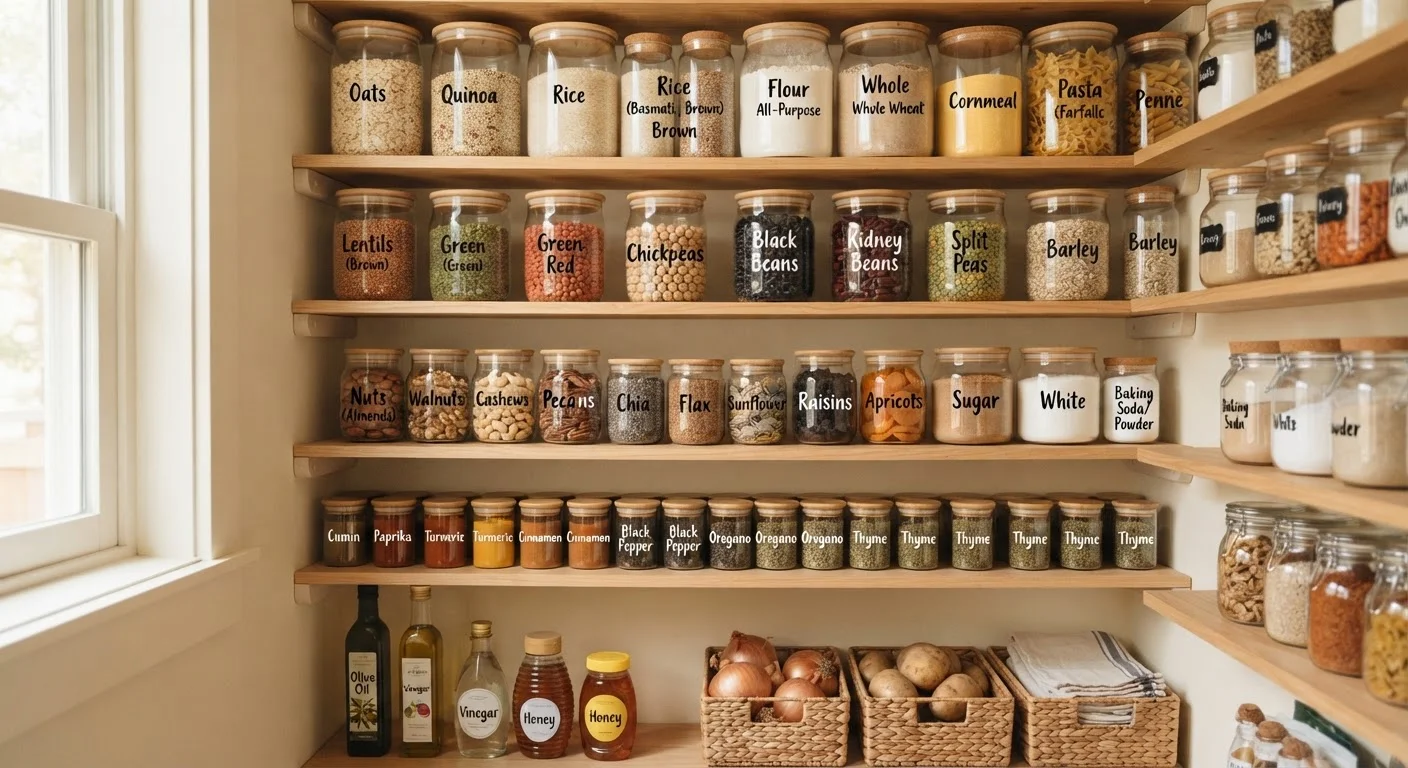
Transfer loose grains, flours, dried legumes, and cereals into airtight containers. This protects against moisture and pantry pests, and makes quantities instantly visible at a glance. Glass jars and BPA-free plastic containers both work well — choose what fits your shelves and budget. Label each container with the contents and, where relevant, the best-by date.
Arrange shelves using a first-in, first-out system
Place newer items behind older ones of the same type so you naturally reach for what expires soonest. This is the same rotation method used in professional kitchens and grocery stores — it's simple and it works. Put the most frequently used items at eye level; reserve higher or lower shelves for things you use occasionally.
Create and post an inventory list
Write down the key staples your household relies on — pasta, canned tomatoes, olive oil, stock, and so on — and note a minimum quantity for each. Attach this list inside a cabinet door or keep a digital version on your phone. Before each grocery shop, a quick glance tells you what needs replacing without a full shelf inspection.
Set a light monthly maintenance routine
Once a month, spend five to ten minutes checking for items approaching their best-by date, consolidating partially used packets, and wiping down any sticky surfaces. This micro-maintenance keeps the system functional without requiring a full reorganisation every few months.
Start With Your Most-Used Staples
If a full reorganisation feels overwhelming, start with the ten ingredients you reach for most often. Getting those consistently accessible and well-stored delivers the majority of the practical benefit. You can refine the rest of the pantry over subsequent weeks without losing momentum.
Maintaining the System Over Time
Organisation only pays off if it holds. The most common failure point is restocking groceries without following the system — bags get unpacked quickly and items land wherever there's space.
Build two habits into your weekly routine: a two-minute shelf scan before shopping, and a dedicated restocking moment when you put groceries away. Both feel minor but collectively eliminate the drift that turns a tidy pantry back into chaos within weeks.
A well-stocked, logically arranged pantry also transforms how you approach meal prep — you'll spend less time taking inventory mid-session and more time actually cooking. For a deeper look at how to structure your full prep workflow, see The Weekly Meal Prep Playbook.
Finally, keep in mind that storage location matters beyond the pantry itself. Some foods commonly stored in cabinets actually do better elsewhere. Food storage myths are worth reviewing once your pantry is in order — a few small changes to where you keep certain staples can meaningfully extend their freshness.