

Key Takeaways
Why Garlic and Onions Cook at Very Different Speeds
Onions and garlic are both aromatics, but they behave very differently under heat — and treating them the same is where trouble starts.
Onions are dense with moisture. A raw onion is roughly 89% water, and that moisture needs to evaporate before the natural sugars can caramelize and the cell walls soften. That process takes time: typically 5 to 10 minutes over medium heat, sometimes longer if you want deep golden color. The water acts as a built-in buffer, keeping the onion from scorching while it cooks through.
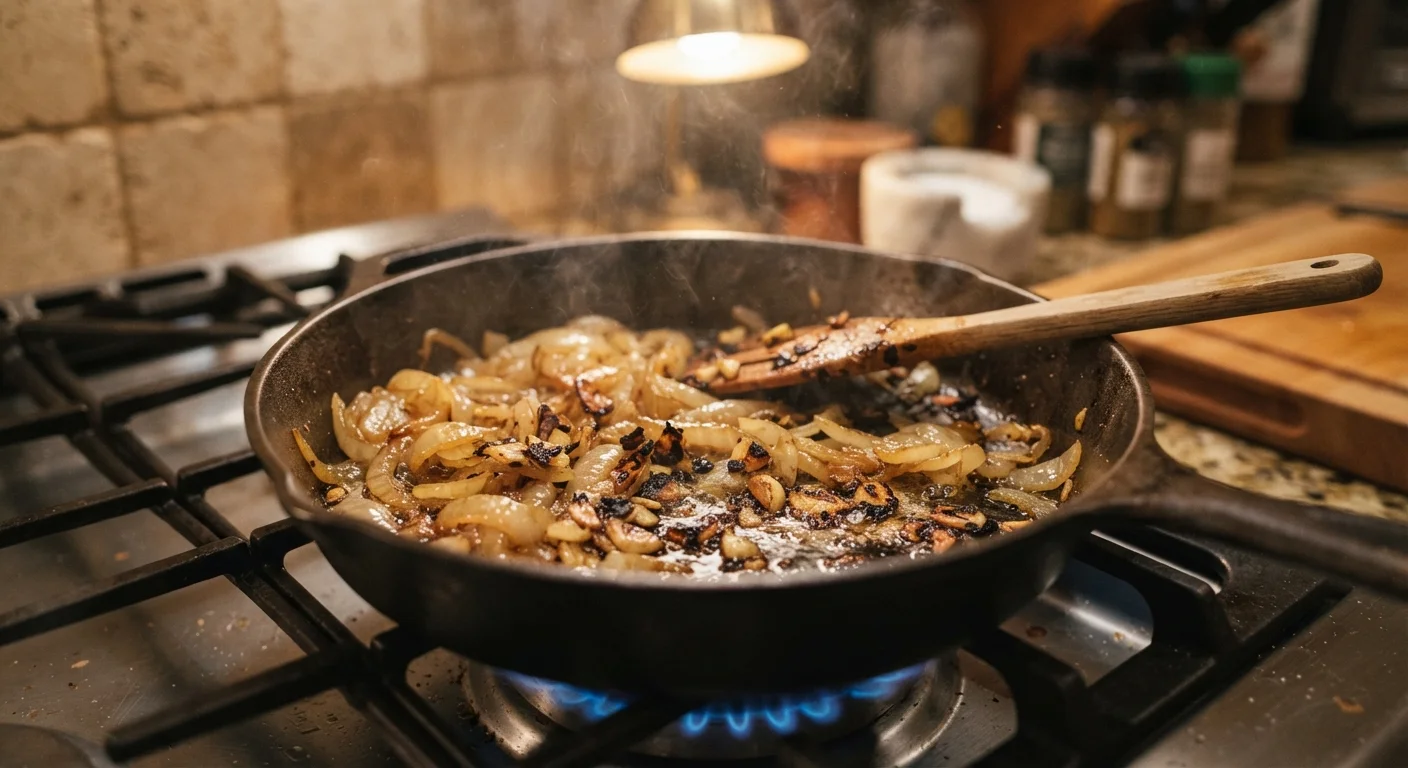
Garlic has far less mass and much less water. Minced or sliced garlic is also cut into tiny pieces, which dramatically increases the surface area exposed to the hot pan. Less moisture, more exposure to heat — that combination means garlic goes from raw to golden to acrid and black in under two minutes, sometimes faster. Its sugars caramelize almost instantly, and once the color tips past golden, the bitter compounds locked in those sugars are released and can't be reversed.
This difference in cooking rate is the core reason the two ingredients can't always go into the pan at the same moment — despite most recipes listing them side by side.
~89%
Water content in a raw onion
According to USDA food composition data, raw onions are approximately 89% water — the main reason they take significantly longer to cook than garlic.
30–60 sec
Time garlic needs over medium heat
Culinary educators commonly cite 30 to 60 seconds as the window for garlic to turn fragrant and golden without crossing into burnt — a remarkably short margin.
Common Mistakes That Lead to Burnt Garlic
Understanding the science is useful, but let's look at the specific habits that send garlic over the edge. If you've ever scraped a pan clean and started over, one of these is likely what happened.
Adding garlic to the pan at the same time as onions.
Why it happens: Most recipes list both ingredients together in the instructions, implying they go in simultaneously. Cooks follow the text without accounting for their different cooking rates.
Cooking garlic over heat that's too high.
Why it happens: Higher heat feels like faster results. Many cooks crank the burner to speed things along, not realizing that garlic's low moisture content makes it extremely sensitive to temperature spikes.
Walking away from the pan after adding garlic.
Why it happens: Garlic feels like a background task — something that just needs a minute. Cooks step away to chop another ingredient or check a timer, and return to find it burnt.
Using garlic that's too finely minced or pressed for high-heat applications.
Why it happens: Finely minced or pressed garlic has maximum surface area exposure, meaning it cooks — and burns — even faster than coarsely chopped or sliced garlic.
Trying to save burnt garlic by continuing the dish.
Why it happens: Starting over feels wasteful, especially partway through a recipe. Cooks convince themselves the bitterness will cook out or be masked by other ingredients.
Getting your prep organized before the pan heats up is one of the most reliable ways to prevent rushed timing. The professional habit of mise en place — having everything measured, chopped, and within reach before you start cooking — gives you the control you need to add each ingredient at exactly the right moment rather than scrambling.
How to Time Your Aromatics Correctly
The fix is straightforward once you internalize the timing difference. Here's a reliable sequence for most savory dishes:
- Start onions (or shallots) first in a lightly oiled pan over medium heat. Stir occasionally and let them cook until they turn translucent and begin to soften — about 5 to 8 minutes depending on thickness.
- Add garlic only when the onions are nearly done. Push the onions to the edge of the pan if needed, add the garlic to the center, and stir constantly for 30 to 60 seconds until fragrant.
- Move quickly. As soon as the garlic smells sweet and nutty, continue to the next step in your recipe — add liquid, protein, or other ingredients to stop the cooking.
If your recipe calls for very high heat — say, for a stir-fry or a proper sear — consider adding garlic off the heat entirely, after the pan is pulled from the burner, to let residual warmth do the work without risk of burning. For more on managing pan temperature, see our guide on getting a proper sear.
Burnt Garlic Cannot Be Fixed
Once garlic has turned dark brown or black, the bitter compounds it releases will permeate the entire dish. There is no culinary technique — no added liquid, acid, fat, or spice — that reliably neutralizes that bitterness. If you burn the garlic, remove it from the pan, wipe the pan clean, and start that step again. The two minutes it costs is always worthwhile.
The type of oil in your pan also matters. Oils with lower smoke points can begin to break down and contribute off-flavors even before your garlic hits the pan. Our guide to cooking oils can help you choose the right fat for the heat level you're working with.
Once you've nailed the timing, tasting as you cook will help you confirm that your aromatics are contributing exactly the flavor depth you're after — not bitterness, not rawness, but that rounded, savory foundation every good dish depends on.