

Food & Cooking

Setting Up Your Kitchen Before a Prep Session

Share
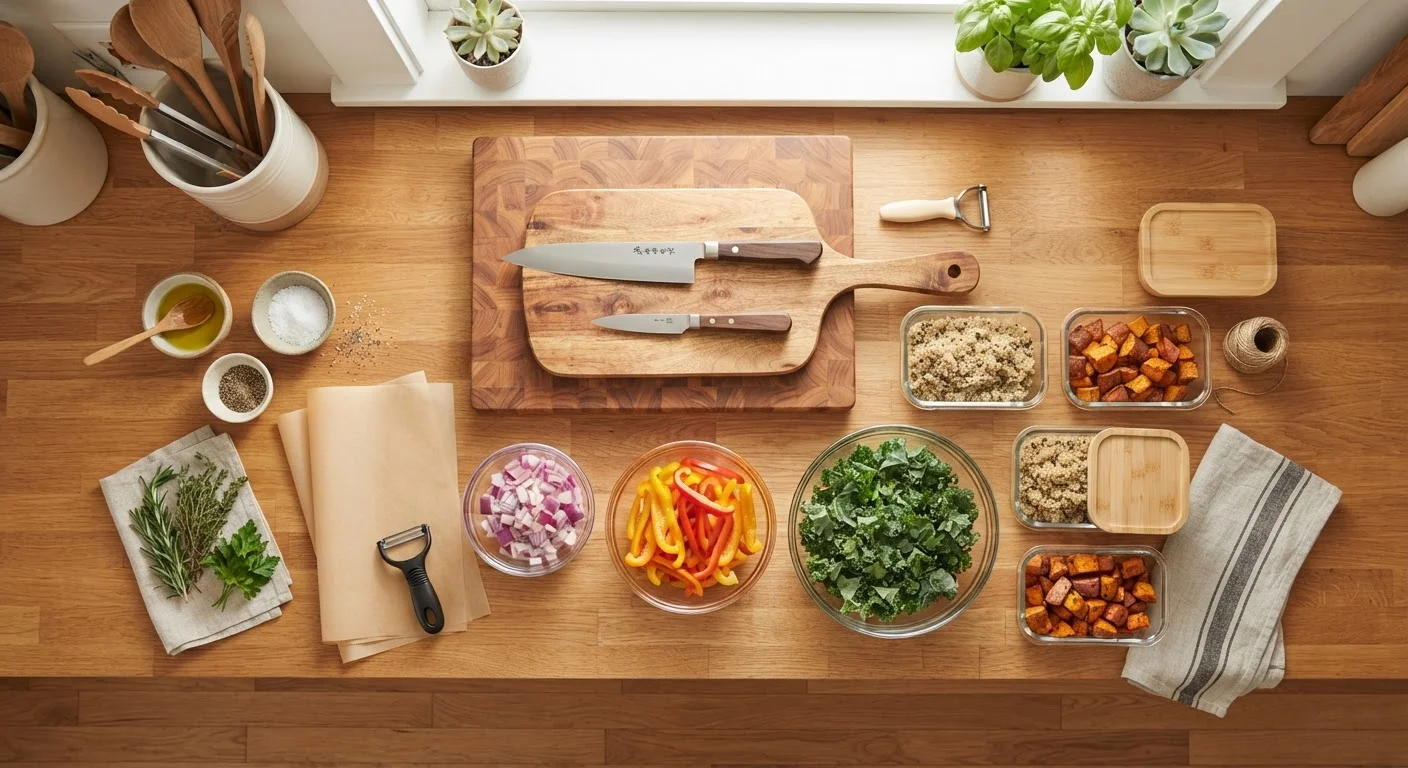
Organised kitchen counter with cutting boards, knives, bowls, and containers arranged for meal prep

Key Takeaways

Clearing and cleaning your workspace before cooking reduces cross-contamination risk and speeds up prep.
Confirming you have the right tools and enough storage containers prevents mid-session interruptions.
Reading all recipes before you start helps you spot conflicts in oven temperature or timing.
Organising ingredients by recipe — a practice called mise en place — keeps your workflow smooth.
A quick fridge audit ensures you have space to store what you cook before you begin.
10–20 min

Summary

22 items · 10–20 minutes

Why Setup Comes First

Most meal prep frustrations — hunting for a lid, realising you're out of olive oil, or discovering two recipes need the oven at different temperatures simultaneously — stem from skipping the setup phase. A short investment upfront pays dividends for the entire session.

Think of it like a professional kitchen: chefs work from a concept called mise en place (French for "everything in its place"). Every ingredient is measured, every tool is within reach, and every surface is clean before the first burner lights. The same principle applies at home, whether you're prepping for two days or the whole week.

This checklist works whether you're new to batch cooking or refining an existing routine. If you haven't planned your meals yet, the Weekly Meal Prep Playbook walks through the planning stage in detail. And if this is your first time attempting a prep session, see our first-timer's roadmap before diving in.

Workspace Preparation

Clear and wipe down all counter surfaces so you have an unobstructed, sanitary work area. Must
Empty the dish rack and run or empty the dishwasher so clean equipment is accessible throughout the session. Must
Lay out a large cutting board (or two) in a stable position — one for produce, one for proteins to avoid cross-contamination. Must
Place a compost or scrap bowl on the counter so you can work without repeatedly walking to the bin. Should

Recipe and Plan Review

Read every recipe you plan to cook from start to finish before picking up a knife. Must
Check for oven temperature conflicts and sequence tasks so your appliances aren't double-booked. Must
Write a simple task order — longest-cooking items first, passive tasks (marinating, soaking) scheduled early. Should
Note any resting or cooling time so you can slot in other tasks rather than standing idle. Should

Ingredient Check

Pull every ingredient called for in your recipes and confirm nothing is missing before you start. Must
Measure dry spices, oils, and pantry staples into small bowls or ramekins so they're ready to add without measuring mid-cook. Should
Rinse and dry produce, then sort it by recipe so you know exactly what goes where. Should
Check expiration dates on dairy, proteins, and any perishables you haven't used in a few days. Must
Remove proteins from the fridge 15–20 minutes before cooking if your recipe requires room-temperature meat. Nice to have

Storage and Fridge Readiness

Count your airtight containers and lids before cooking — confirm you have enough for every portion you plan to store. Must
Clear a designated shelf or zone in the fridge so prepped food has a home the moment it's cooled. Must
Set out labels or masking tape and a marker so you can date containers as you fill them. Should
Stack or nest empty containers on the counter in order of use to avoid rummaging mid-session. Nice to have

Safety and Hygiene

Wash hands thoroughly with soap and water before handling any food, and after handling raw proteins. Must
Confirm you have clean kitchen towels or paper towels nearby for spills and hand-drying. Must
Check that your smoke detector works and that the area around the stove is clear of flammable items. Must
Set a visible timer or use your phone to track cook times — multitasking during prep makes it easy to lose track. Should

Tools, Containers, and a Final Scan

Before you light a single burner, take 60 seconds to confirm your storage situation. Running out of containers halfway through a session means food sitting out longer than it should — a food safety issue, not just an inconvenience.

Don't Skip the Container Count

Running short on storage containers mid-session is one of the most common — and easily avoided — meal prep mistakes. Cooked food left on the counter while you search for lids enters the temperature "danger zone" (40°F–140°F) where bacteria multiply rapidly. Count containers before you cook, not after. The USDA recommends refrigerating cooked food within two hours of cooking.

Once your containers are accounted for, lay out your core tools — cutting board, chef's knife, peeler, sheet pans, and any appliances you'll use. Plug in slow cookers or instant pots now so they're ready the moment you need them. If you're prepping components rather than full meals, our guide on prepping proteins, grains, and vegetables separately can help you decide what equipment to prioritise.

Required

Chef's Knife

The primary cutting tool for chopping vegetables, slicing proteins, and general prep work.

Required

Large Cutting Board

Provides a stable surface for prep; having two prevents cross-contamination between produce and proteins.

Required

Airtight Storage Containers

Used to portion and refrigerate or freeze finished meals and prepped components safely.

Required

Sheet Pans (Half-Sheet Size)

Ideal for roasting vegetables and proteins in large batches during a single oven session.

Optional

Kitchen Scale

Helps portion proteins and grains accurately, especially useful when cooking for multiple meals.

Optional

Instant Pot or Slow Cooker

Handles hands-off cooking of grains, legumes, or braised proteins while you work on other tasks.

Required

Labelling Tape and Marker

Lets you date and identify stored containers so nothing gets lost or kept past its safe window.

With your kitchen set, your tools out, and your ingredients organised by recipe, you're positioned to move efficiently from task to task without backtracking. Good setup doesn't guarantee a perfect session, but it removes the most common obstacles before they become problems.

Food & Cooking Editorial Team is the collective byline for our editorial team and contributor network. Articles published under this byline or an editorial pen name are researched, written, and reviewed according to our editorial standards for clarity, consistency, and independence before publication.

View all articles by Food & Cooking Editorial Team →
Disclaimer: The content on this site is for informational purposes only and is not a substitute for professional advice. Always consult a qualified professional for guidance specific to your situation.