

Key Takeaways
Gutter and Downpipe System
A gutter and downpipe system is the network of channels and vertical pipes attached to your roofline that collects rainwater and directs it safely away from your home's walls and foundation. When working properly, this system prevents water from pooling against your house. When blocked, misaligned, or damaged, it can quietly cause significant structural damage over time.
Gutters are typically pitched at a slight gradient (around 1:500 slope) toward the downpipe to ensure water flows rather than sits. Even minor deviations in slope can cause persistent pooling and eventual overflow.
What Your Gutters Are Actually Doing
Most homeowners think of gutters as a minor cosmetic feature of the roofline. In reality, they're performing a critical structural function every time it rains. A properly functioning gutter system intercepts water running off your roof — which can be hundreds of gallons in a single storm — and channels it through downpipes to discharge safely away from the building.
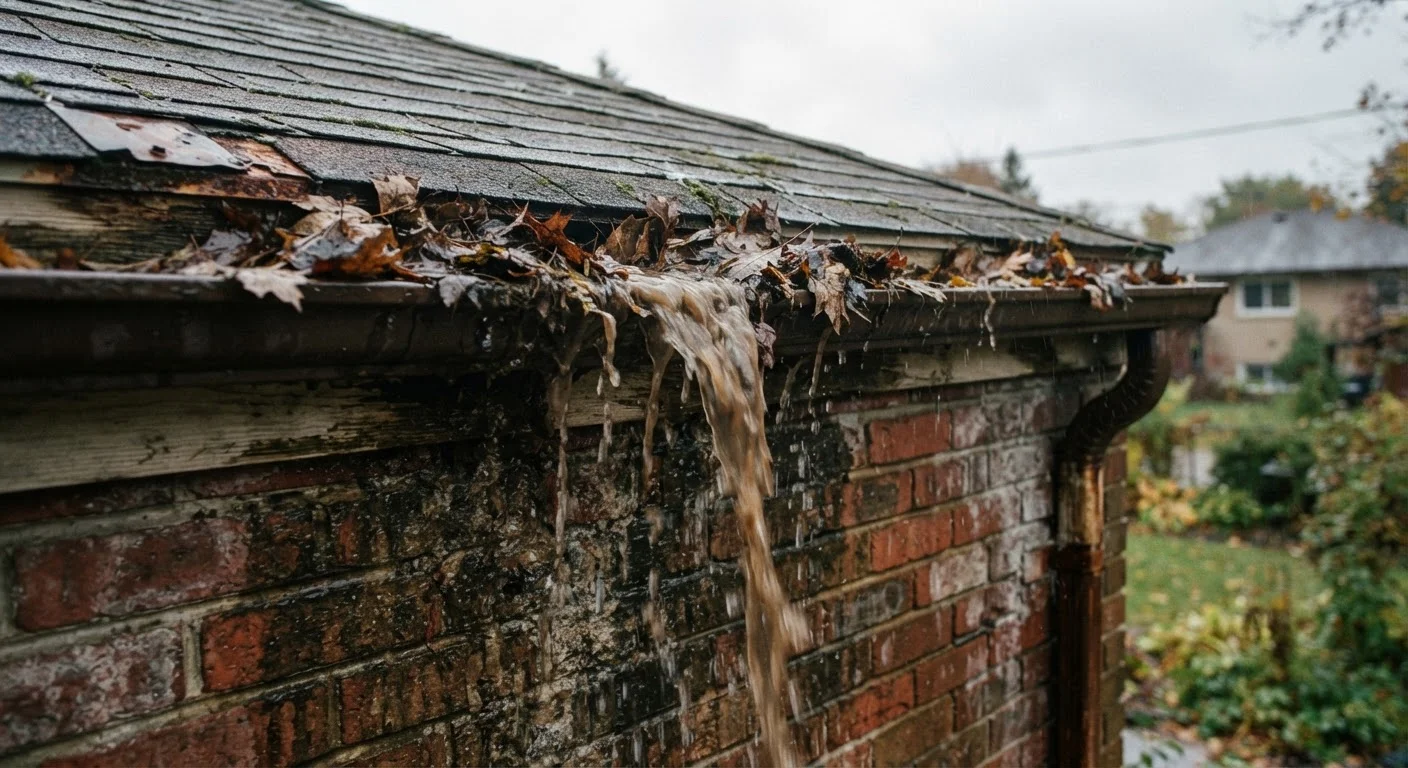
When that system fails, even partially, the water doesn't simply disappear. It takes whatever path is available: over the gutter lip, down the exterior wall, along the fascia boards, or behind the cladding. Each of those paths leads to a different type of damage — and most of it happens silently, out of sight, over months or years.
Understanding this cause-and-effect relationship is the first step toward protecting your home. As our guide to common home maintenance myths explains, the belief that "if it's not visibly leaking, it's fine" is one of the most expensive assumptions a homeowner can make.
The Three Most Common Failure Points
Gutter systems fail in predictable ways. Recognising these patterns makes inspection far easier.
Blockages
Leaves, twigs, seed pods, and compacted organic debris restrict water flow. When a gutter fills and overflows, it behaves like a long, slow waterfall directed at your walls and foundation. Blockages near the downpipe inlet are particularly damaging because they back water up across the entire run.
Sagging and Misalignment
Gutters are designed with a deliberate slope. Over time, fasteners loosen, gutters pull away from the fascia, and sections begin to sag. Water pools in low points rather than flowing to the downpipe — and standing water is both heavier (accelerating further sagging) and a breeding environment for mosquitoes and mould.
Disconnected or Poorly Positioned Downpipes
A downpipe that terminates flush against the foundation, or that has separated at a joint, deposits water exactly where you least want it. Discharge points should direct water at least one to two metres away from the structure, ideally toward a drain or graded lawn area that slopes away from the house.
~85%
Of basement water problems linked to drainage
Industry estimates from waterproofing professionals commonly attribute the majority of basement moisture issues to surface drainage failures, including gutters and grading, rather than rising groundwater.
1–2 metres
Minimum downpipe discharge distance from foundation
Building and waterproofing guidance generally recommends downpipe water be directed at least one to two metres from the building footprint to protect foundation soils.
2× per year
Recommended minimum gutter cleaning frequency
Most home maintenance guidelines recommend clearing gutters at least twice annually, with more frequent cleaning for properties with significant tree canopy overhead.
Where the Damage Shows Up
Gutter failures rarely announce themselves immediately. Instead, they create conditions for damage that surfaces gradually — and often in places that seem unrelated to the roofline.
- Foundation cracking or shifting: Saturated soil around the foundation expands and contracts with temperature and moisture changes. This cyclic stress is a leading contributor to foundation movement.
- Damp interior walls and ceilings: Water infiltrating behind cladding or entering through the fascia can travel horizontally before appearing as a ceiling stain or mould patch — often far from the actual entry point.
- Rotting fascia and soffits: The timber boards directly behind your gutters absorb water when gutters overflow or pull away from their mountings. Rot here can spread to roof framing if left unaddressed.
- Basement or subfloor moisture: Persistent pooling at the foundation perimeter is a common cause of damp basements and subfloor moisture problems, even in homes without obvious leaks.
These issues compound over time. The cost of deferred home maintenance article outlines how a modest gutter repair left unaddressed can escalate into a foundation or structural repair costing many times more.
Do a Downpour Check While It's Raining
One of the most revealing ways to assess your gutter system is to step outside during moderate rainfall and observe where water is actually going. Overflow points, disconnected joints, and misdirected downpipes become immediately visible in real conditions. This quick check takes just a few minutes and can identify problems that a dry-weather inspection would miss entirely.
A Practical Inspection and Maintenance Routine
You don't need specialist equipment to stay on top of gutter health. A basic routine, done consistently, covers most of the risk.
Twice-Yearly Visual Check
After autumn leaf fall and again in spring, walk the perimeter of your home and look for: visible sagging or separation at joints, debris overflow stains on exterior walls, peeling paint near the roofline, and soil erosion directly below the gutter runs.
Clear Debris Regularly
Remove leaves and debris from gutters using gloved hands or a scoop tool, working toward the downpipe. Flush with a garden hose to confirm flow. If water backs up rather than runs freely, the downpipe inlet or lower section may be blocked.
Check Downpipe Discharge
Confirm that each downpipe outlet directs water clearly away from the building and that splash blocks or extensions are in place where needed. Reposition any that terminate too close to the foundation.
Know When to Call a Professional
Multi-storey work, proximity to power lines, and steep or fragile rooflines are all situations where the risk of a fall outweighs the savings of doing it yourself. Our guide to DIY versus professional maintenance offers a useful framework for making that call. Similarly, if you notice rotting fascia or suspect water has reached the roof framing, consult a licensed roofing professional — as minor roof issues can escalate quickly when moisture is involved.