

Key Takeaways
Why Home Maintenance Myths Are Costly
Home maintenance advice travels fast — through neighbors, online forums, and well-meaning family members — and not all of it is accurate. Some myths are harmless. Others lead directly to damage that quietly compounds for months or years before it becomes impossible to ignore. The gap between what homeowners believe and what building science actually supports can be measured in repair bills.
The myths below aren't obscure edge cases. They're widely held beliefs that affect everyday decisions: whether to inspect a roof, how to handle a drain, whether to grab a paintbrush or a caulk gun. Recognizing them is the first step toward more confident, cost-effective home care — and toward knowing when a task genuinely calls for a licensed professional. You can also explore the real cost of deferred maintenance for a broader look at how delay compounds expense.
Myth
If nothing is leaking or visibly broken, you don't need to inspect it.
Fact
Many serious home problems — roof degradation, slow pipe corrosion, and foundation settlement — develop silently well before any visible sign appears.
The absence of an obvious symptom is not proof that a system is healthy. Roofing felt can deteriorate, flashing can pull away from chimneys, and drain lines can build up scale over years without a single visible drip. By the time water stains appear on a ceiling, damage is often already significant. A seasonal maintenance schedule that includes proactive checks — not just reactive repairs — catches problems while they're still inexpensive to fix.
Myth
A fresh coat of paint will seal gaps and protect surfaces from moisture.
Fact
Paint is a finish coating, not a sealant. It cannot bridge gaps, stop air infiltration, or block sustained water intrusion.
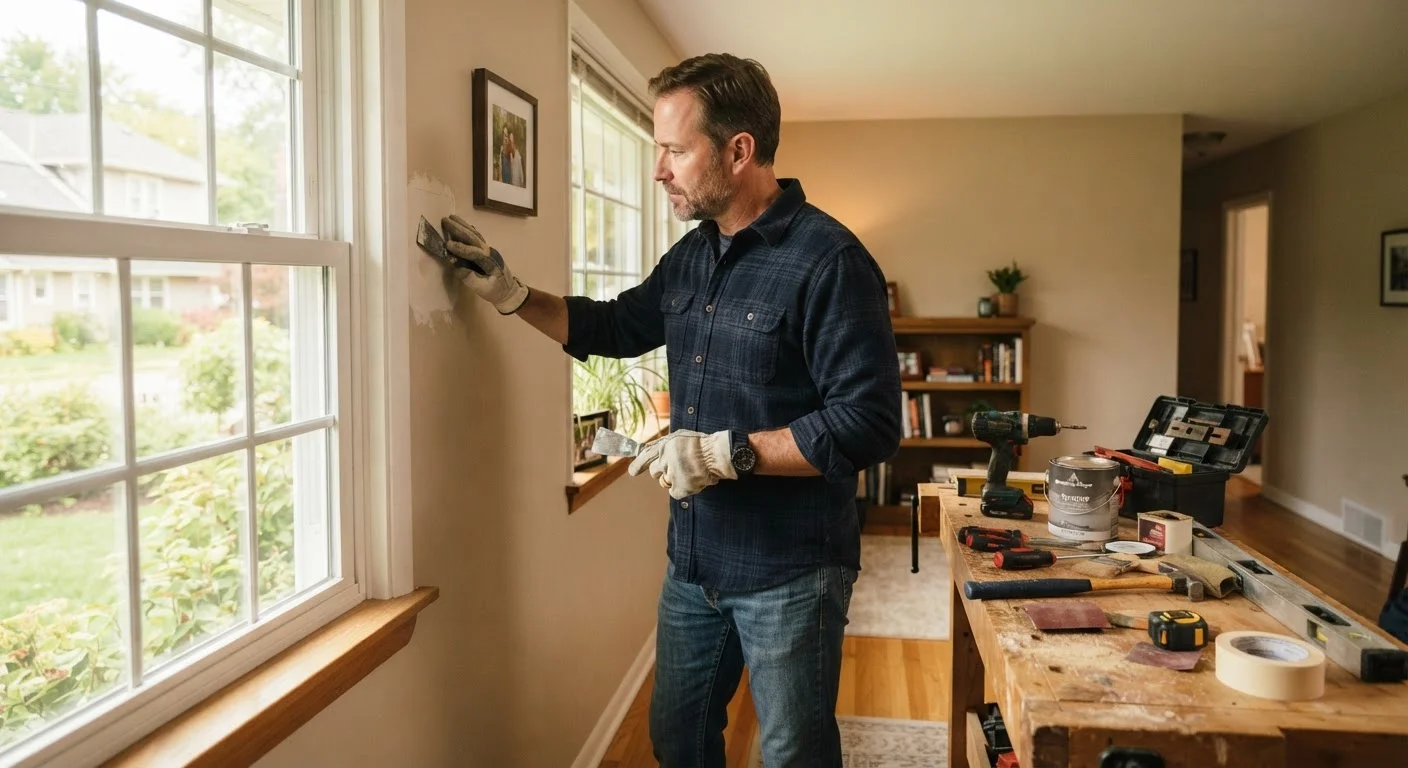
This is one of the most persistent myths in home maintenance. Paint applied over a gap between trim and a window frame may look tidy, but it will crack along that gap within a season and provide essentially no protection against drafts or moisture. The right fix depends on the gap size and location — caulk or weatherstripping are the purpose-built solutions. Good surface preparation matters too; proper wall prep before painting ensures paint performs its actual job — protecting and finishing a surface — rather than masking a problem.
Myth
You only need to clean gutters if you have a lot of trees nearby.
Fact
Wind-blown debris, airborne seeds, and shingle granules accumulate in gutters regardless of how many trees surround your home.
Gutters without tree canopy overhead are not self-cleaning. Shingle granules wash down from the roof with every rainfall, and fine debris blown by wind collects in corners and downpipe inlets. A blocked gutter can redirect water behind fascia boards, into wall cavities, or toward the foundation — all expensive repairs. Understanding how gutters and downpipes connect to water damage makes the case for cleaning them at least twice a year, regardless of your surroundings.
Myth
Small roof damage — a few missing shingles or a small crack — can wait until it's more convenient.
Fact
Even minor roof defects allow water infiltration that can escalate to structural deck rot, insulation damage, and interior ceiling damage within months.
Roofing is one of the areas where delay is genuinely expensive. A missing shingle exposes the underlayment to UV degradation and rain. Once water enters the deck assembly, it can migrate laterally well beyond the original breach. Our article on why small roof issues become expensive details how this escalation typically unfolds. For any roof access, appropriate fall-protection precautions are essential — many repairs are best left to a licensed roofing professional.
Myth
Running hot water down the drain prevents or clears grease blockages.
Fact
Hot water temporarily liquefies grease, but it re-solidifies further down the pipe where water temperature drops — often creating blockages deeper in the drain system.
This myth leads homeowners to believe they're managing grease when they're actually relocating it. The better practice is to collect cooking grease in a container and dispose of it in the trash — not the sink at any temperature. If you suspect a partial blockage is already forming, understanding your home's plumbing system can help you assess when a professional drain cleaning is warranted rather than reaching for chemical drain openers, which can damage older pipes.
Myth
Any home repair you can physically do yourself is safe and legal to complete without permits.
Fact
Many repairs and improvements — even seemingly straightforward ones — require permits, inspections, or licensed tradespeople under local building codes.
The fact that a task is physically possible for a homeowner does not make it legal or safe to complete without oversight. Electrical panel work, plumbing into mains, load-bearing wall modifications, and HVAC connections are regulated in virtually every US jurisdiction. Unpermitted work can complicate home sales, void insurance claims, and — most importantly — create genuine safety hazards. Our guide to knowing the DIY boundary is a practical starting point, and what to ask before hiring a tradesperson helps you vet professionals when the job calls for one.
Protecting Your Home With Accurate Information
The common thread running through these myths is a tendency to underestimate hidden processes — moisture migration, slow corrosion, debris accumulation — in favor of what's immediately visible. Homes require systems thinking: what happens at the roof affects the walls; what goes down the drain affects the pipes behind the wall.
Never DIY Electrical, Gas, or Structural Work
Several myths in this article stem from homeowners underestimating what a repair actually involves. Electrical, gas line, and load-bearing structural work requires a licensed tradesperson in virtually every US jurisdiction. Unpermitted or unsafe work can void your homeowner's insurance and create serious safety hazards. When in doubt, consult a qualified professional before starting — not after.
Building a realistic picture of your home's needs doesn't require expert knowledge, but it does require moving past inherited assumptions. A reliable seasonal routine, a willingness to investigate rather than assume, and a clear sense of when to call a professional are the practical foundations of sound home maintenance. For anything adjacent to gardening or outdoor care, the same critical thinking applies — check our Garden & Yard hub for evidence-grounded outdoor maintenance guidance.
Visible Mould Is Not the Whole Picture
A common myth is that wiping away visible mould with a household cleaner solves the problem. Surface cleaning removes what you can see, but mould often penetrates porous materials like drywall and wood framing. If you notice recurring mould or a persistent musty smell, consult a remediation professional. See our article on mould causes and remediation basics for general background.