

Key Takeaways
Reduces labor costs on straightforward maintenance tasks
Skilled trades charge for time and expertise, often with minimum call-out fees. Routine jobs like caulking, filter replacement, or minor patching are well within reach and can save meaningful amounts annually.
Builds genuine knowledge of your home's systems
Homeowners who do their own maintenance develop an accurate mental map of how their house works — making early problem detection more likely and professional consultations more productive.
Allows faster response to minor issues
Waiting for a contractor appointment for a small, manageable fix can let a minor problem worsen. Knowing you can handle it yourself enables quicker action.
Develops practical skills that compound over time
Each completed task builds confidence and capability for the next. Homeowners who start with basic repairs often become competent at a widening range of mid-level jobs over several years.
Enables better oversight when professionals are involved
A homeowner with hands-on experience can more accurately assess whether a quoted job is reasonable, ask informed questions, and spot if work is being done correctly.
Mistakes can create larger, more expensive problems
A poorly sealed pipe joint, incorrectly installed flashing, or improperly patched exterior can allow water intrusion that causes thousands of dollars in damage — far more than the original professional repair would have cost.
Some work legally requires permits and licensed trades
Electrical, gas, structural, and certain plumbing work is regulated in most US jurisdictions. Performing it without proper licensing or permits can result in fines, failed inspections, and complications at resale.
Personal injury risk on physical or height-related tasks
Falls from ladders are among the most common causes of home-related injuries. Roofwork, high exterior painting, and upper-story gutter cleaning carry real physical risk without proper safety equipment and experience.
Tool investment can offset savings on one-time jobs
Specialized tasks sometimes require tools that cost nearly as much as hiring a professional for a single job. Factoring in tool purchase — or rental — is essential to an honest cost comparison.
May void warranties or home insurance coverage
Some appliance and material warranties are voided by non-professional installation. Home insurance policies may also decline claims resulting from unpermitted or amateur work on covered systems.
Underestimating complexity is a common and costly error
What looks like a simple fix on a video tutorial can reveal hidden complications — old wiring, corroded fittings, or non-standard configurations — that require professional intervention mid-job.
Our Verdict
DIY home maintenance is a genuinely practical skill set that saves money, builds knowledge, and keeps small problems from becoming large ones — when applied to the right jobs. The key is an honest assessment of task complexity, personal skill, and the consequences of getting it wrong. For low-stakes, reversible tasks, rolling up your sleeves makes good sense. For anything involving electricity, gas, structural loads, or required permits, a licensed professional is the safer and often legally necessary choice.
Best for homeowners who are comfortable with basic tools, willing to research tasks thoroughly, and able to recognize when a job has moved beyond their experience level.
What DIY Home Maintenance Actually Covers
The phrase "DIY home maintenance" spans an enormous range — from replacing a worn door hinge to repointing brickwork. Understanding that range is the first step toward making good decisions about what to attempt yourself.
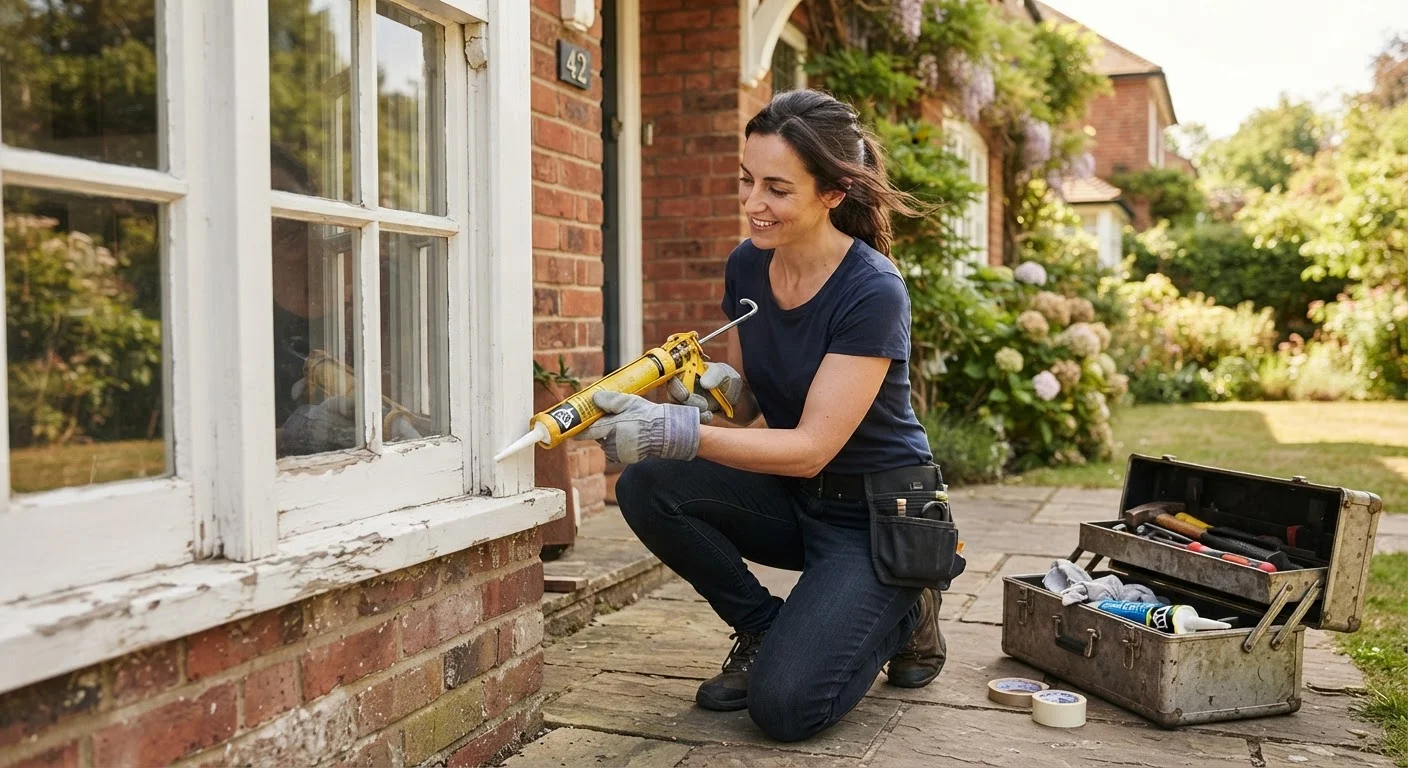
At the accessible end sit tasks that require basic tools, carry low risk if done imperfectly, and are easy to reverse or fix later: caulking around windows and tubs, replacing air filters, patching small drywall holes, touching up exterior paint, cleaning gutters, and tightening loose hardware. These are the backbone of proactive homeownership, and tackling them regularly prevents costlier problems down the road. Our seasonal maintenance guide offers a useful framework for timing these tasks throughout the year.
Further along the spectrum are mid-level jobs — installing a ceiling fan, replacing a faucet, laying tile — that are manageable with research and patience but demand more precision. At the complex end sit tasks where errors can cause injury, void insurance, or violate local code: rewiring circuits, replacing a load-bearing wall, working on gas lines, or major roof repairs.
The Real Advantages of Doing It Yourself
There are genuine, well-documented reasons to handle maintenance tasks yourself when the situation allows.
Reduces labor costs on straightforward maintenance tasks
Skilled trades charge for time and expertise, often with minimum call-out fees. Routine jobs like caulking, filter replacement, or minor patching are well within reach and can save meaningful amounts annually.
Builds genuine knowledge of your home's systems
Homeowners who do their own maintenance develop an accurate mental map of how their house works — making early problem detection more likely and professional consultations more productive.
Allows faster response to minor issues
Waiting for a contractor appointment for a small, manageable fix can let a minor problem worsen. Knowing you can handle it yourself enables quicker action.
Develops practical skills that compound over time
Each completed task builds confidence and capability for the next. Homeowners who start with basic repairs often become competent at a widening range of mid-level jobs over several years.
Enables better oversight when professionals are involved
A homeowner with hands-on experience can more accurately assess whether a quoted job is reasonable, ask informed questions, and spot if work is being done correctly.
Beyond the financial side, hands-on maintenance builds familiarity with your home's systems — which makes it easier to spot problems early and communicate clearly with professionals when you do need to call one. Homeowners who understand how their plumbing works, for example, are better positioned to describe a symptom accurately and avoid unnecessary service calls. See our plumbing basics overview for a grounding in how those systems operate.
Where DIY Creates Real Risk
The downsides of DIY aren't just about failed results — they can involve safety, legal exposure, and costs that exceed what a professional would have charged.
Mistakes can create larger, more expensive problems
A poorly sealed pipe joint, incorrectly installed flashing, or improperly patched exterior can allow water intrusion that causes thousands of dollars in damage — far more than the original professional repair would have cost.
Some work legally requires permits and licensed trades
Electrical, gas, structural, and certain plumbing work is regulated in most US jurisdictions. Performing it without proper licensing or permits can result in fines, failed inspections, and complications at resale.
Personal injury risk on physical or height-related tasks
Falls from ladders are among the most common causes of home-related injuries. Roofwork, high exterior painting, and upper-story gutter cleaning carry real physical risk without proper safety equipment and experience.
Tool investment can offset savings on one-time jobs
Specialized tasks sometimes require tools that cost nearly as much as hiring a professional for a single job. Factoring in tool purchase — or rental — is essential to an honest cost comparison.
May void warranties or home insurance coverage
Some appliance and material warranties are voided by non-professional installation. Home insurance policies may also decline claims resulting from unpermitted or amateur work on covered systems.
Underestimating complexity is a common and costly error
What looks like a simple fix on a video tutorial can reveal hidden complications — old wiring, corroded fittings, or non-standard configurations — that require professional intervention mid-job.
It's also worth noting that some widely held assumptions about home maintenance are simply wrong. Misconceptions about what "good enough" looks like — or which products seal what — can quietly cause damage over months or years. Our article on common home maintenance myths covers several of the most consequential ones.
Tasks That Should Always Go to a Licensed Professional
Certain categories of work are consistently flagged as requiring licensed trades — not out of overcaution, but because the failure modes are severe.
- Electrical panel work and new circuit wiring: Incorrect wiring is a leading cause of house fires. Most jurisdictions require a licensed electrician and a permit for this work.
- Gas line installation or repair: Gas leaks can cause explosions or carbon monoxide buildup. This is not a task for trial and error.
- Structural modifications: Removing or altering walls — particularly load-bearing ones — affects the integrity of the entire structure. Engineering assessment is often required.
- Major roof repairs or replacement: Beyond the fall risk, improper installation can void manufacturer warranties and cause water intrusion that damages framing and insulation.
- Asbestos and lead paint disturbance: Older homes may contain these materials. Disturbing them without proper containment and disposal protocols creates serious health hazards.
Permits: A Quick Reality Check
Many homeowners are surprised to learn how many common projects — adding an outlet, replacing a water heater, building a deck — require a permit in most US municipalities. Permit requirements vary significantly by location, so checking with your local building department before starting is always the right move. The permit process exists to ensure work is inspected and meets safety standards, not simply to create paperwork.
When in doubt about whether a task requires a permit, contact your local building department directly. Unpermitted work can complicate home sales, affect insurance claims, and — in serious cases — result in fines or mandatory removal. If you do need to hire a tradesperson, our guide on vetting tradespeople covers what to ask before work begins.
Making the Call: A Practical Framework
Before starting any job, run through these four questions:
- What happens if I get this wrong? If the answer involves injury, structural damage, or a safety hazard, call a professional.
- Does this require a permit or licensed trade in my area? Check local requirements — not assumptions.
- Do I have the right tools and the ability to use them safely? Renting unfamiliar power tools for a complex job compounds risk.
- Can I realistically undo or fix a mistake? Tasks with reversible outcomes are far safer bets than ones with permanent consequences.
DIY and professional help aren't mutually exclusive. Many homeowners handle the preparation and cleanup themselves — saving labor hours — while leaving the skilled portion to a licensed tradesperson. That hybrid approach often represents the best balance of cost, quality, and safety. For context on how a similar logic applies elsewhere, our piece on DIY car maintenance vs. a mechanic explores the same decision-making framework in a different setting.
~33%
DIY projects that end up needing professional rescue
Industry surveys consistently suggest roughly one in three DIY home repair attempts results in a professional being called in to correct or complete the work.
$1,200+
Typical minimum cost for unpermitted work corrections
Remediation of unpermitted structural, electrical, or plumbing work — when discovered during a home sale inspection — frequently runs into the low thousands of dollars in correction and re-inspection fees.