

Key Takeaways
Start here
How Your Home's Plumbing System Works
Next
Key Components You Should Be Able to Locate
Then
Common Plumbing Problems and Early Warning Signs
When you're ready
What Homeowners Can Safely Do Themselves
Know the limits
When to Call a Licensed Plumber
How Your Home's Plumbing System Works
Your home's plumbing is really two systems working side by side. The supply system carries pressurized fresh water in from the municipal main or a private well, branching to every faucet, toilet, and appliance that needs it. The drain-waste-vent (DWV) system removes used water and sewage by gravity, routing it to the municipal sewer or a septic tank.
Pressure is what makes the supply side work. Water enters at around 40–80 psi (pounds per square inch) in most US homes. The DWV side relies entirely on slope — pipes are angled slightly downward so waste flows out without pumping. Vent pipes rising through the roof allow air into the drain lines, which prevents the vacuum that would otherwise slow or stop drainage.
Understanding this basic split — pressurized water in, gravity-fed waste out — helps you reason through almost every plumbing issue you will encounter.
Supply system
The network of pressurized pipes that delivers fresh, clean water from the municipal main or well to every fixture and appliance in your home.
Drain-waste-vent (DWV) system
The set of pipes that removes used water and sewage by gravity, with vent pipes that allow air in so drains flow freely.
Shut-off valve
A valve that stops water flow to an individual fixture or to the entire house; essential to locate before any plumbing emergency or repair.
P-trap
The curved section of pipe beneath a sink or drain that holds a small amount of water, creating a seal that blocks sewer gases from entering your home.
Pressure reducing valve (PRV)
A device on the main supply line that lowers incoming water pressure to a safe level for your home's pipes and fixtures.
Water hammer
A loud banging noise in pipes caused when water flow is suddenly stopped, creating a pressure shockwave — often heard after a valve or faucet is shut off quickly.
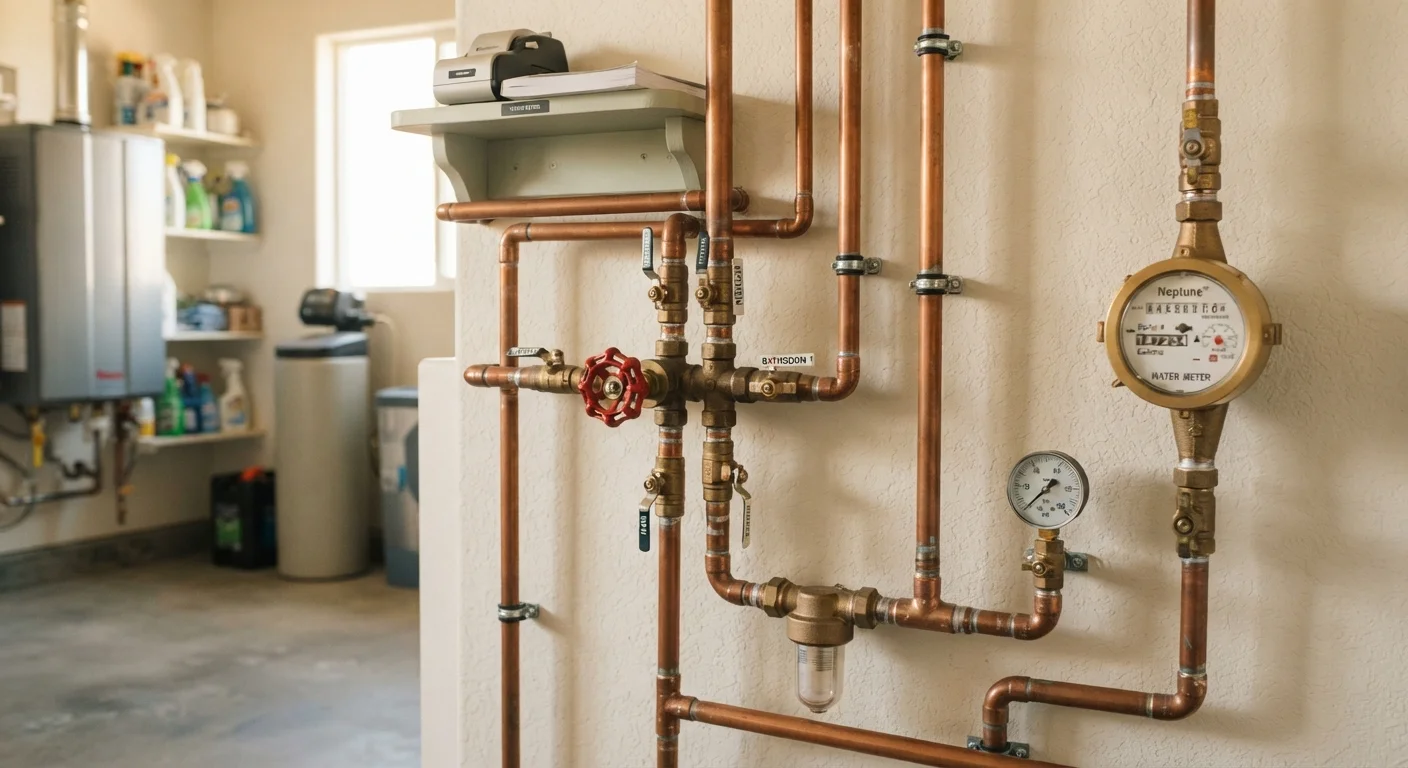
Key Components You Should Be Able to Locate
Before any problem occurs, spend 20 minutes walking your home and finding these essentials:
- Main shut-off valve: Closes the water supply to the entire house. In emergencies, this is the first thing you reach for. It is typically near where the supply line enters the foundation.
- Individual fixture shut-offs: Small valves behind toilets and under sinks that let you isolate one fixture without cutting water to the whole house.
- Water heater: Note whether it is gas or electric, where its shut-off controls are, and when it was last serviced. Most tank water heaters have a useful lifespan of 8–12 years.
- Cleanout access points: Capped pipes at ground level or in the basement that plumbers use to clear blockages in main drain lines.
- Pressure reducing valve (PRV): Found on the supply line in many homes, it prevents excessively high pressure from damaging pipes and fixtures.
Labeling these locations — a strip of masking tape on the wall above a shut-off works fine — pays dividends the moment something goes wrong at midnight.
Common Plumbing Problems and Early Warning Signs
Most plumbing failures give warning before they become serious. Knowing what to look for helps you act early. See our seasonal maintenance guide for a broader checklist of when to check these items throughout the year.
- Slow drains: Usually a buildup of hair, soap scum, or grease. Easy to address early; left alone, a slow drain can back up or signal a deeper blockage.
- Running toilet: A toilet that runs continuously or hisses after flushing is typically a worn flapper valve — a common DIY fix.
- Low water pressure: Sudden drops can indicate a partially closed valve, a failing PRV, or a leak somewhere in the supply line.
- Water stains on ceilings or walls: Brown rings or bubbling paint suggest a leak above — often from a supply line, drain line, or appliance connection in the room above.
- Unusual odors: A sulfur or sewage smell near drains can mean a dry P-trap (pour water into infrequently used drains to restore the water seal) or a venting issue.
Don't Ignore Water Stains
A ceiling stain that appears to have dried up does not mean the leak has stopped — it may simply be intermittent. Persistent moisture inside walls or ceilings can lead to mold growth and structural damage. If you cannot identify and confirm the source of a stain, have a plumber investigate before the problem worsens.
What Homeowners Can Safely Do Themselves
Many everyday plumbing tasks are within reach for a careful, patient homeowner with basic tools. The DIY boundary guide covers this topic in depth, but here are the most common safe starting points:
- Replacing a toilet flapper or fill valve
- Clearing a clogged sink or shower drain with a plunger or hand snake
- Replacing a faucet aerator or showerhead
- Tightening supply line connections under a sink
- Replacing a toilet wax ring (if comfortable removing and resetting a toilet)
- Installing a new toilet seat
For any task, turn off the relevant shut-off valve first and have towels ready. Look up the specific model of fixture before you begin — manufacturers vary in how components go together. If something feels uncertain partway through, it is always reasonable to stop and call a professional rather than risk making the situation worse.
Take a Plumbing Photo Tour
Walk through your home with your phone and photograph every shut-off valve, cleanout access point, and the water heater label. Store these photos in a dedicated album. When a problem strikes — or when you need to describe something to a plumber over the phone — you will have the details immediately at hand without searching in the dark.
When to Call a Licensed Plumber
Some plumbing work carries real risk of water damage, structural harm, or — where gas lines intersect — fire or carbon monoxide hazard. Licensed plumbers carry insurance, know local codes, and can obtain required permits. For your own safety and legal protection, always hire a licensed professional for:
- Any work inside walls or under a slab that involves cutting or relocating pipes
- Sewer line inspection, repair, or replacement
- Water heater installation or gas line connections
- Leak detection when the source is not visible
- New fixture rough-in during a renovation
- Backflow preventer installation or testing (often required by local code)
Many jurisdictions require permits for certain plumbing work — unpermitted work can create problems when you sell the home or make an insurance claim. When you do need to hire, our guide to vetting a tradesperson walks you through what to ask about licensing, quotes, and red flags. Staying curious and informed about your home's systems — rather than ignoring them — is what separates confident homeowners from those who face avoidable surprises. For a related look at home systems, understanding your electrical panel uses the same approach: learn the basics, know your limits, and call a pro when the work demands it.