

Home & Garden

Your Home's Annual Maintenance Rhythm: What to Do Each Season

Share
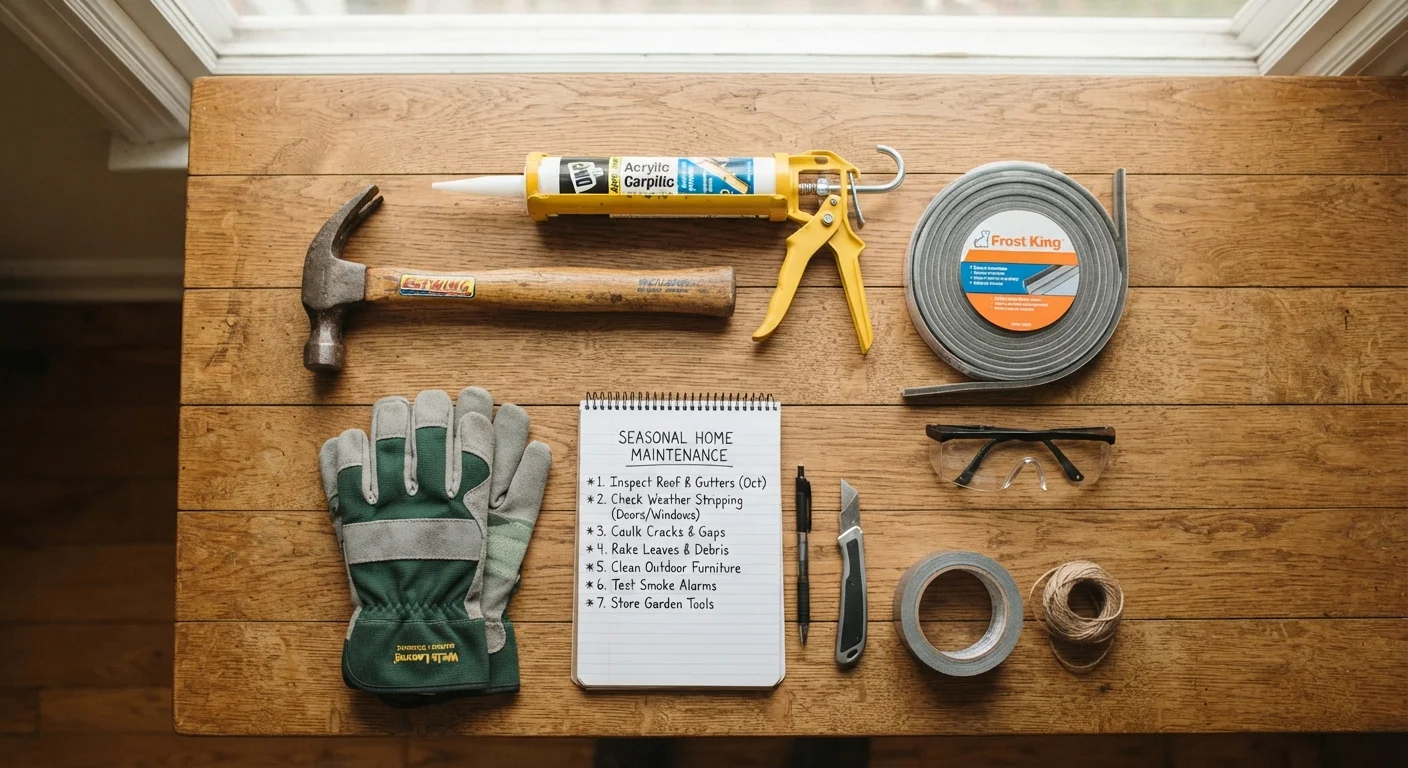
Home maintenance tools and a seasonal checklist arranged neatly on a wooden surface.

Key Takeaways

Spreading maintenance across four seasons prevents small issues from becoming expensive repairs.
Most checklist tasks are DIY-friendly; a handful require a licensed professional for safety.
Consistent seasonal inspections protect your home's structure, systems, and energy efficiency.
Skipping routine upkeep often multiplies long-term repair costs significantly.
Keeping a simple maintenance log makes it easier to spot recurring problems early.
45–90 min

Summary

28 items · 45–90 minutes per season

Why a Seasonal Rhythm Beats a Random Repair List

Home maintenance is easiest when it follows a predictable beat rather than a reactive scramble. Grouping tasks by season means you're always working with the calendar — sealing gaps before cold arrives, clearing gutters before heavy rain, servicing cooling systems before summer peaks. This approach also distributes costs and effort across the year rather than hitting all at once.

As our article on the real cost of deferred home maintenance explains, postponing even small repairs often multiplies what you'll eventually pay. This checklist is designed to help you stay ahead of that curve.

Work through each section at the start of the relevant season. Check tasks off as you go, note anything that needs a professional, and keep a simple log — even a dated notes app entry works well.

Required

Caulk gun and weatherstripping

Used to seal gaps around windows, doors, and exterior penetrations each season.

Required

Ladder (6-ft and extension)

Required for safely accessing gutters, roof edges, and high exterior areas.

Required

Multimeter or GFCI outlet tester

Used to test outlet function and verify GFCI circuits trip correctly.

Required

Pipe insulation or heat tape

Applied to exposed pipes in unheated areas to reduce freeze risk in winter.

Required

Replacement HVAC filters

Kept on hand so filters can be swapped out at the start of each heating and cooling season.

Optional

Flashlight and inspection mirror

Helpful for inspecting crawlspaces, attics, under sinks, and other low-light areas.

Optional

Notebook or maintenance log app

Used to record completed tasks, observed issues, and professional service dates each season.

How to Use This Checklist

The checklist below is organized by season. Items marked must are non-negotiable for safety or structural integrity. Items marked should are strongly recommended to maintain efficiency and value. Nice-to-have items are worth doing when time and budget allow.

For tasks involving electrical panels, gas lines, roofing at height, or structural components, always consult a licensed professional. Our guide on knowing where the DIY boundary is can help you assess what's safe to tackle yourself.

Some Tasks Always Need a Licensed Pro

Electrical panel work, gas line connections, structural repairs, and any task requiring a permit are not DIY territory — attempting them without proper training and licensing can create serious safety hazards and may void your homeowner's insurance. When in doubt, contact a licensed contractor and ask about local permit requirements before starting. See our guide on understanding your home's electrical panel for more on what homeowners can and cannot safely do.

Spring

Inspect the roof for winter damage — look for missing, cracked, or curled shingles and have a roofer assess anything that concerns you. Must
Clean gutters and downspouts of debris accumulated over winter, and check that water drains away from the foundation. Must
Test all smoke detectors and carbon monoxide alarms; replace batteries and any units older than ten years. Must
Inspect exterior caulking around windows, doors, and penetrations; replace any that is cracked or missing. Should
Service your air conditioning system — clean or replace filters and consider a professional tune-up before peak cooling season. Should
Check exterior paint and siding for peeling or water damage, and touch up or plan repairs before summer heat sets in. Nice to have

Summer

Check window and door screens for tears; repair or replace to keep insects out while windows are open. Should
Inspect deck, porch, and fence structures for rot, loose fasteners, or wobbly railings, and make repairs before regular use. Must
Test your ground-fault circuit interrupter (GFCI) outlets — especially near water sources — by pressing the test button and verifying they trip correctly. Must
Clean dryer exhaust vent from the exterior to remove lint buildup, which is a leading cause of home fires. Must
Check attic ventilation and insulation levels to reduce cooling costs and prevent moisture buildup. Should
Flush the hot water heater tank to remove sediment that reduces efficiency and shortens the unit's lifespan. Nice to have

Autumn

Have your heating system serviced by a licensed HVAC technician before the first cold snap — include furnace, heat pump, or boiler as applicable. Must
Clean gutters again after leaves have fallen to prevent ice dams and water overflow damaging the roofline. Must
Seal gaps around doors, windows, and utility penetrations with weatherstripping or caulk to reduce heat loss. Must
Drain and store outdoor hoses; shut off exterior faucets and, in cold climates, insulate or drain in-ground irrigation lines. Should
Test sump pump operation before the rainy season by pouring water into the pit and confirming it activates. Should
Stock emergency supplies — flashlights, batteries, a portable charger, and basic repair materials — ahead of winter storms. Nice to have

Winter

Inspect pipes in unheated spaces (garages, crawlspaces, exterior walls) and add insulation or heat tape to prevent freezing. Must
Check the basement and crawlspace for moisture, efflorescence (white mineral deposits on walls), or signs of seepage after rain or snowmelt. Must
Replace HVAC filters if not done in autumn, and keep vents clear of furniture or drapes to maintain efficient airflow. Should
Inspect fireplace and wood stove flues for creosote buildup; have a certified chimney sweep clean them annually if used regularly. Must
Walk the interior room by room looking for drafts, water stains on ceilings, or window condensation that signals insulation or seal issues. Should
Use winter downtime to organize maintenance records, plan spring projects, and budget for any repairs identified during the year. Nice to have
Check and clear snow or ice from dryer and HVAC exhaust vents after major storms to prevent dangerous backdrafting. Must
Review your homeowner's insurance policy annually to ensure coverage reflects any improvements or changes made during the year. Nice to have

Pairing Home and Garden Maintenance

Many seasonal home tasks overlap naturally with yard and garden work. While you're inspecting exterior walls in spring, it's a natural moment to assess your planting beds or check irrigation lines. In autumn, closing down your garden properly protects soil structure and perennials — our end-of-season garden shutdown checklist walks through that process in detail.

For month-by-month yard guidance to complement this home checklist, see seasonal garden tasks for every month. Just as your home benefits from structured seasonal attention, so does your outdoor space — and tackling both together on the same weekend makes efficient use of your time.

If your seasonal routines extend to your vehicle, the same logic applies there too. See our seasonal car maintenance checklist for a parallel approach to keeping your car ready for weather changes.

Don't Ignore Recurring Issues

If you spot the same problem — a persistent damp patch, a door that won't close properly, a circuit breaker that trips repeatedly — two seasons in a row, treat it as a priority, not background noise. Recurring symptoms almost always indicate an underlying issue that worsens over time. Our article on common home maintenance myths covers how ignoring early warning signs can lead to much costlier repairs later.

Home & Garden Editorial Team is the collective byline for our editorial team and contributor network. Articles published under this byline or an editorial pen name are researched, written, and reviewed according to our editorial standards for clarity, consistency, and independence before publication.

View all articles by Home & Garden Editorial Team →
Disclaimer: The content on this site is for informational purposes only and is not a substitute for professional advice. Always consult a qualified professional for guidance specific to your situation.