

Key Takeaways
Start here
Choosing the Right Spot
Next
Deciding What to Grow
Then
Preparing the Ground
When you're ready
Planting and Early Care
Ongoing
Keeping the Garden Going
Choosing the Right Spot
Before you buy a single seed, walk your yard and observe where sunlight falls. Vegetables need a minimum of six hours of direct sun daily — eight is better for fruiting crops like tomatoes and peppers. Low-light spots favor leafy greens, but even they struggle below four hours.
Look for flat ground or a gentle slope with no standing water after rain. Poor drainage drowns roots and promotes disease. Avoid areas directly under large trees, which compete for water and nutrients and create too much shade.
Proximity to a water source is practical, not optional. Dragging a hose across the yard becomes a real deterrent on busy evenings, so pick a spot close to an outdoor spigot. Also note any areas with strong prevailing wind, which can dry soil rapidly and damage young transplants.
Start smaller than you think you need
A 4×4 foot bed is a genuinely good first garden. It's easy to water, weed, and observe — and the lessons you learn in one compact space apply directly when you expand. Resist the urge to go big in year one; a well-tended small plot outperforms a neglected large one every time.
Deciding What to Grow
Grow what your household actually eats. This sounds obvious, but many first-timers plant based on what seems garden-worthy rather than what ends up on the dinner table. A few rows of lettuce you'll use in salads beats a sprawling pumpkin patch you have no plan for.
Match your crop choices to your local growing season. In most of the continental US, cool-season crops — lettuce, spinach, peas, radishes — go in early spring and again in early fall. Warm-season crops — tomatoes, cucumbers, beans, zucchini — wait until after your last frost date.
Last frost date
The average date after which freezing temperatures are unlikely in your area. Warm-season vegetables should not be planted outdoors before this date.
Cool-season crops
Vegetables that grow best in cooler temperatures — typically spring and fall — and may bolt or turn bitter in summer heat. Examples include lettuce, spinach, and peas.
Warm-season crops
Vegetables that require warm soil and air temperatures to thrive, such as tomatoes, cucumbers, and beans. They are killed by frost.
Direct sowing
Planting seeds straight into the garden bed rather than starting them indoors first. Some crops — like carrots and beans — prefer this method.
Soil amendment
Any material mixed into soil to improve its texture, drainage, or nutrient content. Compost is the most common and widely useful amendment.
Transplant
A seedling started indoors or in a nursery and then moved to the garden. Transplants give slow-growing crops a head start on the season.
Start with no more than four or five varieties. Diversity is good, but complexity kills beginner enthusiasm. If you want to grow more without expanding your in-ground plot, see our guide to container gardening for proven options in pots and planters.
Preparing the Ground
Healthy soil is the foundation of a productive garden. Most native yard soil benefits from amendment before planting. Dig down eight to twelve inches and work in two to four inches of compost — store-bought or homemade. Compost improves drainage in clay soils, boosts water retention in sandy soils, and feeds the microbial life plants depend on.
A basic soil test, available through many cooperative extension offices, tells you the pH and nutrient levels of your soil. Most vegetables prefer a pH between 6.0 and 7.0. Adjusting outside that range before planting is far easier than correcting problems mid-season.
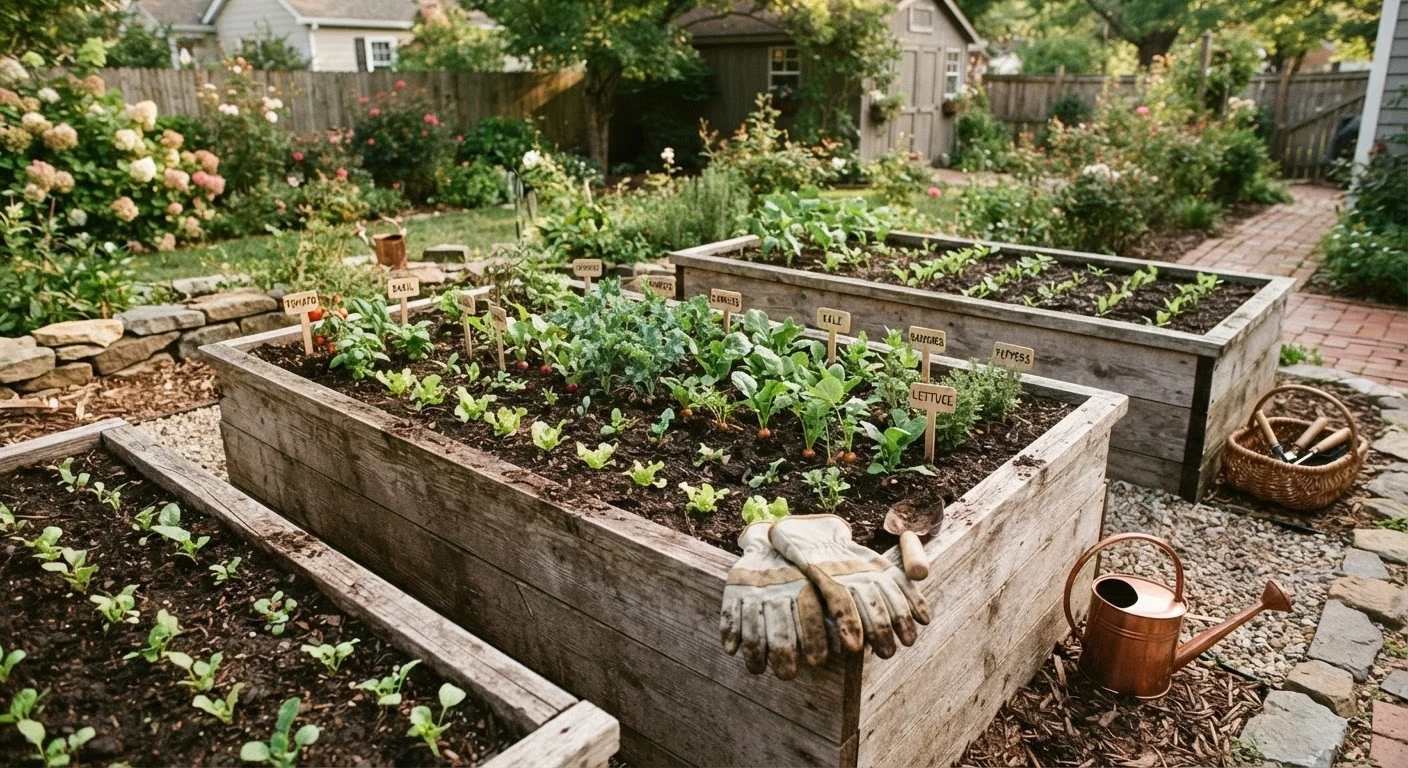
If building a raised bed, fill it with a mix of topsoil and compost. Raised beds warm up faster in spring, drain well by default, and let you sidestep whatever your native soil looks like. Even an eight-inch-deep raised bed gives roots enough room for most vegetables. For more on timing and bed preparation, our spring garden prep guide covers the full process step by step.
If you'd like to enrich your soil using kitchen waste rather than buying bags of compost, composting at home is simpler than most people expect and costs almost nothing to set up.
Planting and Early Care
Read seed packets carefully — they contain spacing, depth, and timing information specific to each crop. Crowding is one of the most common beginner mistakes. Plants that compete for space produce less and are more vulnerable to disease and pests.
Some crops are best started from transplants (seedlings), especially tomatoes and peppers, which need a long growing season. Others, like beans, carrots, and beets, prefer to be sown directly in the ground and don't transplant well. Seed packets will say which approach is recommended.
Water transplants in deeply on planting day. For seeds, keep the top inch of soil consistently moist until germination. After that, shift to deeper, less frequent watering to encourage roots to grow downward rather than staying near the surface.
Seedlings can be fragile in the first few weeks. If yours seem to struggle — becoming leggy, wilting, or simply disappearing — our article on why seedlings fail explains the most common causes and how to fix them.
Keeping the Garden Going
Two habits will carry you through most of the season: regular watering and consistent weeding. Weeds compete directly with vegetables for water, nutrients, and light. Pulling them when they're small — before they set seed — is far less work than dealing with an established weed problem later.
Mulching the soil surface with two to three inches of straw, shredded leaves, or wood chips slows weed growth, retains moisture, and moderates soil temperature. It's one of the highest-return tasks in any vegetable garden.
Watch your plants rather than following a rigid schedule. Yellowing leaves, wilting despite moisture, or unusual spots on foliage are early signals worth investigating. Many problems are easily corrected when caught early but become harder to manage once they spread.
Harvesting on time matters too. Crops like zucchini and beans left too long on the plant signal the plant to stop producing. Check your garden every day or two during peak season and harvest regularly to keep production going.
Growing your own vegetables naturally connects to how you cook and eat. If you're looking to make the most of a garden harvest in the kitchen, eating more nutritiously offers practical, low-effort ideas for building better meals around fresh ingredients.