

Key Takeaways
Our Verdict
No single container type wins across every situation. Glass is the most durable and versatile option for most prepped meals, while plastic suits grab-and-go convenience and portability. Compartment trays fill a specific niche when texture and separation matter. The airtight seal — regardless of material — is the deciding factor for freshness and safety.
| Best for | Recommended |
|---|---|
| Reheating directly in the container | Glass containers |
| Portable lunches and on-the-go meals | BPA-free plastic containers |
| Mixed-texture meals like grain bowls | Compartment trays |
| Long freezer storage | Glass or heavy-duty plastic with tight lids |
Why Your Container Choice Actually Matters
Most people focus on what they cook during meal prep — and far less on how they store it. But the container you choose affects moisture retention, odor transfer, seal integrity, and even whether a meal can go straight from fridge to oven. Getting this right is one of the most practical steps you can take to reduce food waste and keep meals tasting good on day four.
For a complete picture of how storage fits into the broader prep process, see our Weekly Meal Prep Playbook — it covers everything from planning to portioning. This article zeroes in on the container question specifically, comparing the three formats you're most likely to encounter: glass, plastic, and compartment trays.
| Glass | Plastic (BPA-free) | Compartment Trays | |
|---|---|---|---|
| Odor & stain resistance | Excellent — non-porous | Moderate — absorbs over time | Varies by material |
| Microwave safe | Yes (lid-dependent) | Usually yes | Usually yes |
| Oven safe | Often yes (check specs) | No | Rarely |
| Portability | Heavy, breakable | Lightweight, durable | Moderate weight |
| Texture preservation | Good with tight seal | Good with tight seal | Excellent — foods stay separated |
| Longevity | Many years if handled well | 1–2 years before degrading | Varies widely |
| Upfront cost | Higher | Lower | Low to moderate |
Glass Containers: Durable, Versatile, and Odor-Resistant
Tempered glass containers with locking or snap-fit lids are widely considered the most reliable option for storing cooked meals. Glass is non-porous, which means it doesn't absorb food odors or stains the way plastic can after repeated use. It's also safe for oven reheating (check manufacturer specs — most lids are not oven-safe), microwave use, and dishwasher cleaning.
The main trade-off is weight and fragility. Glass containers are heavier and can break if dropped, which makes them less ideal for packed lunches or commutes. They also tend to cost more upfront. That said, they last significantly longer than plastic alternatives, making them a sound long-term investment for regular meal preppers.
Label Every Container Before It Goes In
Write the contents and date on a piece of masking tape or a reusable label before refrigerating. This takes ten seconds and eliminates the guesswork that leads to food being kept too long. A simple system like this pairs well with understanding how long different foods actually stay safe in the fridge.
Glass is especially well-suited for acidic dishes — tomato-based sauces, citrus marinades, and pickled vegetables — because it won't react with or absorb those flavors over time.
Plastic Containers: Convenient but Not Without Trade-offs
Lightweight, stackable, and often less expensive, plastic containers are a practical default for many households. For meal prep purposes, look for containers labeled BPA-free (BPA, or bisphenol A, is a chemical used in some plastics that has prompted food safety concerns). Most quality meal prep plastics today meet this standard.
The limitations are real: plastic becomes scratched over time, and those scratches harbor bacteria and absorb odors. Containers that smell faintly of last week's curry — even after washing — are past their useful life. Plastic is also generally not safe for oven use, and some types warp or leach compounds when repeatedly microwaved on high heat.
For portability and budget, plastic still makes sense. Pair it with safe refrigerator storage guidelines to make sure you're not relying on a scratched container past the three-to-four day window for most cooked foods.
Compartment Trays: A Texture-Saving Solution
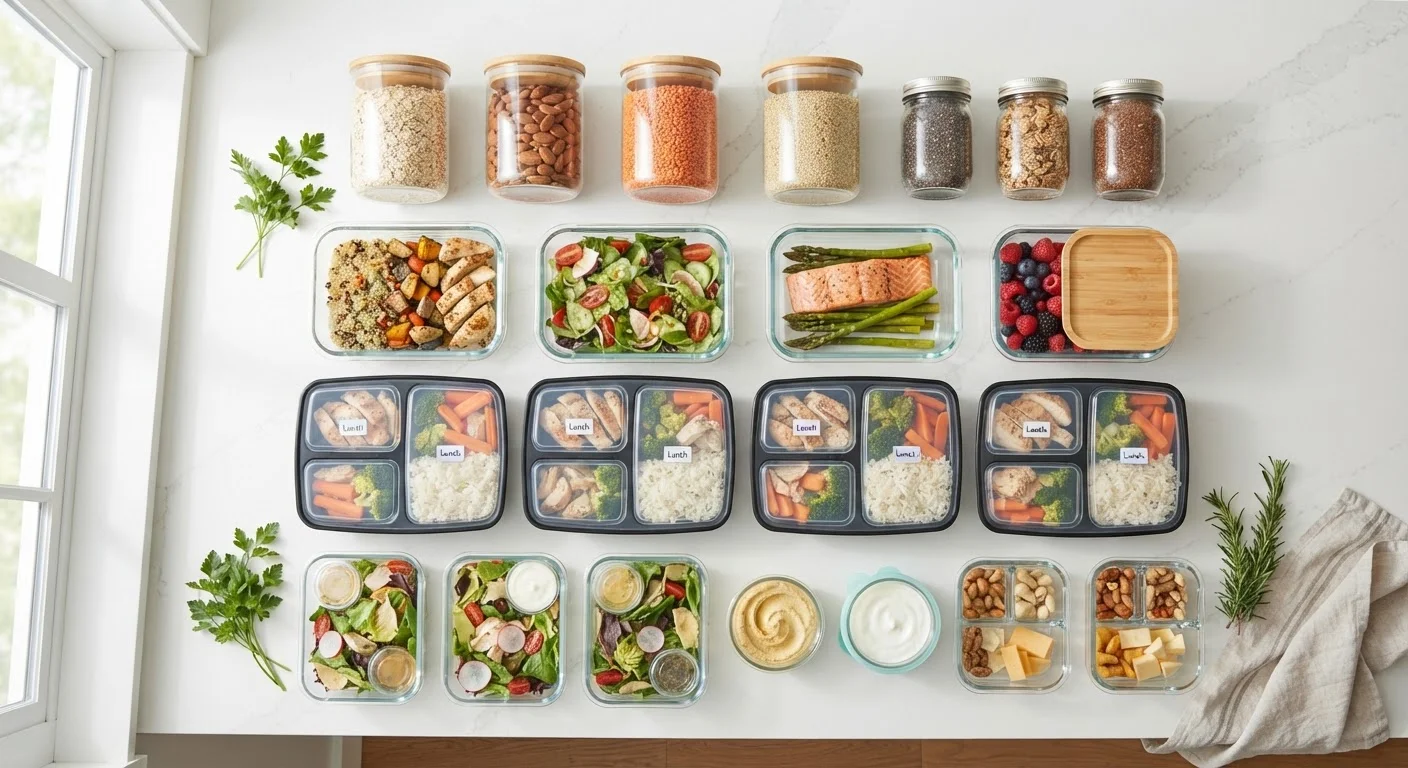
Compartment trays — containers divided into two, three, or four separate sections — solve a specific problem: wet foods making dry foods soggy. A grain bowl where the dressing has soaked through the quinoa by Tuesday morning is a texture problem, not a safety one, but it's enough to put people off meal prepping altogether.
By keeping sauces, proteins, grains, and vegetables separated until eating, compartment trays help meals feel fresher and more intentional. This is particularly useful when prepping individual components rather than fully assembled dishes.
The trade-off is that compartment trays are typically harder to find in glass, though options exist. Many are plastic, which brings the same concerns noted above. Leakage between compartments is also a risk with lower-quality versions — worth checking reviews before relying on one for a packed bag.
The Non-Negotiables: Airtight Seals and Proper Cooling
Regardless of material, two factors matter more than any branding or feature list. First: the seal. An airtight lid dramatically slows oxidation and moisture loss, both of which degrade food quality and accelerate spoilage. Test any lid before buying — it should require deliberate pressure to open and close, with no give around the edges.
Second: food temperature before sealing. Placing hot food directly into a sealed container traps steam, which condenses into water and creates conditions that accelerate bacterial growth. The FDA recommends getting cooked food into the refrigerator within two hours of cooking. Spread food out on a sheet tray or shallow dish to cool faster before transferring to containers.
Common storage misconceptions — like the idea that covering hot food protects it — are covered in more detail in our article on food storage myths that waste groceries. And if you're weighing whether to store meals in the freezer instead, our comparison of freezer-first vs. fridge-only prep lays out the trade-offs clearly.
This article is for general informational purposes only and does not constitute food safety or medical advice. For specific food safety guidance, consult official resources such as the USDA or FDA.