

Key Takeaways
Our Verdict
Neither approach is universally superior — the right choice depends on how your week is structured and what you're cooking. Fridge-only prep wins for freshness, texture, and simplicity when you're eating through meals within four to five days. Freezer-first prep pays off when you cook in bulk, want a backup supply, or have a smaller household where eating the same meal repeatedly isn't realistic.
| Best for | Recommended |
|---|---|
| Busy adults eating prepped meals within five days | Fridge-Only Prep |
| Those cooking large batches and wanting a month-long meal reserve | Freezer-First Prep |
| Solo households or anyone prone to food waste | Freezer-First Prep |
| Cooks who prioritize texture and variety throughout the week | Fridge-Only Prep |
How Each Approach Works
Meal prep generally falls into two storage strategies. Fridge-only prep means cooking meals or components ahead and storing everything in the refrigerator to eat within the next four to five days. Freezer-first prep means intentionally cooking in larger quantities and portioning meals directly into freezer-safe containers before they're needed — treating the freezer as your primary storage system rather than a backup.
If you're new to either method, the first-timer's roadmap to meal prep covers the planning and shopping basics that apply to both. Understanding the trade-offs, though, helps you decide which fits your actual week — not someone else's ideal schedule.
| Fridge-Only Prep | Freezer-First Prep | |
|---|---|---|
| Typical storage window | 3–5 days | 1–3 months |
| Texture preservation | Excellent for most foods | Variable; soups/stews hold best |
| Day-of convenience | Ready immediately | Requires overnight thawing |
| Waste risk | Higher if plans change | Lower; frozen meals keep longer |
| Best food types | Grains, proteins, roasted veg | Soups, stews, beans, casseroles |
| Batch cooking suitability | Moderate | High |
| Upfront prep time | Lower per session | Higher, but covers more days |
Where Fridge-Only Prep Has the Edge
The clearest advantage of fridge-only prep is texture. Foods like roasted vegetables, leafy grain bowls, cooked pasta, and proteins with crispy exteriors hold their quality far better when refrigerated than when frozen and thawed. Freezing causes ice crystals to form inside food cells; when those crystals melt, they break down the cellular structure — which is why previously frozen broccoli turns mushy and crusty chicken loses its crunch.
Fridge prep is also more flexible day-to-day. If your plans change and you end up eating out Tuesday instead of Wednesday, you just push everything back a day. With frozen meals, you need to think ahead and thaw overnight, which requires a bit more planning discipline.
For guidance on how long specific foods stay safe in the refrigerator, the safe fridge storage times for prepped meals is a useful quick reference. Knowing those windows helps you avoid both waste and food safety risks.
Label Everything Before It Goes In
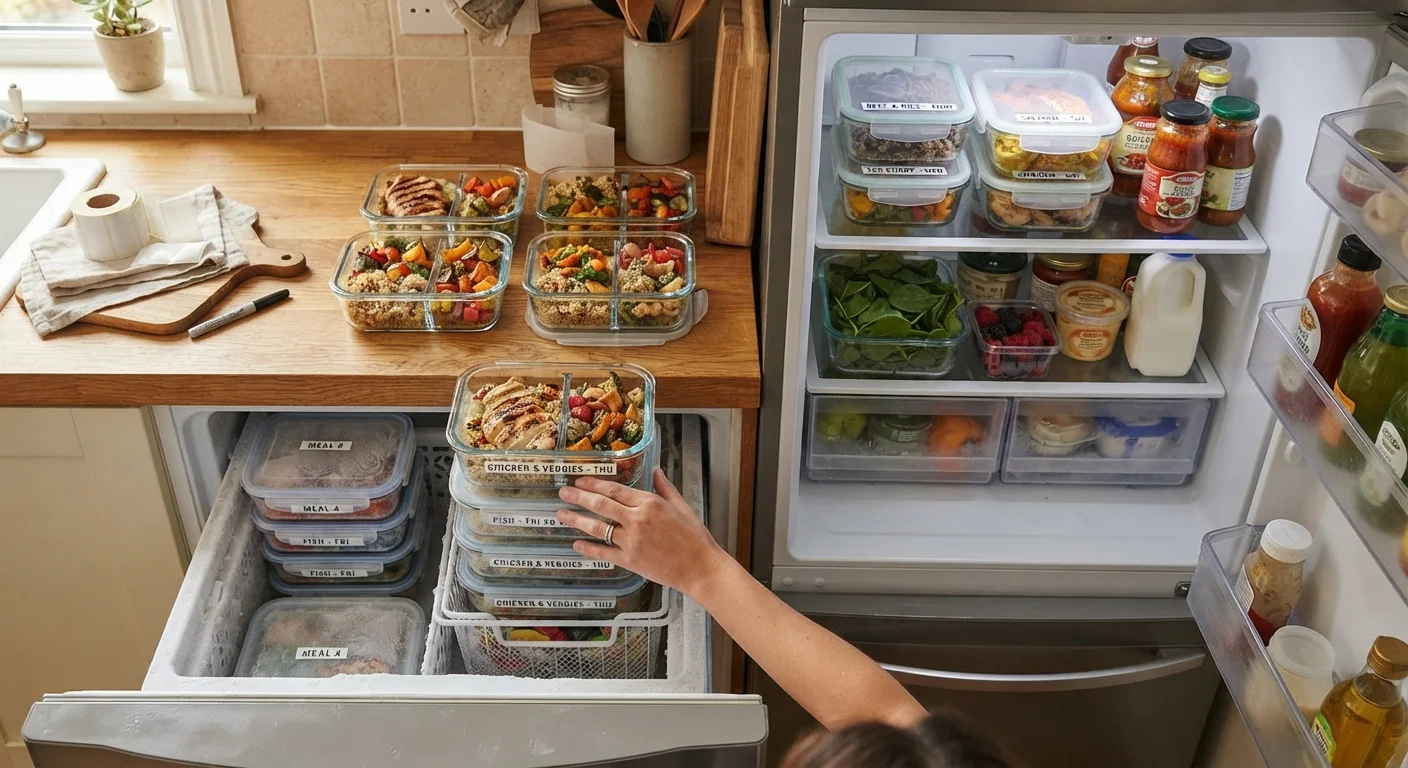
Whether you're using the fridge or freezer, label containers with the dish name and the date it was made. Fridge prep items should have an eat-by date based on ingredient type; frozen meals should note the freeze date so you can use older portions first. A simple strip of masking tape and a permanent marker is all you need — don't rely on memory.
Where Freezer-First Prep Has the Edge
Freezer-first prep shines when volume and time savings matter most. Cooking a double or triple batch of soup, chili, casserole, or braised meat on a Sunday and freezing meal-sized portions means you have ready-to-heat dinners for weeks — not just days. That's a meaningful time investment that pays back on the busiest weeknights.
It also reduces food waste significantly. If you're cooking for one or two people, finishing five portions of the same meal before they spoil can be a real challenge. Freezing a few of those portions right away removes that pressure entirely. The meal prep strategies for solo households explores this in more detail for smaller households.
Foods that freeze particularly well include: soups and stews, cooked beans and lentils, cooked grains like rice and farro, ground meat dishes, and baked goods. Foods that generally don't freeze well include raw cucumbers, cooked eggs, cream-based sauces, and anything with high water content that's meant to stay crisp.
Don't Freeze Food That's Still Warm
Placing hot or warm food directly into the freezer raises the internal temperature of the freezer and can partially thaw nearby items. It also promotes condensation, which leads to ice crystals and freezer burn. Cool cooked food to room temperature first — no more than two hours at room temperature for food safety — then refrigerate briefly before transferring to the freezer if needed.
Combining Both Strategies Intelligently
The most practical approach for many households is a hybrid. Prep component foods — grains, proteins, roasted vegetables — for the fridge, where texture matters most. Simultaneously, freeze complete meals (soups, stews, casseroles) as an insurance policy for the nights when nothing goes to plan. This way you're not locked into one system.
How you store prepped food matters just as much as where you store it. Container choices directly affect food quality and shelf life — airtight seals and freezer-safe materials make a significant difference in both methods. For a broader look at how prep style affects flexibility, see the comparison between prepping components vs. full meals.
Your storage approach should also align with how you cook overall. If you batch cook rather than prep complete meals, that decision affects which storage method makes more sense — a distinction worth understanding before committing to a weekly system. See batch cooking vs. full meal prep for a clear breakdown of those differences.