

Key Takeaways
Why Component Prepping Beats Cooking Full Meals in Advance
Most meal prep advice tells you to cook Monday's lunch, Tuesday's dinner, and so on — neat, labeled containers stacked in your fridge. In practice, this approach gets rigid fast. Life shifts: you eat out unexpectedly, your appetite changes, or by Wednesday you're tired of the same flavor combination you were excited about on Sunday.
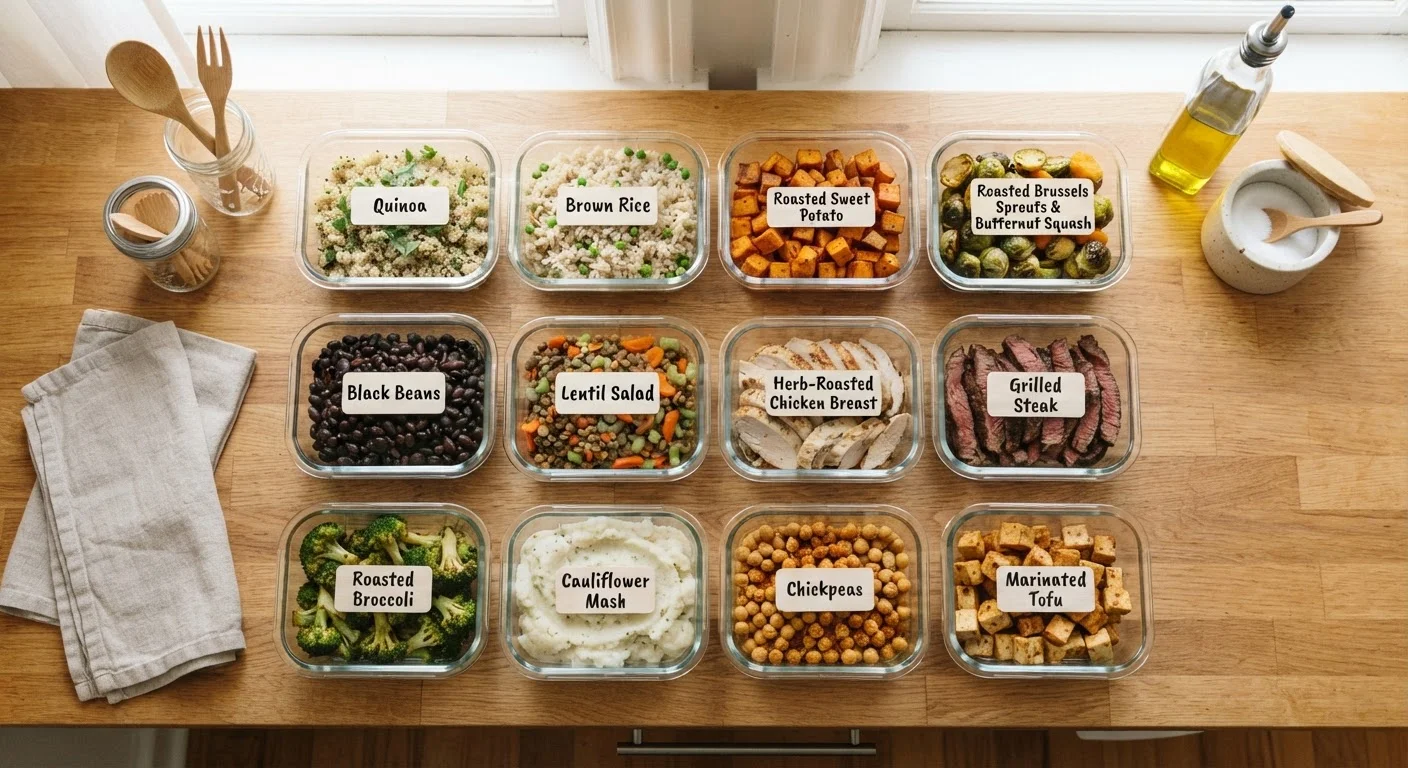
Component prepping sidesteps this problem entirely. Instead of assembling complete dishes, you cook the raw ingredients — a batch of grains, a tray of roasted vegetables, a protein or two — and store them separately. At mealtime, you mix and match based on what sounds good. The result is far more variety from a single prep session than you'd ever get from pre-built meals.
If you're newer to structured food prep, the practical first-timer's roadmap lays out the foundational steps before you experiment with component-based strategies.
Cook one or two proteins in neutral seasoning so they work across multiple cuisines
Heavily seasoned proteins lock you into a specific flavor profile, limiting how you can use them. Lightly seasoned or plain-cooked proteins — think poached chicken, baked tofu, or boiled eggs — absorb whatever sauce or seasoning you add at serving time, making them far more versatile. This small shift dramatically expands the number of meals you can build from a single batch.
Prepare a single batch of whole grains and use it as a base for every meal format
Whole grains like brown rice, farro, or quinoa hold well in the refrigerator for several days without texture loss, making them the most reliable prep-ahead component. A large batch can anchor bowls, fill wraps, bulk up soups, or serve as a side dish with minimal additional effort. They also pair with nearly any protein or vegetable without competing flavors.
Roast vegetables at high heat in large batches and reheat or serve at room temperature
Roasting concentrates flavor and produces a satisfying texture that holds up well in the fridge, unlike steamed or boiled vegetables, which tend to go soft and bland. High-heat roasting (around 400–425°F) also works efficiently — one sheet pan can cook two to three vegetable varieties at once if they have similar cooking times. Room-temperature vegetables work well in salads and wraps without needing to be reheated.
Keep raw salad greens and fresh vegetables stored separately as a quick add-on component
Washed and dried salad greens can last several days in the fridge when stored in a breathable container lined with a paper towel to absorb moisture. Keeping them separate from cooked components means you always have something fresh to add, preventing meals from feeling heavy or monotonous. Raw vegetables like sliced cucumbers, shredded carrots, or cherry tomatoes also prep quickly and add crunch and color with no cooking required.
Prepare two or three sauces or dressings to dress components differently across the week
Sauces are the most effective tool for making the same set of ingredients taste distinct from one day to the next. A simple tahini dressing, a soy-ginger vinaigrette, and a yogurt-herb sauce give you three entirely different flavor directions from identical base components. Sauces generally keep well for five to seven days in sealed jars and take only minutes to mix together.
Best Practices for Prepping Each Component Type
Each component category — proteins, grains, and vegetables — has its own storage behavior and preparation logic. Understanding these differences helps you get the most out of every prep session.
For a broader view of how component prep fits into weekly planning overall, the weekly meal prep playbook covers every stage from shopping to portioning.
Storing Components So They Actually Stay Fresh
The way you store prepped components matters as much as how you cook them. Grains and proteins are generally safe in the refrigerator for three to four days when kept in airtight containers. Roasted vegetables can last about the same, though delicate greens and anything dressed should be kept separate and consumed sooner.
Sauces, dressings, and toppings — cheese, nuts, fresh herbs — should always be stored apart and added at serving time. This one habit preserves texture and prevents sogginess across multiple days. For a deeper look at how different containers affect food quality, see our guide on container choices and food storage.
Safe Refrigerator Storage Timeframes
The USDA recommends storing cooked poultry, meat, and seafood in the refrigerator for no more than three to four days. Cooked grains and vegetables follow similar guidelines. When in doubt, label containers with the date they were prepared and discard anything beyond the safe window. If you want to extend storage further, see how freezer-first prep compares to fridge-only prep.
If your schedule doesn't allow a single dedicated session, component prepping pairs naturally with a shorter, less time-consuming approach. The article on building a prep routine that doesn't consume your weekend offers a practical framework for that.
When you build variety into a single set of components, you also avoid the flavor fatigue that sets in by midweek. Our piece on keeping prepped meals from tasting identical by Thursday shows how small finishing touches — a different sauce, a fresh herb, a squeeze of citrus — make the same ingredients feel like different meals.
3–4 days
Safe fridge storage for most cooked components
The USDA advises consuming refrigerated cooked proteins and grains within three to four days to maintain food safety.
5–7 days
Typical shelf life for homemade sauces and dressings
Most oil- or acid-based sauces stored in sealed jars remain usable for up to a week, making them one of the most durable prep-ahead components.