

Key Takeaways
Provides genuine social companionship rabbits need
A bonded companion meets a rabbit's social needs in ways that human interaction cannot fully replicate, reducing stress-related behaviors like overgrooming and lethargy.
Reduces boredom and associated destructive behavior
Rabbits left alone for extended periods often become bored or anxious. A companion provides ongoing mental stimulation throughout the day.
Bonded pairs show measurably calmer behavior
Observational data from rabbit welfare organizations consistently shows that successfully bonded rabbits spend more time resting comfortably and display fewer stress indicators.
Mutual grooming supports hygiene in hard-to-reach areas
Rabbits groom each other around the face and ears — areas that are difficult for a single rabbit to clean independently — which can contribute to better baseline hygiene.
Bonding can fail, even with correct technique
Not every rabbit pair will accept each other. Some combinations remain incompatible despite patient, properly managed introductions, requiring permanent separate housing.
Doubles recurring veterinary and care costs
Two rabbits mean two annual wellness visits, two animals to spay or neuter, and two emergency funds — expenses that add up significantly over a rabbit's 8–12 year lifespan.
Territorial aggression can injure both animals
Rabbit bites and scratches during conflict can cause real injury. Introductions that are rushed or unsupervised carry a genuine risk of harm to one or both animals.
Space requirements increase substantially
A second rabbit requires an enclosure that is large enough to prevent resource-guarding conflict — many existing single-rabbit setups are simply not large enough for two.
Bonding process demands significant owner time
Daily supervised neutral-territory sessions, often for weeks or months, are the standard approach — a commitment that is easy to underestimate before starting.
Our Verdict
A second rabbit can meaningfully improve quality of life for a social, well-adjusted rabbit — and for an owner willing to invest in the bonding process. However, the path is rarely simple: it demands space, time, financial planning, and a realistic acceptance that not all pairings work out. Going in informed is the single most important thing you can do.
Owners whose current rabbit is already healthy, spayed or neutered, and showing behavioral signs of loneliness, and who have the space, budget, and patience the bonding process genuinely requires.
Why the Decision Deserves Careful Thought
Rabbits are not naturally solitary. In the wild, they live in social groups, and many domestic rabbits display clear signs of boredom or stress when kept alone — overgrooming, lethargy, or repetitive behaviors. A bonded companion can address these issues in ways that human interaction alone often cannot.
That said, the idea that any two rabbits will simply get along is a common misconception. Rabbits are highly territorial, and introducing an unfamiliar animal into an established space can trigger aggression that ranges from chasing and fur-pulling to serious biting. The decision to add a second rabbit is genuinely consequential — for your pet's wellbeing, your budget, and your household routine.
If you're also weighing how companion dynamics work across species, our guide to getting a second cat explores similar territory and emotional challenges.
The Pros of Adding a Second Rabbit
When bonding succeeds, the benefits are real and observable.
Provides genuine social companionship rabbits need
A bonded companion meets a rabbit's social needs in ways that human interaction cannot fully replicate, reducing stress-related behaviors like overgrooming and lethargy.
Reduces boredom and associated destructive behavior
Rabbits left alone for extended periods often become bored or anxious. A companion provides ongoing mental stimulation throughout the day.
Bonded pairs show measurably calmer behavior
Observational data from rabbit welfare organizations consistently shows that successfully bonded rabbits spend more time resting comfortably and display fewer stress indicators.
Mutual grooming supports hygiene in hard-to-reach areas
Rabbits groom each other around the face and ears — areas that are difficult for a single rabbit to clean independently — which can contribute to better baseline hygiene.
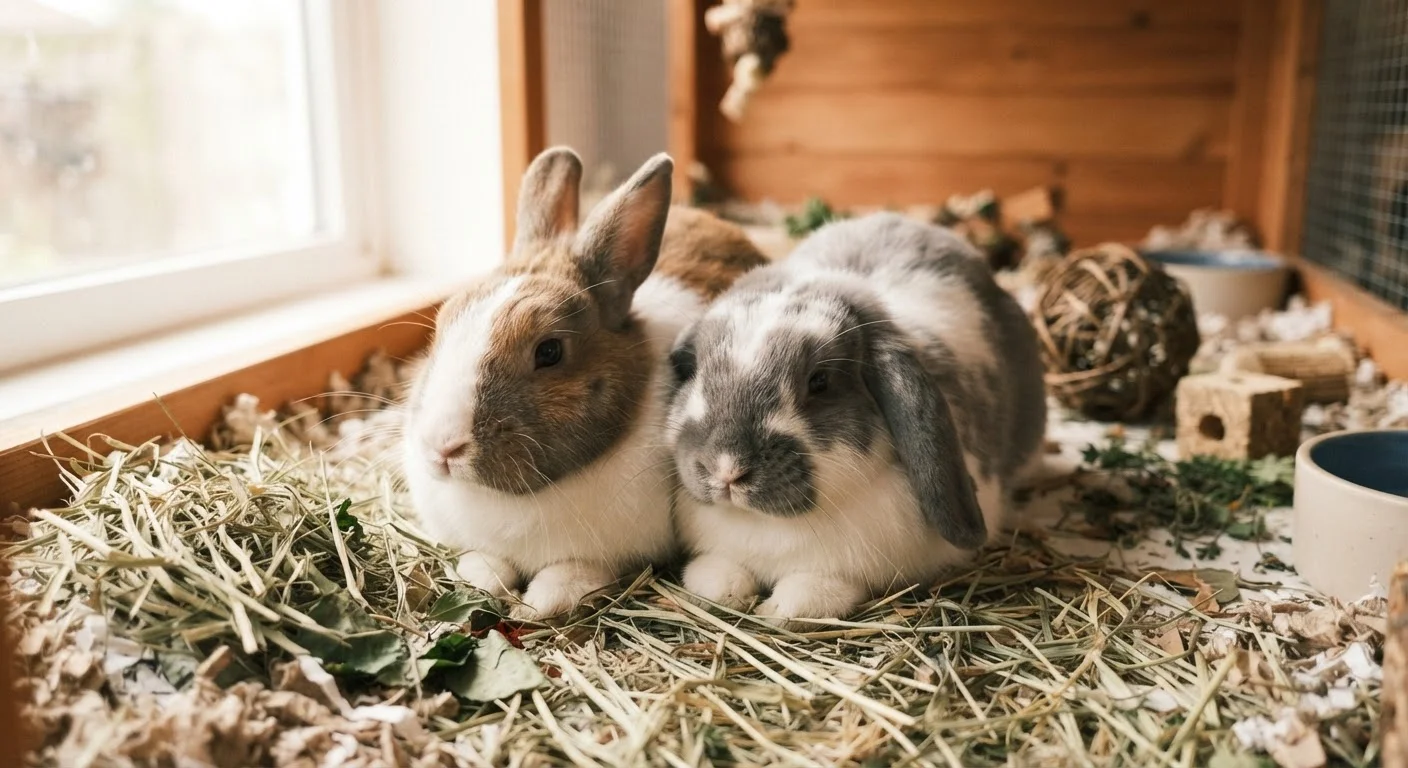
It's worth noting that rabbits bond deeply — a successfully paired duo will groom each other, sleep in contact, and show measurably calmer behavior compared to singly housed individuals. This companionship is difficult to replicate through human interaction alone, particularly for owners who work outside the home.
The Cons You Should Weigh Honestly
Every advantage of rabbit companionship comes with a counterweight that owners should understand before committing.
Bonding can fail, even with correct technique
Not every rabbit pair will accept each other. Some combinations remain incompatible despite patient, properly managed introductions, requiring permanent separate housing.
Doubles recurring veterinary and care costs
Two rabbits mean two annual wellness visits, two animals to spay or neuter, and two emergency funds — expenses that add up significantly over a rabbit's 8–12 year lifespan.
Territorial aggression can injure both animals
Rabbit bites and scratches during conflict can cause real injury. Introductions that are rushed or unsupervised carry a genuine risk of harm to one or both animals.
Space requirements increase substantially
A second rabbit requires an enclosure that is large enough to prevent resource-guarding conflict — many existing single-rabbit setups are simply not large enough for two.
Bonding process demands significant owner time
Daily supervised neutral-territory sessions, often for weeks or months, are the standard approach — a commitment that is easy to underestimate before starting.
What Happens If Bonding Doesn't Work
If two rabbits cannot be successfully bonded after a thorough, properly managed process, they may need to live in separate enclosures permanently. Some owners house incompatible rabbits in adjacent, visually separated spaces within the same room so each rabbit still has sensory awareness of another animal nearby. This is a legitimate outcome and not a failure of care — but it does require space and resources to manage well.
Rabbits that do not bond successfully may need to be housed in separate enclosures permanently — sometimes within the same room with a visual barrier. This is a real outcome to plan for, not a remote possibility.
Key Factors That Influence Success
Spay/neuter status: Bonding an unneutered rabbit with any other rabbit — regardless of sex — dramatically increases aggression and territorial marking. Most rabbit welfare organizations recommend that both animals be spayed or neutered and allowed to fully recover before formal introductions begin.
Personality matching: Age, energy level, and temperament all affect compatibility. Many shelters and rabbit rescues offer "speed dating" sessions where rabbits meet on neutral ground under supervision, which can help predict whether two animals are likely to tolerate each other.
Neutral territory introductions: The bonding process should never begin in your existing rabbit's enclosure. A neutral space — somewhere unfamiliar to both animals — reduces territorial behavior and gives the pairing a better starting point.
Space: Two rabbits need significantly more room than one. A single rabbit already requires more space than most commercial hutches provide. Two rabbits in an undersized enclosure is a reliable source of conflict. Assess your setup honestly before committing.
8–12 years
Typical domestic rabbit lifespan
The House Rabbit Society notes that domestic rabbits commonly live 8 to 12 years, making the decision to add a second rabbit a long-term commitment.
Weeks to months
Typical rabbit bonding timeline
Rabbit welfare organizations widely report that successful bonding between adult rabbits typically takes anywhere from several weeks to several months of structured introductions.
Ensuring your rabbit's overall care is solid — including diet — is equally important before adding stress to their environment. Our guide to common rabbit feeding myths covers key nutritional errors that are easy to overlook.
Financial and Practical Realities
A second rabbit effectively doubles your recurring costs: veterinary care (including spay/neuter for the new animal, annual checkups, and emergency funds), food, hay, bedding, and enrichment. Rabbits are also classified as exotic animals by many veterinary practices, which means specialist care can be more expensive than for cats or dogs.
Time is the other currency. The bonding process is not passive — it typically requires daily supervised sessions, careful monitoring of body language, and the willingness to separate animals immediately if escalation occurs. Owners who underestimate this time commitment often find the process stressful for both themselves and their pets.
If you're still in the early stages of deciding what kind of small pet fits your lifestyle, our overview of small pets for different living situations may help you think through the broader picture before committing to rabbits at all.