

Key Takeaways
Why Matching Pet to Lifestyle Matters More Than You Think
Choosing a small pet based on appearance or impulse is one of the most common mistakes new owners make. A mismatch between an animal's needs and your daily reality leads to stress for both parties — and, in many cases, welfare problems that could have been avoided.
The species profiles below aren't a ranking. They're a practical guide to help you identify which animal's care requirements genuinely align with your living situation, schedule, and household. If you're also weighing whether a dog or cat might be a better fit, our dog care hub and cat care hub cover the full scope of those commitments.
One factor every prospective small-pet owner should understand: small animals often hide signs of illness until a condition is serious. Before committing to any species, it's worth reading about why small pets deteriorate so rapidly so you're prepared to act early.
Freshwater Fish — Best for Small Spaces and Busy Schedules
Freshwater fish ask relatively little of your time once their tank is properly established. They don't require daily handling, produce no noise, and suit renters whose leases restrict furry or feathered animals. Their primary demand is environmental: water quality must be maintained consistently, which means regular partial water changes and monitoring of ammonia, nitrite, and nitrate levels.
The setup phase carries the steepest learning curve. A tank must be cycled — a biological process that establishes beneficial bacteria — before fish are introduced. Skipping this step is the leading cause of early fish loss. Our guide to setting up a freshwater aquarium walks through this process in full. For households with young children, fish provide a calm, visual experience without contact risks.
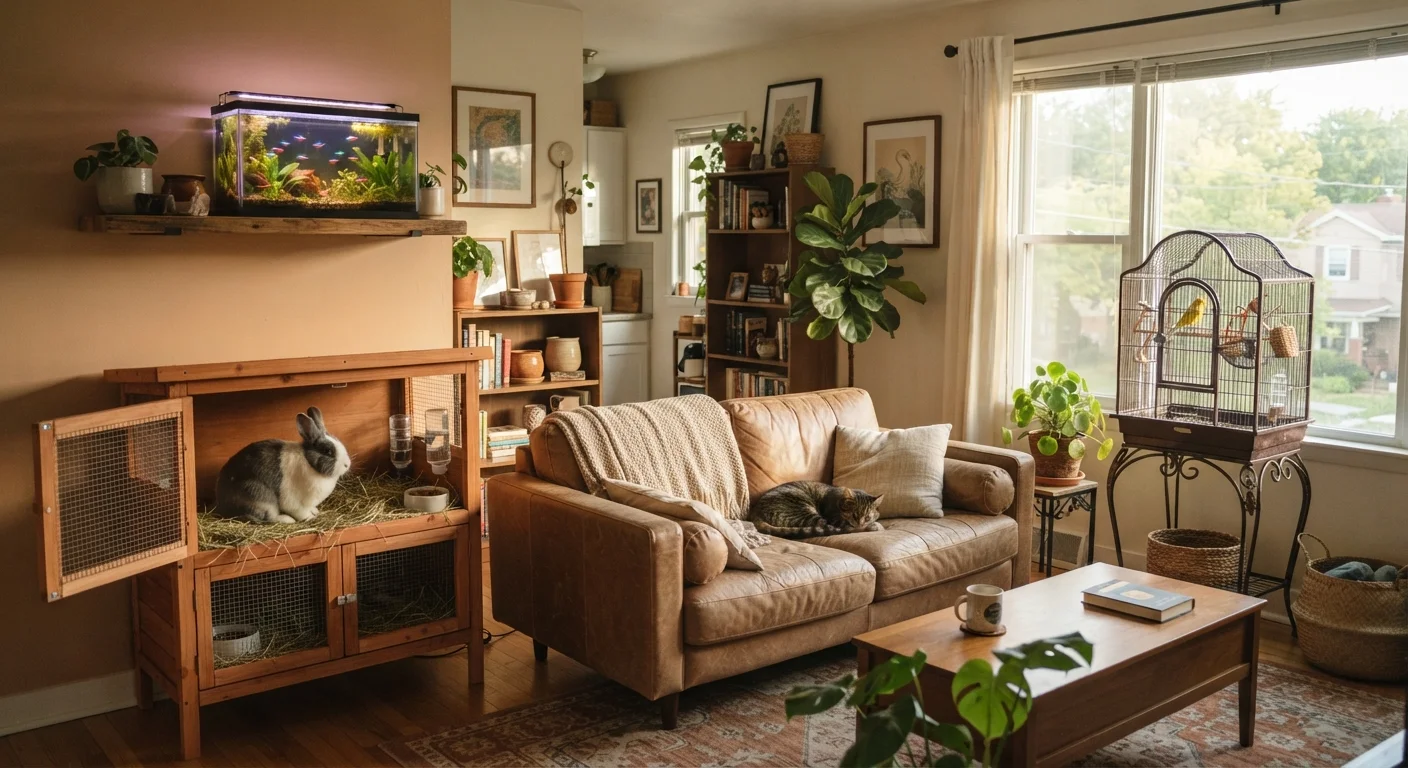
Fish suit renters and busy owners, but water quality management is non-negotiable from day one.
Hamsters — Suited to Quieter, Adult-Only or Older-Child Households
Hamsters are often marketed as ideal starter pets for young children, but their behavioral profile actually suits older children and adults better. Most hamster species are naturally crepuscular or nocturnal, meaning peak activity occurs in the evening and overnight. This makes them poor companions for very young children who interact during the day and may disturb a sleeping animal.
Hamsters also need significantly more space than standard pet-store cages provide. A minimum floor area of around 450 square inches is commonly recommended by welfare organizations, and enrichment — deep substrate for burrowing, a large wheel, foraging opportunities — is essential for psychological wellbeing. Our article on keeping a hamster happy in a small home covers practical setup ideas for apartment living.
Hamsters are nocturnal by nature — a mismatch with young children's daytime interaction expectations.
Guinea Pigs — Social Animals That Suit Family Homes With Time to Spare
Guinea pigs are among the most sociable small mammals kept as pets. They are highly vocal, active during daylight hours, and strongly prefer the company of their own species — most welfare organizations recommend keeping them in pairs or small groups rather than alone. This social need means that committing to guinea pigs often means committing to at least two animals.
They handle gentle interaction well and are generally more tolerant of handling than hamsters or mice, making them more compatible with calm, supervised children. Their dietary needs are specific: guinea pigs cannot synthesize vitamin C and require it through fresh vegetables and appropriate pellets daily. This is a non-negotiable care element that must be planned for consistently.
Guinea pigs are sociable and day-active, but their vitamin C requirement demands consistent daily attention to diet.
Rabbits — A Strong Match for Engaged Owners With Adequate Space
Rabbits are intelligent, long-lived animals — commonly reaching eight to twelve years — with complex physical and social needs that are frequently underestimated. They require substantial space for daily exercise, a hay-based diet (hay should form approximately 80–90% of intake), and ideally the company of a bonded rabbit companion. A solitary rabbit without sufficient stimulation can develop behavioral problems and signs of chronic stress.
If you're considering adding a second rabbit, the bonding process requires careful management. Our article on what to consider before getting a second rabbit outlines the territory and personality factors involved. Rabbits suit owners who can devote meaningful time daily and have the floor space to allow free-roaming periods. They are not a good fit for households where the animal would be largely confined to a small hutch.
Rabbits live over a decade and need daily exercise, companionship, and a hay-dominant diet — not a hutch-only life.
Budgerigars and Cockatiels — Best for Home-Based or Flexible-Schedule Owners
Small parrots like budgerigars and cockatiels are highly social birds that form strong attachments to their caregivers. This is both their appeal and their most significant welfare demand: they need regular daily interaction and mental stimulation. An owner who is away from home for long stretches without providing environmental enrichment or a companion bird risks a stressed, feather-destructive, or unhappy animal.
Noise is a real factor. Cockatiels are louder than budgerigars as a rule, though individual personalities vary considerably. Our article on budgerigar vs. cockatiel compares the two in depth. Both species require bird-safe home environments — common household hazards, including non-stick cookware fumes, are genuinely dangerous. See our guide to indoor bird hazards for a room-by-room safety overview.
Pet birds need daily social interaction — long hours alone without enrichment or company causes measurable psychological harm.
Before You Decide: Practical Questions Worth Asking First
Beyond species characteristics, a handful of situational questions can quickly narrow your options. Does your rental agreement permit pets — and if so, which types? Many landlords who prohibit cats and dogs allow caged or aquatic animals, but it's worth confirming in writing. Do you or anyone in your household have allergies? Rabbits and guinea pigs can trigger reactions in sensitive individuals just as cats can.
Check Your Lease Before Choosing a Species
Many rental agreements that prohibit cats and dogs still permit caged animals or aquariums — but the definitions vary. Ask your landlord or property manager for written clarification before purchasing any animal or equipment. Some leases specifically exclude rabbits or birds even where other small pets are allowed. Getting confirmation in advance protects both you and the animal.
Finally, consider your longer-term plans. Some small animals, including certain parrots and rabbits, can live well over a decade. A cockatiel may outlive a dog. The commitment you're making extends further than many people anticipate. Once you've chosen a species, use species-specific health resources — such as our species-by-species illness guide — to stay ahead of any welfare concerns.