

Key Takeaways
Why Rabbit Feeding Myths Are Genuinely Dangerous
Rabbits are among the most misunderstood pets in American households. Unlike dogs and cats, whose nutritional needs are widely discussed and well-documented in mainstream culture, rabbits suffer from a stubborn set of popular misconceptions — many rooted in cartoons and folk wisdom rather than veterinary science. The problem is that rabbits have highly sensitive digestive systems. What seems like a harmless treat or a convenient dietary shortcut can trigger gastrointestinal stasis, a potentially fatal condition in which the gut slows or stops moving.
Getting rabbit nutrition right matters more than many owners realize. If you're new to rabbit ownership, the first-time rabbit owner's guide covers housing, behavior, and diet basics in full.
Myth
Carrots are a rabbit's favorite food and a healthy daily staple.
Fact
Carrots are high in sugar and should be given only as an occasional treat — at most a small slice a few times per week.
The carrot-rabbit association is almost entirely a product of popular culture. In reality, carrots are root vegetables with a relatively high sugar content that rabbits' digestive systems are not well-adapted to process in volume. Frequent carrot feeding can contribute to obesity, dental disease, and disruption of the gut microbiome. Reserve carrot slices for rare treat use, and never substitute them for hay or leafy greens.
Myth
Iceberg lettuce is a great way to keep your rabbit hydrated.
Fact
Iceberg lettuce contains lactucarium, a compound that can cause diarrhea and digestive disturbance in rabbits, and should be avoided entirely.
While iceberg lettuce is mostly water, the small amount of lactucarium it contains can have a sedative-like and purgative effect on rabbits. Loose stools and diarrhea are serious in rabbits — they can cause rapid dehydration and may signal the beginning of a dangerous GI episode. If you want to provide hydration through greens, stick to safe options like romaine lettuce, butter lettuce, or cilantro. Plain fresh water in a heavy ceramic bowl or sipper bottle remains the only reliable hydration source.
Myth
Rabbits can eat any fruit or vegetable — they're herbivores, after all.
Fact
Many fruits and vegetables are harmful or toxic to rabbits, including onions, garlic, avocado, rhubarb, and all members of the allium family.
Being an herbivore does not mean a rabbit can safely consume all plant matter. Onions and garlic can damage red blood cells. Avocado contains persin, which is toxic to many small animals. Rhubarb leaves contain oxalic acid at levels that are dangerous to rabbits. Even spinach and kale, while not toxic, are high in oxalates and calcium and should only be given occasionally. When introducing any new food, do so gradually and in small quantities while monitoring for changes in droppings or behavior.
Myth
Pellets alone are a complete and convenient rabbit diet.
Fact
Pellets are a supplement to hay and greens, not a replacement; an all-pellet diet causes obesity, dental problems, and dangerous GI slowdown.
Commercially available rabbit pellets were originally developed for fast weight gain in meat rabbits, not long-term companion animal health. They are calorie-dense and low in the long-strand fiber that keeps a rabbit's gut and teeth healthy. Rabbits fed primarily on pellets are at significantly elevated risk for obesity, cecal dysbiosis (imbalance of gut bacteria), and gastrointestinal stasis. A small daily portion of quality hay-based pellets is fine for most adults, but hay must always be the dietary foundation.
Myth
Wild rabbits eat mostly grass, so a lawn is a safe food source for pet rabbits.
Fact
Lawn grass may be treated with pesticides, herbicides, or fertilizers that are toxic to rabbits, and certain lawn weeds are also dangerous.
Even if you don't treat your lawn yourself, neighboring properties, runoff, and environmental contamination mean you cannot reliably verify that outdoor grass is chemical-free. Additionally, many common lawn weeds — including foxglove, lily of the valley, and bindweed — are toxic to rabbits. Wild rabbits also have different gut flora and foraging behavior than domestic rabbits. If you want to offer fresh grass, grow untreated organic grass indoors or source hay from a reputable supplier.
What a Truly Healthy Rabbit Diet Looks Like
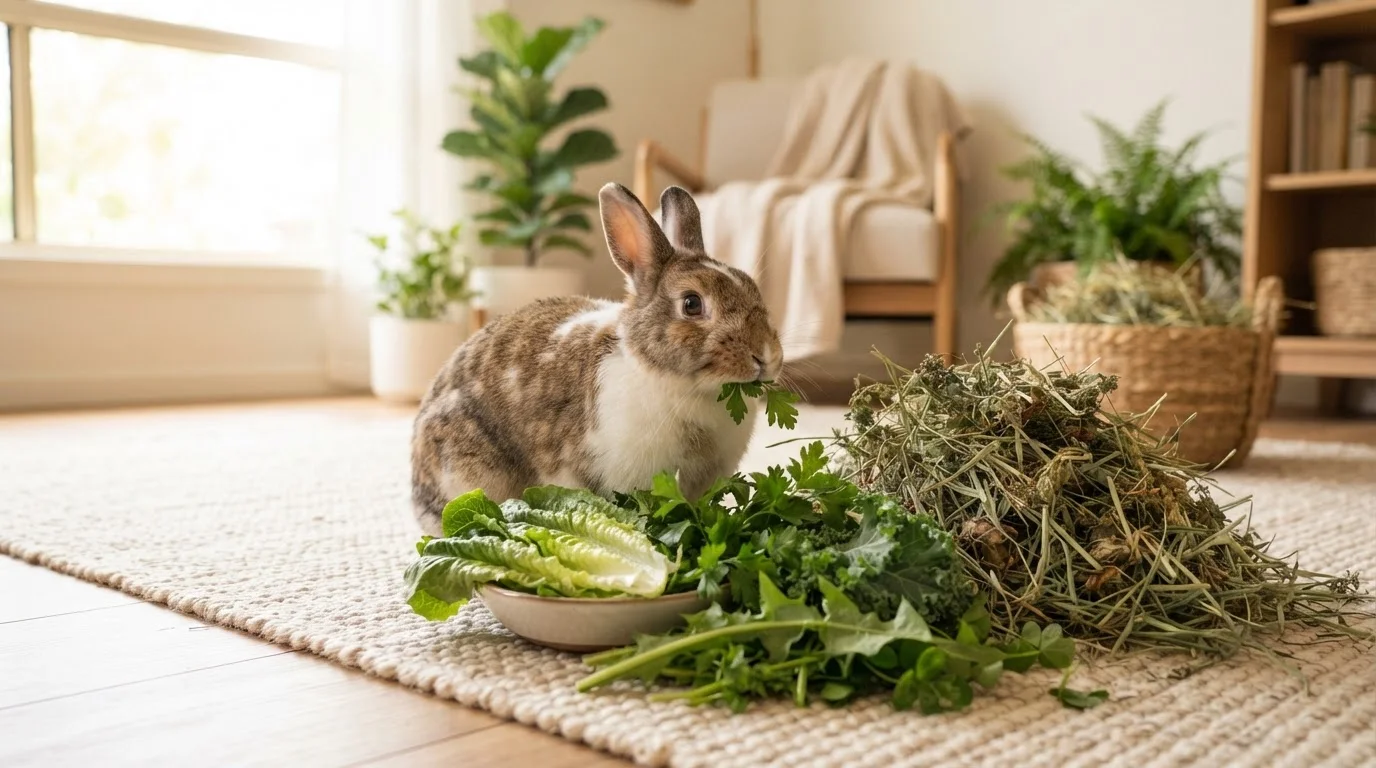
Veterinary consensus is clear: unlimited fresh grass hay — timothy, orchard grass, or meadow hay — should make up roughly 80 to 90 percent of an adult rabbit's diet. The high fiber content keeps gut motility consistent and wears down continuously growing teeth. Leafy greens such as romaine lettuce, cilantro, and leafy herbs provide enrichment and micronutrients. Pellets, when offered, should be plain timothy-based and given in small, measured amounts — typically no more than a quarter cup per five pounds of body weight per day, though your veterinarian can advise the right amount for your individual rabbit.
80–90%
Proportion of diet that should be fresh hay
Veterinary guidelines consistently recommend that unlimited grass hay form the vast majority of an adult domestic rabbit's daily food intake.
~500,000
Pet rabbits in U.S. households
The American Pet Products Association estimates rabbits are among the most commonly kept small mammals in the United States, making accurate feeding information widely critical.
Fresh, clean water must always be available. A medium-sized rabbit can drink between 50 and 150 milliliters of water per kilogram of body weight daily, depending on diet and ambient temperature. Relying on vegetables alone for hydration is never sufficient. If you're considering adding a companion animal, our article on what to consider before getting a second rabbit is worth reading before you commit.
Watch for Signs of GI Stasis
Gastrointestinal stasis — when a rabbit's digestive system slows or stops — is a medical emergency. Signs include reduced or absent fecal output, loss of appetite, lethargy, and a hunched posture. If you observe these symptoms, contact a rabbit-savvy veterinarian immediately. Do not attempt to treat GI stasis at home with dietary changes alone.
This article is for general informational purposes only and does not constitute veterinary advice. Always consult a rabbit-savvy veterinarian for guidance specific to your pet's health and dietary needs.