

Key Takeaways
Start here
Rabbits Are Not Low-Maintenance Pets
Next
Housing and Space Requirements
Then
Diet: What Rabbits Actually Need
Important
Health, Veterinary Care, and Spaying or Neutering
Finally
Understanding Rabbit Behaviour and Social Needs
Rabbits Are Not Low-Maintenance Pets
One of the most common misconceptions about rabbits is that they are simple, low-effort pets — a step up from a goldfish but easier than a dog or cat. That framing is inaccurate and sets owners up to struggle. Rabbits are intelligent, social, and physiologically complex animals that require daily attention, appropriate housing, a carefully managed diet, and routine veterinary care.
Unlike bringing home a dog, rabbit ownership lacks cultural infrastructure: there are fewer rabbit-familiar veterinarians, less mainstream guidance, and more persistent myths. First-time owners benefit most from understanding the species accurately before committing, rather than discovering mismatches after adoption.
GI stasis
A dangerous slowdown or complete halt of a rabbit's digestive system, often triggered by stress, dehydration, or insufficient fiber. It requires immediate veterinary treatment.
Crepuscular
Most active during the low-light periods of dawn and dusk. Rabbits are crepuscular by nature, which affects when they eat, play, and interact.
Binkying
A spontaneous leap and mid-air twist that rabbits perform when they feel happy and safe. It is a reliable sign of a content, healthy rabbit.
Hay-based diet
A feeding approach in which unlimited grass hay — not pellets or vegetables — forms the bulk of daily intake, supporting both digestion and dental health.
Prey animal instinct
Because rabbits are naturally hunted by predators, they instinctively hide pain or illness. Owners need to monitor subtle behavioral changes rather than waiting for obvious symptoms.
Housing and Space Requirements
A rabbit's enclosure must allow it to take at least three full hops in any direction, stand upright on its hind legs, and stretch out fully when resting. Small wire-bottom cages marketed as rabbit hutches typically fail all three criteria and can cause foot injuries and psychological distress.
A minimum starting point for a single rabbit is a pen or space of roughly 8 square feet for sleeping and shelter, combined with access to at least 24 square feet of exercise space for several hours per day. Many experienced rabbit keepers use free-roaming setups within rabbit-proofed rooms. Rabbit-proofing means covering electrical cables, protecting baseboards, and blocking off spaces where a rabbit could become trapped.
Substrate matters: solid flooring covered with appropriate bedding — such as compressed paper or fleece — protects sensitive hock joints far better than wire mesh. Litter boxes filled with hay-based or paper litter should be placed in corners the rabbit naturally selects, since rabbits are instinctively tidy and respond well to location-based litter training.
Diet: What Rabbits Actually Need
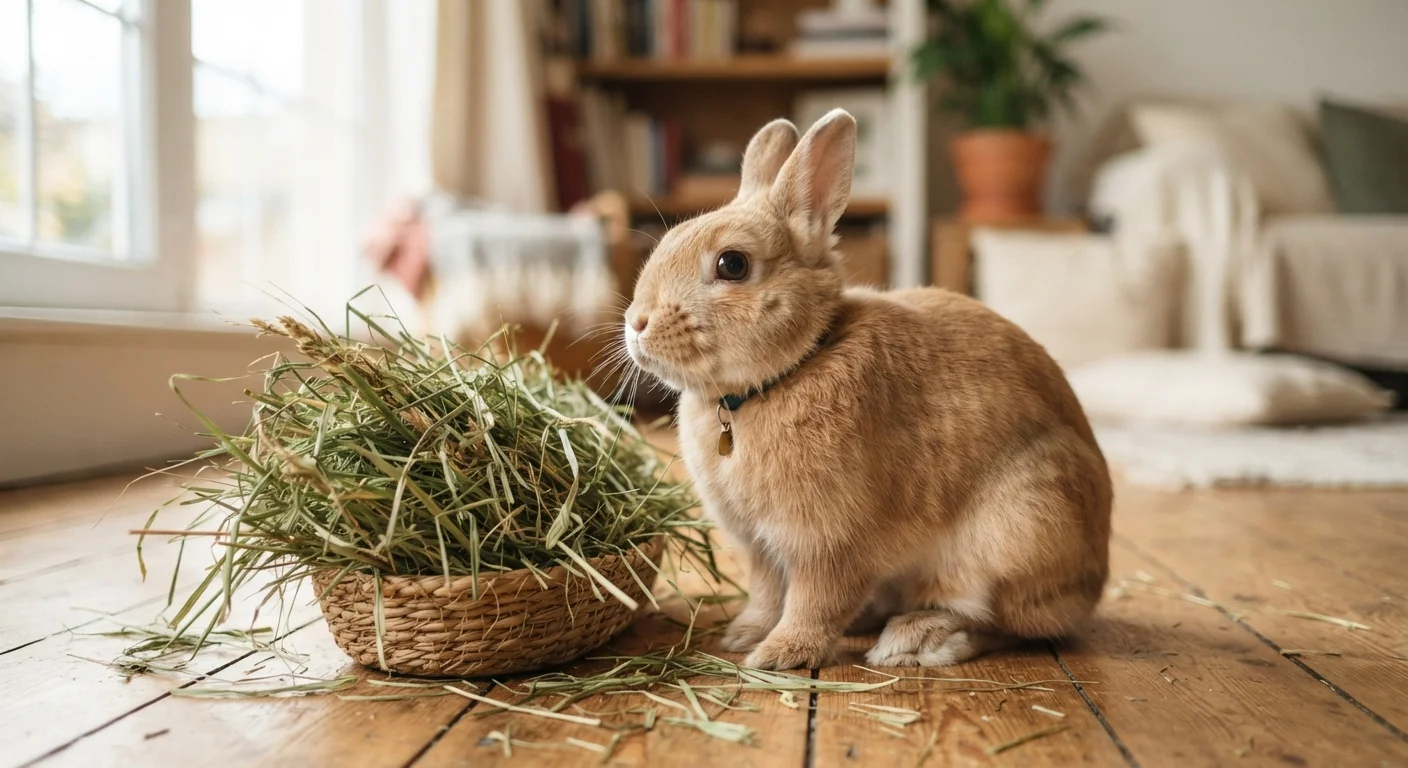
The foundation of a rabbit's diet is unlimited grass hay — timothy hay being the most widely recommended for adults. Hay should account for roughly 80% of daily intake. It provides the long-strand fiber that keeps the digestive tract moving and wears down continuously growing teeth. A rabbit that stops eating hay is a rabbit at serious health risk.
Fresh leafy greens — around one to two packed cups per five pounds of body weight per day — supplement hay well. Safe options include romaine lettuce, cilantro, and parsley. High-sugar items like carrots are often misunderstood as staples; they should be small, occasional treats. The popular belief that carrots are a rabbit's primary food is a persistent myth — one our guide on common rabbit feeding myths addresses in detail.
Pellets, if used, should be plain timothy-based pellets offered in limited quantities. An excess of pellets reduces hay consumption and contributes to obesity and dental disease. Fresh water must be available at all times via a heavy ceramic bowl or a reliable sipper bottle.
Introduce New Foods Slowly
When adding a new vegetable or leafy green to a rabbit's diet, offer a small amount and wait 24 hours before giving more. Digestive upset in rabbits can escalate quickly, and a gradual introduction helps you identify any problematic foods before they cause harm.
Health, Veterinary Care, and Spaying or Neutering
Rabbits require a veterinarian experienced with exotic or small mammals — not all general practice vets have deep rabbit knowledge. Establishing care with a rabbit-savvy vet early, before any health emergency arises, is strongly advisable. Annual wellness exams allow for dental checks, weight monitoring, and early detection of common issues like ear mites, respiratory infections, or urinary problems.
Spaying females and neutering males is one of the most impactful decisions an owner can make. Unspayed female rabbits face a significantly elevated risk of uterine cancer as they age — a widely recognized concern in rabbit medicine. Neutering males reduces territorial aggression and urine spraying. Both procedures also make bonding two rabbits far more manageable.
GI stasis — a slowdown or halt of the digestive tract — is among the most common and serious rabbit emergencies. Signs include a sudden drop in droppings, reduced appetite, a hunched posture, or tooth grinding. This condition can become life-threatening within hours and requires immediate veterinary attention. Do not wait to see if it resolves on its own.
Understanding Rabbit Behaviour and Social Needs
Rabbits communicate primarily through body language. A relaxed rabbit may flop dramatically onto its side — alarming to new owners but a sign of contentment. Thumping a hind foot signals alarm or irritation. Binkying — spontaneous leaping and twisting mid-air — indicates happiness and physical wellbeing. Learning to read these signals helps owners respond appropriately and builds trust over time.
Rabbits are crepuscular, meaning they are most active at dawn and dusk. Expecting a rabbit to be lively and interactive in the middle of the afternoon often leads to frustration on the owner's part and disturbance for the rabbit. Scheduling interaction and exercise time around natural activity peaks improves the relationship significantly.
Rabbits are social animals that often thrive in the company of a bonded partner. If you are considering expanding your household, what to consider before getting a second rabbit outlines the bonding process and compatibility factors in detail. A single rabbit can form a close bond with a patient human caretaker, but it requires consistent, daily engagement — not passive cohabitation.
House Rabbit Society
A well-established nonprofit resource offering detailed guidance on indoor rabbit care, diet, housing, and veterinary referrals. Particularly useful for first-time owners looking for species-specific information.
Find a Rabbit-Savvy Vet
Several exotic animal veterinary directories allow you to search for vets with documented rabbit experience by zip code — an essential step before your rabbit needs emergency care.