

Key Takeaways
Start here
Is Dog Ownership Right for You?
Next
Puppy-Proofing and Setting Up Your Space
Then
Essential Supplies and Daily Needs
When you're ready
Veterinary Care, Training, and Socialization
Is Dog Ownership Right for You?
Bringing a dog into your life is genuinely rewarding — but it's also one of the most significant commitments a person can make. Dogs typically live 10 to 15 years and require daily attention, exercise, feeding, and medical care throughout that time. Before choosing a breed or visiting a shelter, it's worth honestly assessing your lifestyle, living situation, and finances.
Consider how many hours you're away from home each day. Dogs are social animals and most breeds are not suited to prolonged isolation. Think about your activity level — a high-energy working breed in a small apartment can be a poor match, while a calmer dog may thrive in the same space. Budget matters too: routine vet visits, quality food, supplies, grooming, and unexpected health costs add up across a dog's lifetime.
If you're weighing a dog against other pets, our guide on welcoming a first cat covers how feline ownership differs in time and care demands. Similarly, first-time rabbit ownership carries its own unique requirements worth understanding.
Socialization
The process of gradually and positively exposing a young dog to a wide range of people, animals, sounds, and environments so they learn to respond calmly rather than with fear or aggression.
AAFCO
The Association of American Feed Control Officials — a body that sets standards for pet food labeling and nutritional adequacy in the United States.
Core vaccines
Vaccinations recommended for all dogs regardless of lifestyle, including protection against diseases like rabies, distemper, and parvovirus.
Crate training
Teaching a dog to view a crate as a safe, comfortable resting space, which also supports house training and provides a secure retreat in new or stressful situations.
Positive reinforcement
A training approach that rewards desired behaviors — typically with treats, praise, or play — to make those behaviors more likely to occur again.
Puppy-Proofing and Setting Up Your Space
Dogs — especially puppies — explore with their mouths and noses, which means your home needs to be made safe before they arrive. Walk through each room at floor level and remove or secure anything that poses a hazard: electrical cords, toxic houseplants, cleaning products, small objects that could be swallowed, and unsecured trash cans.
Common household plants such as Sago palm, Dieffenbachia, and certain lilies are toxic to dogs. The ASPCA Animal Poison Control Center maintains a comprehensive list of toxic and non-toxic plants that can help you audit your space. Secure cabinet doors with childproof latches if necessary, and use baby gates to restrict access to stairs or rooms where supervision isn't possible.
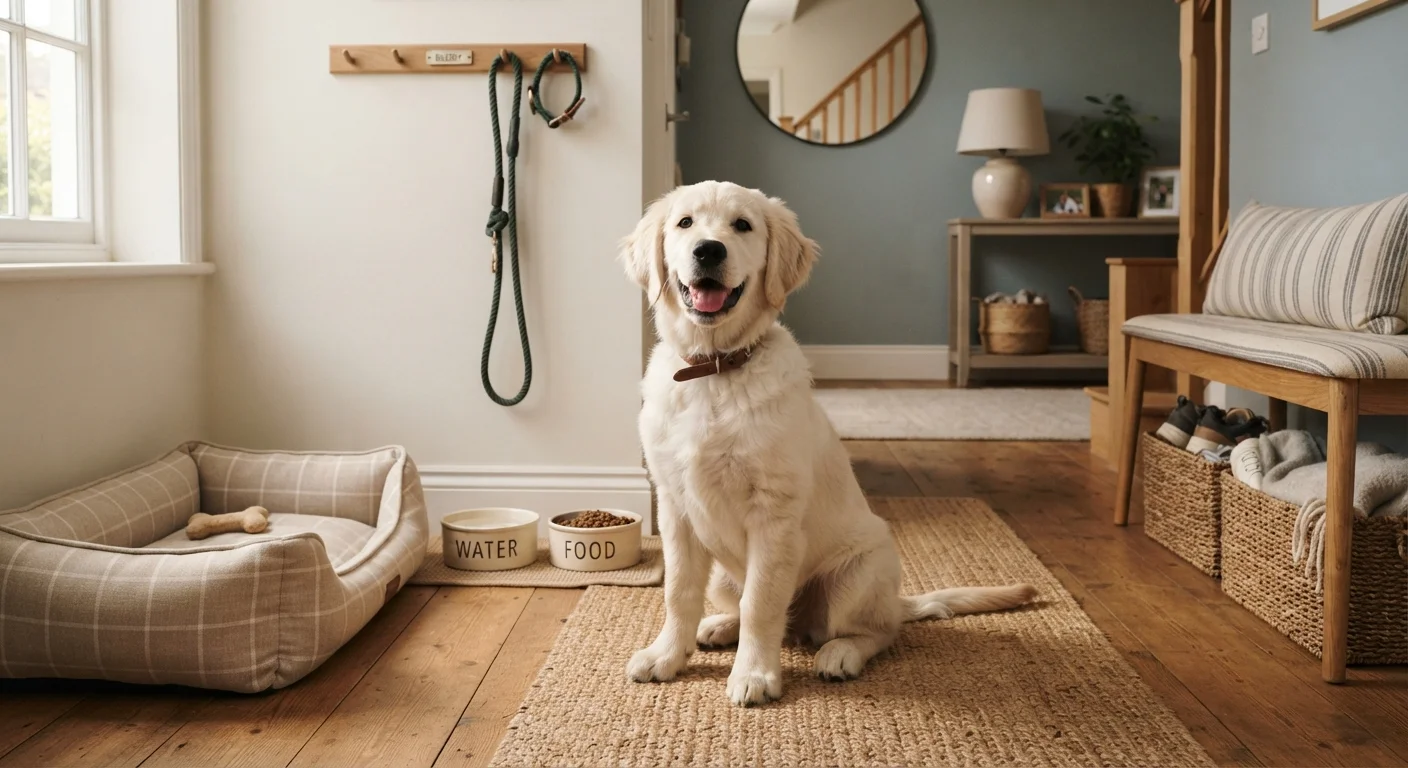
Designate a specific area for your dog's crate or bed — a quiet corner away from heavy foot traffic works well. Dogs benefit from having a predictable, calm resting spot that is clearly their own. Set up food and water bowls in a consistent location, and decide on house rules (furniture access, sleeping arrangements) before your dog arrives — changing the rules later is confusing for the animal.
Set Rules Before Day One
Decide on furniture and sleeping rules with everyone in the household before your dog arrives. Inconsistency — one person allowing the couch, another discouraging it — is confusing for dogs and slows learning. A united household approach makes training far more effective from the start.
Essential Supplies and Daily Needs
You don't need to buy every product marketed to pet owners, but certain supplies are genuinely necessary from day one. A well-fitted collar with an ID tag and current contact information is non-negotiable. A six-foot leash is the standard for walks. Choose a crate sized to allow your dog to stand, turn around, and lie down comfortably — not so large that a puppy can use one end as a bathroom.
Food is one of the most important daily decisions you'll make as a dog owner. Puppies, adult dogs, and seniors have different nutritional needs. Your veterinarian can help you select an AAFCO-compliant diet appropriate for your dog's life stage. Establish a consistent feeding schedule — twice daily is standard for most adult dogs — rather than leaving food out continuously, which can make house training harder and complicate weight management.
Dental health is another daily responsibility that's easy to overlook. Canine dental disease is widespread and largely preventable, and introducing tooth brushing early makes it far easier for your dog to accept. For a fuller picture of what long-term care looks like, our complete guide to dog ownership across life stages covers nutrition and health in depth.
Veterinary Care, Training, and Socialization
Schedule a wellness exam with a veterinarian within the first week of bringing your dog home. This visit establishes a health baseline, confirms vaccination status, and allows your vet to screen for common parasites. Puppies need a series of core vaccines in their first months; your vet will outline the recommended schedule for your region. Discuss heartworm, flea, and tick prevention at this visit as well.
Training should begin immediately — not after your dog has settled in. Basic cues like sit, stay, come, and leave it are built on short, positive, reward-based sessions. Harsh corrections or punishment-based training approaches are not supported by current behavioral science and can damage the trust you're working to build. Puppy classes offer structured guidance and are taught by certified trainers.
Socialization — exposing your puppy to a wide variety of people, sounds, surfaces, and experiences in a positive way — is one of the highest-impact investments you can make in your dog's future temperament. There is a sensitive period early in puppyhood when these experiences have outsized influence. Socialization gaps that develop early can show up as fear or reactivity later in life, making early, thoughtful exposure genuinely important.
Avoid Skipping Early Vet Visits
It can be tempting to wait on a vet visit if your new dog seems healthy, but many serious conditions show no obvious symptoms in early stages. Parasite infections, heart abnormalities, and incomplete vaccination records are all issues a vet can catch during a routine wellness exam. Early detection typically leads to simpler, less costly care.