

Key Takeaways
Why the Early Window Matters So Much
Between roughly three and sixteen weeks of age, a puppy's brain is wired to accept novelty without defaulting to fear. During this period — often called the critical or sensitive socialisation window — positive exposure to people, animals, sounds, and environments lays down lasting neural associations. Experiences that feel safe at this stage are far more likely to register as normal throughout the dog's life. Experiences that are missed, or that occur under stress, leave gaps that can surface years later as fear, reactivity, or avoidance.
This is not simply a matter of personality. A dog's genetics establish a baseline for temperament, but how those traits express depends heavily on early environment. Two littermates raised in different households can develop dramatically different behavioural profiles by the time they reach adulthood. Understanding this mechanism helps owners recognise that many adult behaviour problems — lunging at strangers, panic during thunderstorms, hostility toward other dogs — are not stubbornness or dominance, but the predictable result of an unmet developmental need.
For a broader look at preparing for these early weeks, see our guide to everything you need before bringing a dog home.
The Window Is Short — and Irreversible
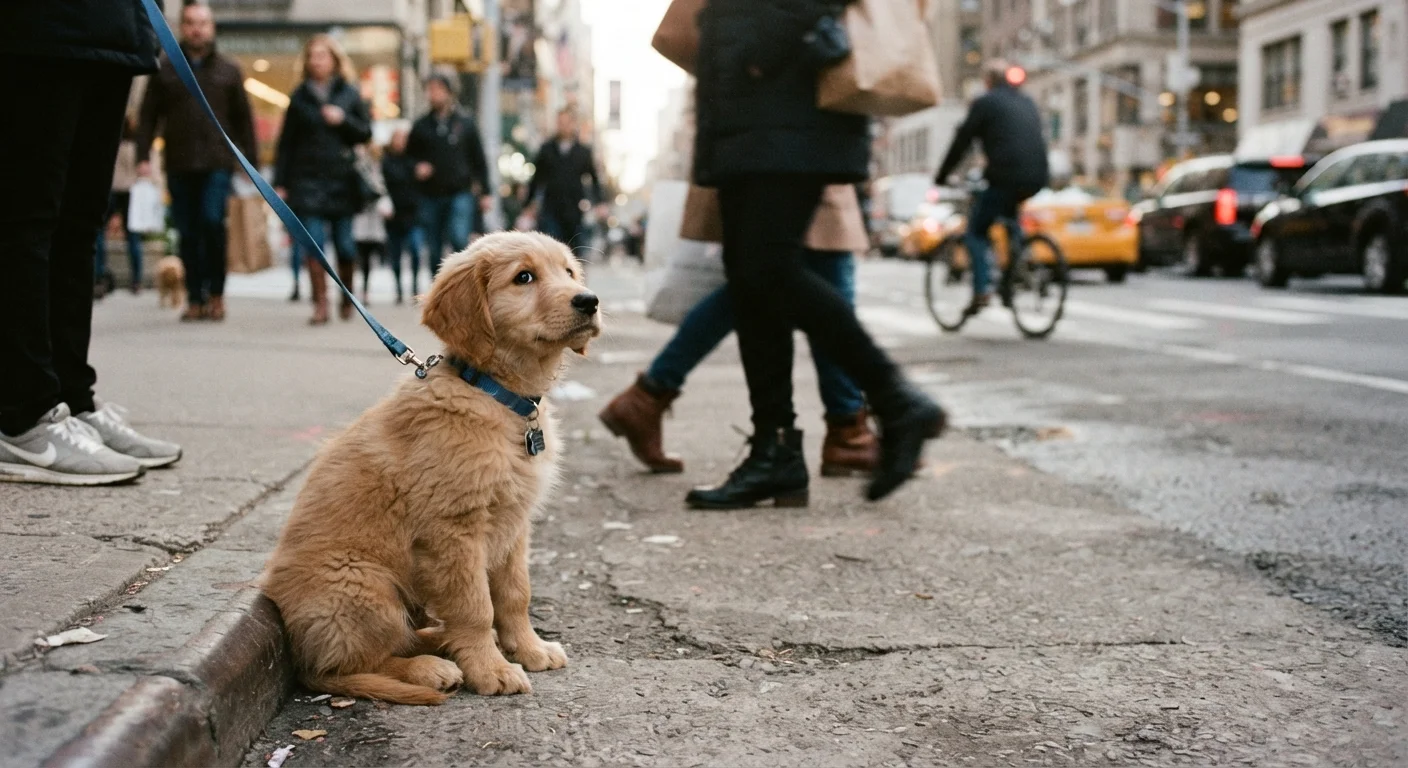
Behavioural science identifies roughly three to sixteen weeks of age as the critical period for canine socialisation. Neural pathways formed during this time significantly influence how a dog perceives novelty for the rest of its life. Missing this window doesn't doom a dog, but it does make later behavioural change substantially harder and slower. Puppies in this period should be gently exposed to as wide a variety of people, environments, sounds, and animals as safely possible.
Common Socialisation Mistakes and How to Avoid Them
Most socialisation gaps do not stem from neglect — they stem from understandable misconceptions about what socialisation actually requires. The mistakes below are among the most frequently observed by veterinary behaviourists and are directly linked to the fear-based behaviours that show up in adolescent and adult dogs.
Waiting until all vaccines are complete before introducing a puppy to the world.
Why it happens: Owners understandably worry about infectious disease and follow a cautious interpretation of veterinary vaccination schedules, keeping puppies home until fully vaccinated at roughly 16 weeks.
Treating socialisation as a numbers game rather than a quality-of-experience goal.
Why it happens: Many owners assume that simply meeting lots of dogs and people is sufficient, without considering whether those encounters feel safe and positive to the puppy.
Neglecting exposure to everyday sounds, surfaces, and environments.
Why it happens: Owners focus on people and other animals but overlook non-social stimuli — vacuum cleaners, car traffic, umbrellas, tiled floors, or crowded elevators — that routinely trigger adult fear responses.
Assuming a sociable puppy will stay sociable without ongoing reinforcement.
Why it happens: Once a puppy seems confident, owners often stop deliberate socialisation efforts, not realising that adolescence (roughly six to eighteen months) can bring a second fear period that erodes earlier gains.
Reinforcing fearful behaviour with excessive reassurance.
Why it happens: It feels natural to comfort a trembling or whining dog, and owners worry that ignoring distress is cruel.
Dogs that develop significant anxiety as a result of early gaps may also show signs of separation-related distress. Our article on separation anxiety in dogs covers the signs and evidence-based approaches in detail.
Addressing Gaps in Adolescent and Adult Dogs
Remedial socialisation — sometimes called desensitisation and counter-conditioning — can meaningfully reduce fear responses in dogs that missed early exposure, but it requires realistic expectations. Change is slower, more effortful, and less complete than what is achievable during the critical window. The goal shifts from building neutral associations to gradually replacing fearful ones, which takes consistent repetition over weeks or months.
A certified applied animal behaviourist (CAAB) or a veterinary behaviourist (Dip ACVB) can design a structured programme tailored to your dog's specific triggers and severity. In some cases, a veterinarian may discuss whether anxiety-reducing medication could support the behaviour modification process — medication alone rarely resolves the issue but can reduce arousal enough for learning to occur.
Flooding Is Not Socialisation
Forcing a fearful dog into overwhelming situations — a technique sometimes called flooding — does not build confidence. It frequently worsens fear and can create lasting trauma responses. Any exposure to new stimuli should be gradual and paired with calm, positive experiences. If your dog is already showing reactive or fearful behaviour, work with a certified applied animal behaviourist or a veterinary behaviourist rather than attempting intensive exposure on your own.
Understanding your dog's living environment also matters when planning exposure work. Dogs kept primarily outdoors may face different socialisation challenges than those integrated into household activity. Our piece on indoor vs. outdoor dog arrangements explores what each setup actually involves.
This article provides general educational information about canine behavioural development and is not a substitute for professional veterinary or behavioural advice. If your dog is showing signs of fear, reactivity, or aggression, consult a qualified veterinary or animal behaviour professional for an individualised assessment.