

Key Takeaways
Why Canine Dental Health Deserves More Attention
Dental disease is one of the most common — and most overlooked — health problems in dogs. According to the American Veterinary Medical Association, an estimated 80% of dogs show signs of periodontal disease by the time they reach age three. Yet many owners never examine their dog's mouth between veterinary visits.
The consequences go beyond bad breath. Bacteria that accumulate in infected gum tissue can enter the bloodstream and have been associated with damage to the kidneys, liver, and heart over time. Understanding what's happening in your dog's mouth — and what you can do about it — is one of the most impactful things you can do for their long-term wellbeing. If you're bringing a dog home for the first time, dental care should be part of your planning from day one. See our comprehensive new dog ownership guide for a full picture of what to prepare.
80%
Dogs showing dental disease by age 3
According to the American Veterinary Medical Association, periodontal disease is among the most diagnosed conditions in companion animals.
1 in 3
Pet owners who brush their dog's teeth regularly
Veterinary surveys consistently show that the majority of dog owners do not practice daily or even weekly dental hygiene for their pets.
Warning Signs Every Dog Owner Should Recognize
Dogs rarely show obvious pain, even when dental disease is advanced. Knowing the subtler signs helps you act early.
- Persistent bad breath: Some odor is normal, but a foul or distinctly rotten smell often signals bacterial buildup or infection.
- Reluctance to chew or eat: A dog that suddenly avoids hard food or chews only on one side of its mouth may be experiencing oral discomfort.
- Pawing at the face or mouth: This behavior can indicate tooth pain or gum inflammation.
- Visible tartar or discoloration: Yellow-brown buildup along the gumline is calcified plaque and cannot be removed by brushing alone.
- Swollen, bleeding, or receding gums: Healthy gum tissue is pink and firm — redness, swelling, or pulling away from the teeth are red flags.
- Dropping food or drooling excessively: These can both be signs of mouth pain.
If you notice any of these signs, schedule a veterinary appointment rather than waiting for an annual check-up. Your vet's annual visit checklist is a useful reference for what gets assessed at routine exams.
Best Practices for Protecting Your Dog's Teeth
Veterinary dental guidelines consistently point to a combination of daily home care and periodic professional treatment as the most effective approach.
Brush your dog's teeth daily using a dog-formulated toothpaste.
Daily brushing is the gold standard recommended by veterinary dental organizations because it disrupts plaque before it can mineralize into tartar. Human toothpaste contains ingredients such as xylitol and fluoride that are toxic to dogs, so species-appropriate products are essential.
Introduce dental care habits during puppyhood.
Dogs that are handled around the mouth from an early age are significantly more accepting of toothbrushing and oral examinations as adults. Establishing the habit early avoids the resistance that often develops in older dogs with no prior exposure.
Use Veterinary Oral Health Council (VOHC)-accepted dental products as supplements to brushing.
The VOHC evaluates dental chews, water additives, and diets through controlled trials and awards its seal only to products that demonstrate a meaningful reduction in plaque or tartar. These products are useful adjuncts, particularly when brushing isn't fully tolerated.
Schedule regular oral exams at every veterinary visit.
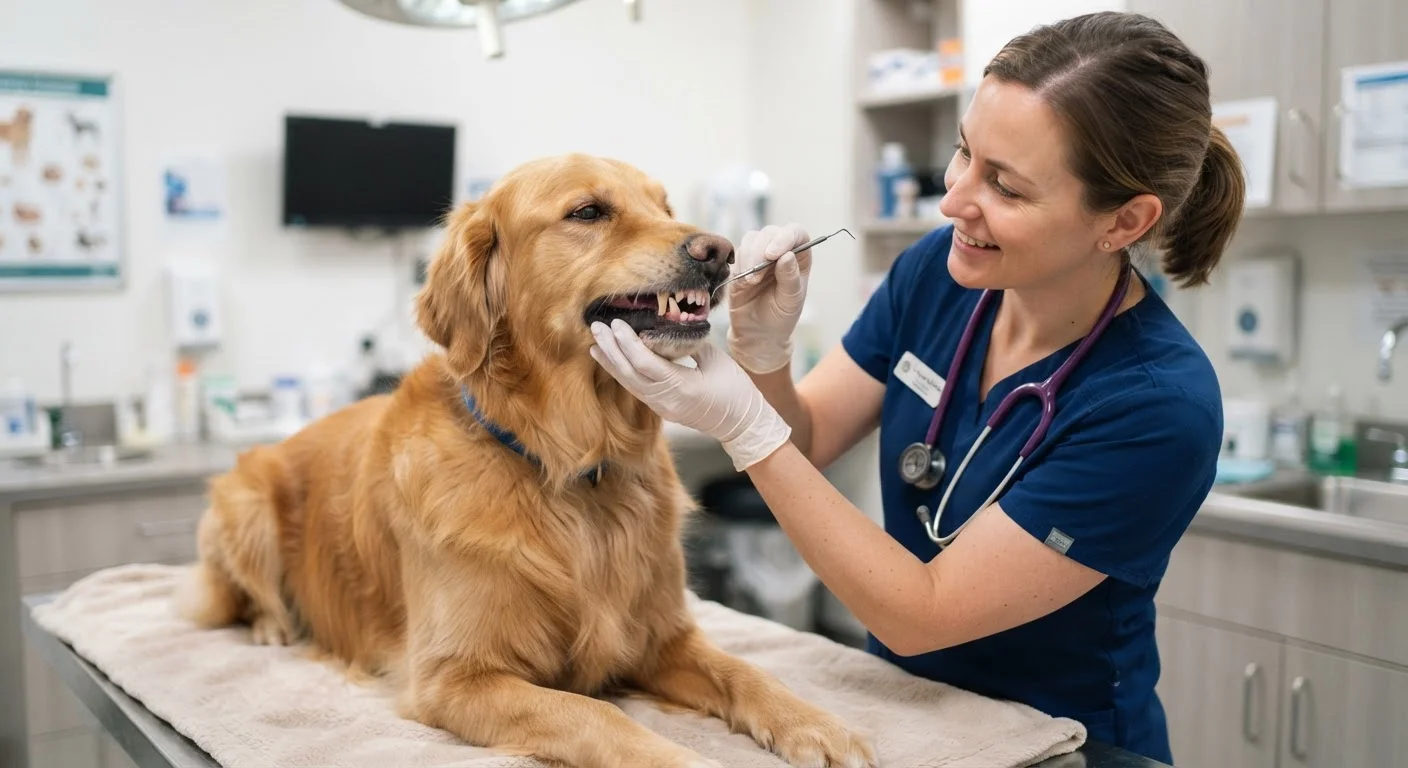
Veterinarians assess tooth integrity, gum health, and signs of disease that owners are unlikely to detect at home. Catching periodontal disease in its early stages means less invasive treatment and better outcomes.
Avoid hard objects that can fracture teeth.
Tooth fractures are a common but preventable injury in dogs. Slab fractures often expose the pulp, leading to pain and infection that requires extraction or root canal therapy. A general rule used by veterinarians is that if you wouldn't want to be hit on the kneecap with it, it's too hard for your dog's teeth.
Professional Cleanings: What to Expect
Even the most diligent home brushing cannot remove tartar that has already calcified onto the tooth surface. Professional veterinary dental cleanings — performed under general anesthesia — allow the veterinarian to scale above and below the gumline, probe each tooth for pockets or looseness, take dental X-rays, and extract teeth that are beyond saving.
Anesthesia is required for a thorough and safe procedure; anesthesia-free dental cleanings performed outside a veterinary setting do not allow proper subgingival (below the gumline) cleaning and are not considered an adequate substitute by veterinary dental specialists.
How often your dog needs a professional cleaning depends on breed, size, and individual plaque accumulation rate. Small and brachycephalic (short-nosed) breeds tend to develop dental disease faster due to tooth crowding. Your vet will advise an appropriate interval, typically every one to three years for most dogs.
This article is for general informational purposes only and does not constitute veterinary medical advice. Always consult a licensed veterinarian regarding your individual dog's dental health needs.