

Key Takeaways
Summary
22 items · 1.5–3 hours spread over one or two weekends
Why Autumn Garden Shutdown Matters
Skipping the end-of-season tidy-up is one of the most common mistakes casual gardeners make. Diseased foliage left on beds can harbour fungal spores and pest eggs that emerge aggressively come spring. Unprotected perennial roots are vulnerable to repeated freeze-thaw cycles that heave them out of the soil. And tools left dirty or damp through winter corrode faster than most people expect.
Think of this checklist as an investment in next year's garden. The spring garden prep work becomes dramatically easier when you close out the season properly. Work through these tasks as temperatures begin to drop and before the ground freezes solid — timing varies by region, but generally that means late September through November for most of the US.
If you're planning which plants to overwinter versus replace, our guide on annual vs. perennial plants can help you think through that decision before you start pulling things out.
Garden fork or spade
Digging up tender bulbs and lightly incorporating compost into vegetable beds.
Pruning shears and loppers
Cutting back perennial stems and removing spent plant material cleanly.
Stiff-bristle scrub brush
Removing caked soil from tool blades before oiling and storing.
Linseed oil or tool oil
Wiping metal blades after cleaning to prevent rust during storage.
Mulch (straw, shredded leaves, or wood chips)
Insulating dormant perennial beds against freeze-thaw temperature swings.
Breathable storage containers or mesh bags
Storing cured tender bulbs with ventilation to prevent rot during winter.
Soil test kit
Assessing pH and nutrient levels so you can plan spring amendments over winter.
Cover crop seed mix
Sowing into empty vegetable beds to protect and enrich soil over the dormant season.
The End-of-Season Shutdown Checklist
Work through the groups below in order — beds and plant material first, then soil, then water systems, and finally tools and storage. Check off each item as you go.
Beds and Plant Material
Soil and Mulching
Water Systems
Tools and Storage
Don't Mulch Too Early or Too Thick
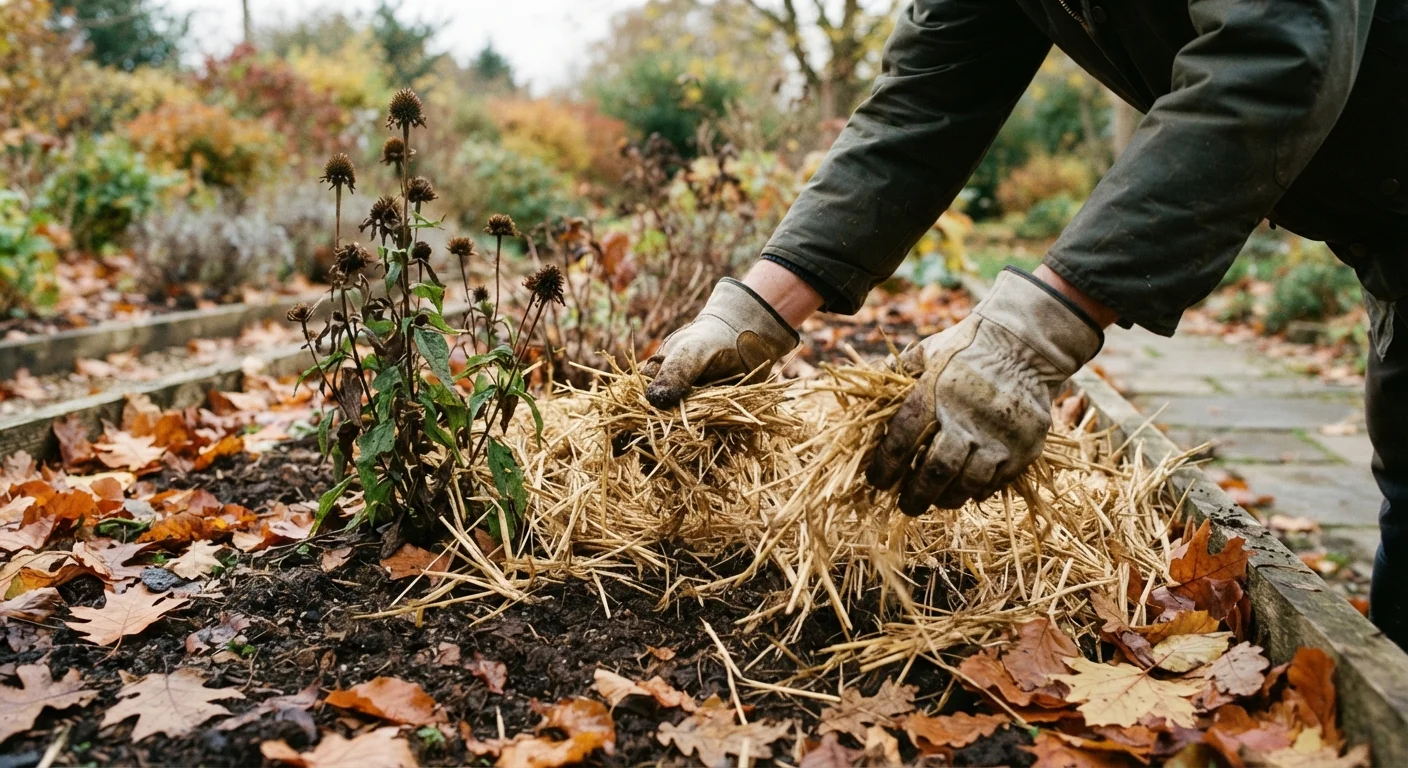
Mulching beds while the soil is still warm can encourage rodents to nest close to plant crowns. Wait until after the first hard frost to apply winter mulch. Pile it no deeper than 3 inches, and keep it a couple of inches away from stems to allow air circulation and reduce rot risk.
Garden shutdown shares the same seasonal logic as other property care. You'll find the broader picture in our home's annual maintenance rhythm guide, which covers what to address around the house each season alongside your garden tasks.
A Few Things Worth Getting Right
A couple of shutdown tasks deserve extra attention because they're easy to do incorrectly or skip entirely.
Compost vs. Trash
Not everything pulled from your garden belongs in the compost bin. Healthy green waste — non-seeded annuals, vegetable tops free of disease — composts well. But visibly diseased stems, powdery mildew-covered leaves, or plants that went to seed aggressively should go in the trash or municipal green waste, not your home pile. A backyard compost pile rarely reaches the sustained temperatures needed to kill pathogens or viable seeds reliably.
Mulching Depth
Two to three inches of mulch over dormant perennial beds is generally sufficient to moderate soil temperature swings. Too little provides minimal insulation; too much — especially piled against plant crowns — can trap moisture and cause rot. Keep mulch a couple of inches away from stems and crowns.
Bulb Storage
Tender bulbs such as dahlias, cannas, and gladioli won't survive winter in the ground in most US climate zones. Dig them after the first light frost, let them cure in a dry spot for a few days, then store in a breathable container with barely damp peat or vermiculite in a cool, frost-free location. Check them once mid-winter for rot or excessive drying.
Gas Equipment and Outdoor Spigots Need Attention First
Frozen water in unprotected spigots and pipes can burst them, leading to significant repair costs. Similarly, leaving stale gasoline in small engines over winter causes starting and carburetor problems. Address both of these before any serious cold arrives — they're the two shutdown tasks most likely to cost you money if skipped.