

| Typical residential panel capacity | 100–200 amps |
| Standard household circuit ratings | 15A (lighting) or 20A (outlets/appliances) |
| Kitchen & bathroom circuits | Require GFCI protection by code (National Electrical Code (NEC)) |
| Fuse panels still in use | Common in homes built before ~1960 |
| Panel upgrade trigger | Adding EV charging, major renovation, or frequent overloads |
How Your Home's Electrical Protection Works
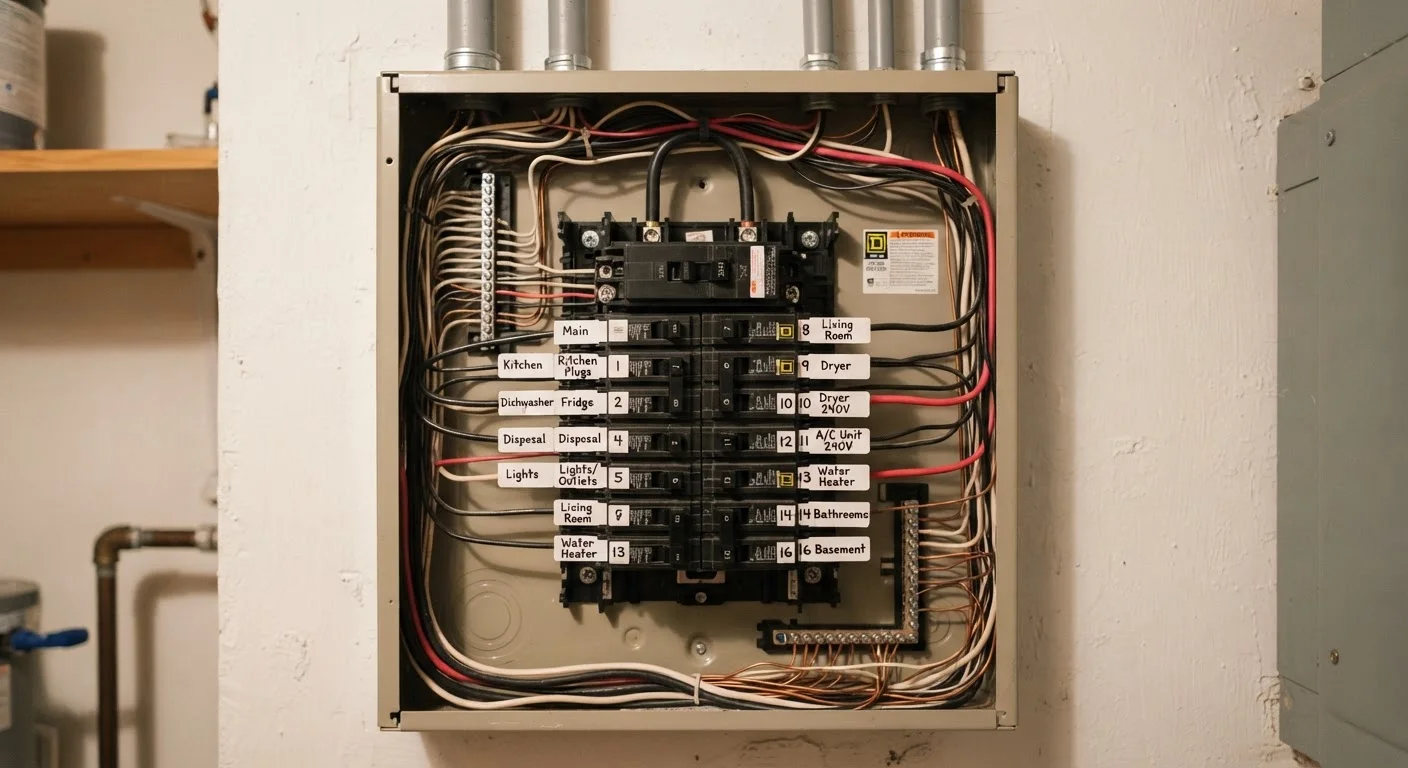
Every home has a system designed to prevent electrical overloads and fires. At its core are three components: the electrical panel (also called a breaker box or load center), circuit breakers, and in older homes, fuses. Understanding what each one does helps you respond appropriately when something goes wrong — and recognize when a problem is beyond a simple reset.
| Typical residential panel capacity | 100–200 amps |
| Standard household circuit ratings | 15A (lighting) or 20A (outlets/appliances) |
| Kitchen & bathroom circuits | Require GFCI protection by code (National Electrical Code (NEC)) |
| Fuse panels still in use | Common in homes built before ~1960 |
| Panel upgrade trigger | Adding EV charging, major renovation, or frequent overloads |
The electrical panel is the central hub where utility power enters your home and splits into individual circuits. Each circuit feeds a specific area or set of outlets and is protected by either a breaker or a fuse rated for a maximum current load (measured in amps). When that limit is exceeded, the protective device interrupts the circuit — cutting power before wiring overheats.
Circuit breakers are mechanical switches that trip automatically under overload. Fuses contain a thin wire that melts when current is too high. Both do the same protective job, but breakers can be reset while fuses must be replaced once blown.
Warning Signs You Should Not Ignore
Your electrical system often signals trouble before a serious problem develops. Knowing what to look for can help you act early.
~51,000
Home electrical fires reported annually in the US
According to the U.S. Fire Administration, electrical failures or malfunctions are among the leading causes of residential fires.
~40 years
Typical lifespan of a residential electrical panel
Panels older than this may lack capacity for modern loads and may use outdated components that warrant professional evaluation.
- Frequent tripping: A breaker that trips repeatedly on the same circuit suggests either a persistent overload or a fault in the wiring or an appliance. Don't simply keep resetting it — investigate the cause.
- Burning smell or scorch marks: Any smell of burning plastic or visible discoloration near outlets, the panel, or switches warrants immediate attention. This is a fire risk.
- Flickering or dimming lights: Occasional dimming when a large appliance starts is normal. Persistent flickering across multiple circuits may indicate a loose connection or an undersized panel.
- Warm or buzzing panel: A panel that is hot to the touch or makes a buzzing sound is a serious warning sign. Turn off non-essential loads and contact a licensed electrician promptly.
- Blown fuses repeatedly: In older fuse-panel homes, regularly blowing the same fuse suggests the circuit is overloaded for modern demand or there is a wiring fault.
For a broader view of what to check and when, see your seasonal home maintenance schedule, which includes electrical inspection reminders throughout the year.
What Homeowners Can Safely Do
There is a clear boundary between routine homeowner tasks and work that requires a licensed electrician. Here is where most people can act confidently:
- Resetting a tripped breaker: Switch it fully to the OFF position first, then back to ON. If it trips again immediately, stop and call a professional — do not force it.
- Replacing a blown fuse: Always replace with a fuse of the same amperage rating. Using a higher-rated fuse bypasses the protection and is a fire hazard.
- Identifying and labeling circuits: If your panel is poorly labeled, you can map circuits yourself by plugging a lamp into outlets and switching breakers one at a time. Clear labeling helps in emergencies.
- Reducing load on a circuit: If a breaker trips when you run multiple appliances, redistributing them across different circuits often resolves it.
Electrical Panel
The main distribution board where utility power enters a home and is divided into individual circuits. Also called a breaker box, load center, or service panel.
Circuit Breaker
A resettable mechanical switch that automatically cuts power to a circuit when current exceeds a safe limit. It protects wiring from overheating and potential fire.
Fuse
An older protective device containing a metal wire that melts when current is too high, breaking the circuit. Unlike a breaker, a blown fuse must be replaced, not reset.
Amperage (Amps)
The measure of electrical current flowing through a circuit. Breakers and fuses are rated in amps to define the maximum safe load for that circuit.
Overload
A condition in which more electrical current is drawn from a circuit than its wiring and protective device are rated to handle, triggering a breaker trip or blown fuse.
Ground Fault
An unintended path for electrical current, often to a grounded surface. Ground fault circuit interrupters (GFCIs) are specialized devices that detect and interrupt these faults rapidly.
The same principle of knowing your limits applies across home systems — just as plumbing basics have a clear DIY boundary, so does electrical work.
When the Work Must Go to a Licensed Electrician
Electrical work inside the panel — and most wiring work — is regulated in virtually every US jurisdiction. Many tasks require permits, inspections, and a licensed electrician. This is not bureaucracy for its own sake: improper panel work is a leading cause of house fires.
Always hire a licensed professional for:
- Adding, removing, or relocating circuit breakers
- Upgrading your panel capacity (e.g., from 100A to 200A service)
- Replacing a fuse panel with a modern breaker panel
- Installing a whole-home surge protector inside the panel
- Any work involving the main service entrance or meter
- Diagnosing persistent tripping, burning smells, or unexplained power loss
Before any professional starts work, it pays to be prepared. Our guide on hiring a tradesperson covers what questions to ask, how to verify licensing, and what a legitimate quote should include.
For a broader framework on where to draw the DIY line at home, see DIY home maintenance boundaries.
This article is for general informational purposes only and does not constitute electrical or safety advice. Always verify local code requirements and consult a licensed electrician for any work inside or affecting your electrical panel.