

Key Takeaways
Soil Type
Soil type refers to the physical composition of your garden soil — specifically the relative proportions of sand, silt, and clay particles it contains. Each combination creates a distinct texture that affects how water moves through soil, how easily roots can grow, and which nutrients are available to plants. Knowing your soil type is the first step to gardening with confidence rather than guesswork.
Soil texture is determined by particle size: sand particles are the largest (0.05–2 mm), silt is medium (0.002–0.05 mm), and clay particles are the smallest (under 0.002 mm). These proportions are typically mapped using a soil texture triangle.
Why Soil Type Matters More Than You Might Think
Gardeners often focus on sunlight, watering schedules, and plant selection — but soil is the foundation everything else depends on. The same tomato plant can thrive in one backyard and struggle in another, and soil type is frequently the reason why. Understanding what's actually beneath your garden beds lets you work with your soil rather than against it.
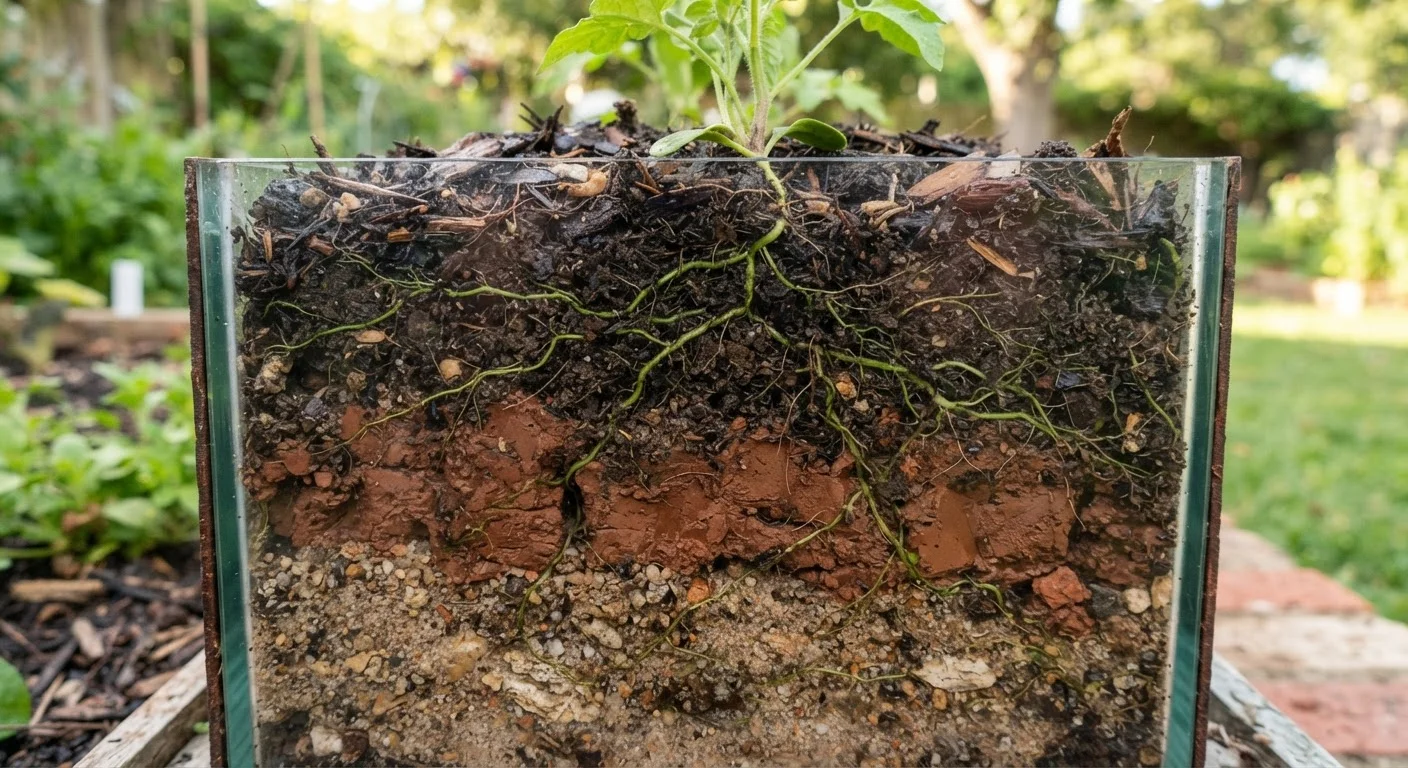
Soil is made up of mineral particles, organic matter, water, air, and a vast community of microorganisms. The mineral portion — a mixture of sand, silt, and clay — defines your soil's basic texture and behavior. That texture dictates drainage, aeration, nutrient retention, and how easily roots can penetrate and spread.
See our spring garden prep guide for practical steps on assessing and improving your beds before planting season begins.
~25%
Air and water share in healthy soil volume
Soil scientists generally note that ideal garden soil is roughly 45% mineral matter, 5% organic matter, 25% water, and 25% air by volume.
1 billion+
Microorganisms per teaspoon of healthy soil
USDA Natural Resources Conservation Service estimates that a single teaspoon of productive soil contains more than one billion bacteria alone, underscoring why soil health matters.
6–12 inches
Depth most vegetable roots actively forage
Most vegetable crops concentrate the majority of their feeder roots within the top 6–12 inches of soil, making topsoil texture especially critical for food gardens.
The Four Main Soil Types Explained
Clay Soil
Clay soil is dense, smooth, and often sticky when wet. Because clay particles are extremely fine, they pack tightly together, leaving little room for air and making drainage slow. On the upside, clay holds nutrients exceptionally well. Gardeners with clay soil often find it sets hard in summer and becomes waterlogged in winter. Working it when wet causes compaction, so timing matters.
Sandy Soil
Sandy soil has large, coarse particles that let water drain through quickly — sometimes too quickly. Nutrients leach away before roots can absorb them, and the soil dries out fast in warm weather. It does warm up early in spring, which can be an advantage for cool-season crops. Sandy soil is easy to dig and rarely compacts.
Silty Soil
Silty soil sits between sand and clay in particle size. It feels smooth and almost soapy when wet. Silt drains better than clay and retains more moisture than sand, making it reasonably fertile. However, it can crust over on the surface after rain, repelling water and making it hard for seedlings to emerge. It's also prone to erosion on slopes.
Loam
Loam is the sweet spot most gardeners aim for — a balanced blend of sand, silt, and clay that drains well, retains adequate moisture, and holds nutrients effectively. It crumbles easily, is pleasant to work, and supports a wide variety of plants. If your soil is already loamy, your main job is to maintain it with regular organic matter additions.
How to Identify Your Soil Type at Home
You don't need a laboratory to get a good read on your soil. Two simple tests work well for home gardeners:
- The ribbon test: Moisten a small handful of soil until it holds together. Press it between your thumb and forefinger and push it out into a ribbon. A long, smooth ribbon (over 2 inches) indicates clay-heavy soil. A short, crumbly ribbon suggests sand or loam. A ribbon of medium length that feels silky points to silt.
- The jar test: Fill a clear jar one-third with soil, top it with water, shake well, and let it settle for 24–48 hours. Sand drops to the bottom first, silt settles in the middle, and clay (if present) forms the top layer. The relative depths of each layer show you your soil's rough composition.
For a precise result, cooperative extension services in most US states offer affordable soil testing kits that also measure pH and nutrient levels — a worthwhile investment for new garden beds.
Test Before You Amend
Before adding fertilizers or large quantities of amendments, consider a basic soil test from your local cooperative extension office. Testing reveals pH and nutrient levels alongside texture, so you can amend precisely rather than guessing. Over-amending — especially with lime or nitrogen — can cause as many problems as it solves.
Improving Your Soil, Whatever Type You Have
The good news is that nearly every soil type can be improved, and the solution is almost always the same starting point: organic matter. Compost, aged manure, leaf mold, and cover crops all help shift soil toward a more balanced, loamy structure over time.
- For clay soil: Incorporate compost or fine grit to open up structure and improve drainage. Avoid working clay when wet — wait until it's moist but not sticky.
- For sandy soil: Add generous amounts of compost to improve moisture retention and feed soil microbes. Mulching helps prevent rapid moisture loss from the surface.
- For silty soil: Compost improves aggregation, reducing crusting and erosion. Minimize foot traffic on silty beds.
Mulching done right is one of the most effective ways to protect and gradually enrich any soil type — it conserves moisture, suppresses weeds, and breaks down to feed the soil over time. Pair mulching with a regular compost habit and your soil will improve noticeably season after season. For ongoing care throughout the year, the seasonal garden tasks guide outlines when to amend, test, and feed your soil for best results.