

Key Takeaways
Why Visual Portioning Works
Calorie counting can be a useful tool for some people, but for many everyday adults it creates friction, anxiety, or an unsustainable relationship with food. The good news is that nutrition science offers a simpler alternative: visual portioning methods that help you eat a reasonable variety of foods without tracking apps or a food scale.
These approaches won't be medically precise, and that's intentional. They're designed to be good enough, consistently — which is exactly what supports long-term health for most people. If you have a specific medical condition or dietary need, always consult a registered dietitian or your healthcare provider before making significant changes to how you eat.
For general guidance on thinking through a full week of nutritious eating, see what to consider before you plan.
Focus on Pattern, Not Perfection
A balanced diet is built over dozens of meals, not a single plate. If one meal is off-balance — heavy on carbs, light on vegetables — simply adjust the next one. Consistency over time is far more impactful than precision at any given sitting. This mindset takes pressure off individual meals and makes the approach much easier to stick with.
Tools and What You'll Need
No special equipment is required. The methods below rely on everyday objects you already have.
A standard dinner plate (9–10 inches)
Provides the visual template for dividing food into sections without measuring.
Your own hand
A built-in, always-available portioning guide that naturally scales to your body size.
A set of meal prep containers
Useful for pre-portioning balanced meals in advance so the method is already done at mealtime.
How to Build a Balanced Plate, Step by Step
Follow these steps at each main meal. Once the pattern becomes habit — typically after a few weeks of practice — you'll do it automatically without thinking through each one.
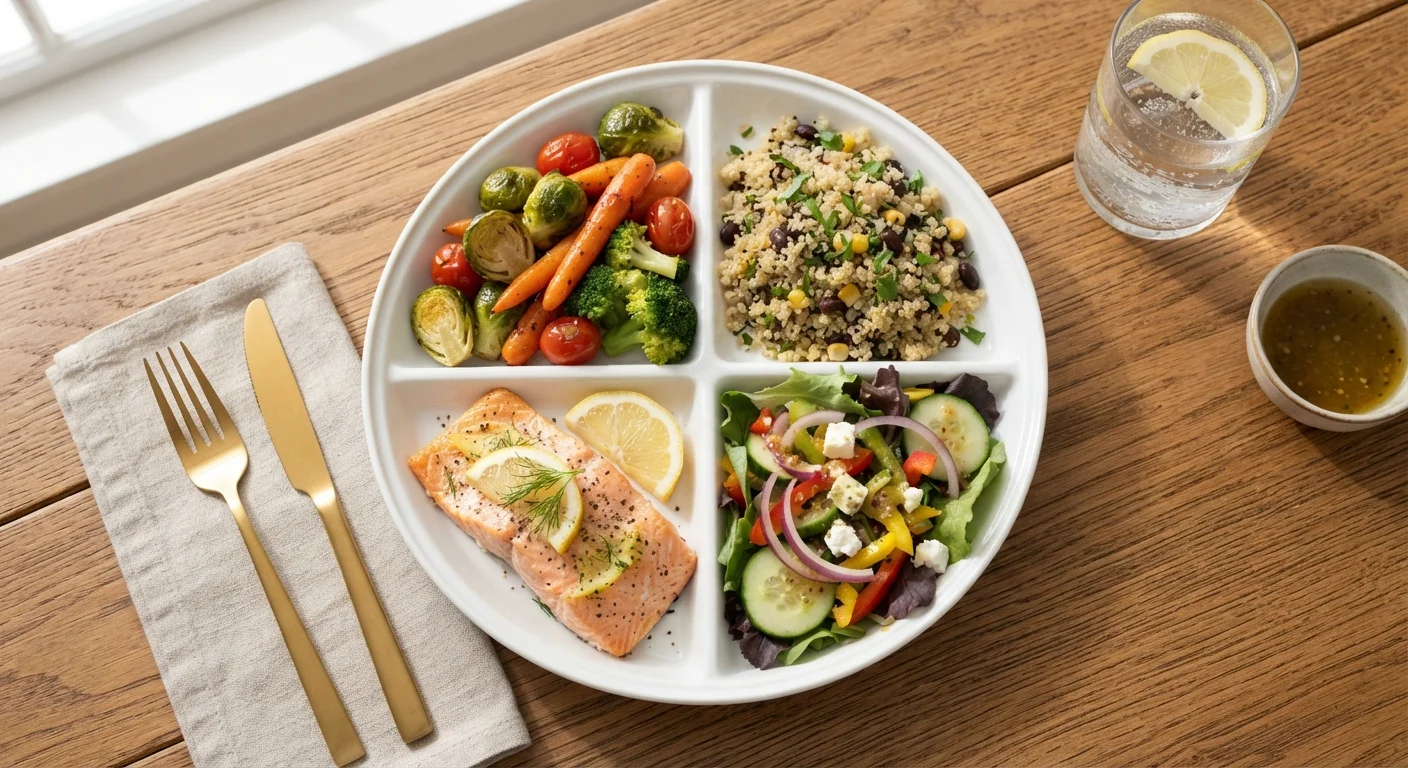
Fill half your plate with non-starchy vegetables
Before adding anything else, fill roughly half your plate with vegetables — the more varied in color, the better. Think leafy greens, roasted broccoli, sliced peppers, tomatoes, zucchini, or carrots. This half provides fiber, vitamins, and minerals while naturally keeping overall calorie density low without any measurement required.
Add a palm-sized portion of protein
Use your palm — not including fingers — as a guide for a single serving of protein. This works for chicken, fish, tofu, beans, or any other protein source. For most adults, one palm roughly equals 3–4 ounces of cooked meat or fish, which aligns with commonly recommended serving guidelines. Place this on one quarter of your plate.
Add a cupped-hand portion of whole grains or starchy vegetables
Cup one hand loosely to estimate a serving of cooked grains — rice, quinoa, whole-wheat pasta — or starchy vegetables like sweet potato or corn. This fills the remaining quarter of your plate. Whole grain options generally provide more fiber and nutrients than refined alternatives, though any grain is better than skipping the food group entirely.
Include a small amount of healthy fat
Fat is an essential part of a balanced diet and helps with the absorption of fat-soluble vitamins. Use a thumb-sized amount as a guide: a drizzle of olive oil over vegetables, a small scoop of avocado, or a sprinkle of nuts or seeds. This doesn't need its own dedicated plate space — it's simply part of how you prepare or finish the other components.
Choose water or an unsweetened drink
What you drink alongside your meal affects overall intake in ways that are easy to overlook. Water, sparkling water, unsweetened tea, or black coffee are straightforward choices that add no added sugars. If you enjoy milk or a fortified plant-based alternative, a glass alongside a meal can contribute calcium and other nutrients.
Assess variety across the day, not just the meal
No single meal needs to be nutritionally complete on its own. Step back and look at what you've eaten across the whole day — and ideally across the whole week. If breakfast was light on vegetables, lean into them at lunch. If dinner was protein-heavy, balance with a lighter protein at the next meal. This big-picture view reduces pressure on any individual plate.
These same principles translate well to meal prep. The weekly meal prep playbook walks through how to batch-cook balanced portions efficiently.
Making It Work in Real Life
Visual portioning is flexible by design. A restaurant meal, a family dinner, or a busy weeknight don't need to derail the approach — you're aiming for a reasonable pattern across most meals, not a perfect score at every one.
- Eating out: Mentally divide the plate before you start. If vegetables are scarce, order a side salad or steamed option.
- Mixed dishes: For soups, stir-fries, or casseroles, the same logic applies — aim for roughly half the volume to come from vegetables, with protein and grains making up the rest.
- Snacks: Pair a small protein source (plain yogurt, a hard-boiled egg, a handful of nuts) with a fruit or vegetable to keep energy stable between meals.
If budget is a consideration, this approach pairs well with affordable staples. Eating well on a budget covers how to build variety without overspending. And if you want to understand what's in packaged foods you're adding to your plate, reading a nutrition label without the confusion breaks down what each section actually means.
This Approach Has Limits for Some People
Visual portioning is a practical general framework, but it may not be appropriate if you are managing diabetes, kidney disease, eating disorder recovery, or other conditions where specific nutrient targets matter. If you have any of these or other health conditions, work directly with a registered dietitian who can tailor guidance to your situation. Do not use this method as a substitute for professional medical nutrition therapy.
This article is for general informational and educational purposes only and does not constitute medical or nutritional advice. Speak with a qualified healthcare provider or registered dietitian for guidance tailored to your individual needs.