

Key Takeaways
Why Budget Eating Gets a Bad Reputation
The phrase "eating on a budget" often conjures images of ramen packets and sad salads. That reputation isn't entirely deserved. The foods nutritionists consistently point to as dietary cornerstones — legumes, whole grains, eggs, frozen vegetables, canned fish — are also among the most affordable items in any grocery store.
The challenge isn't access to good food. It's knowing which habits and purchasing decisions make the biggest practical difference. This article focuses on principles that hold up across income levels, kitchen skill sets, and schedule constraints. If you want to go deeper on the spending side, our grocery savings guide covers realistic habits that reduce your bill without radical changes.
Build meals around legumes and whole grains as your primary base.
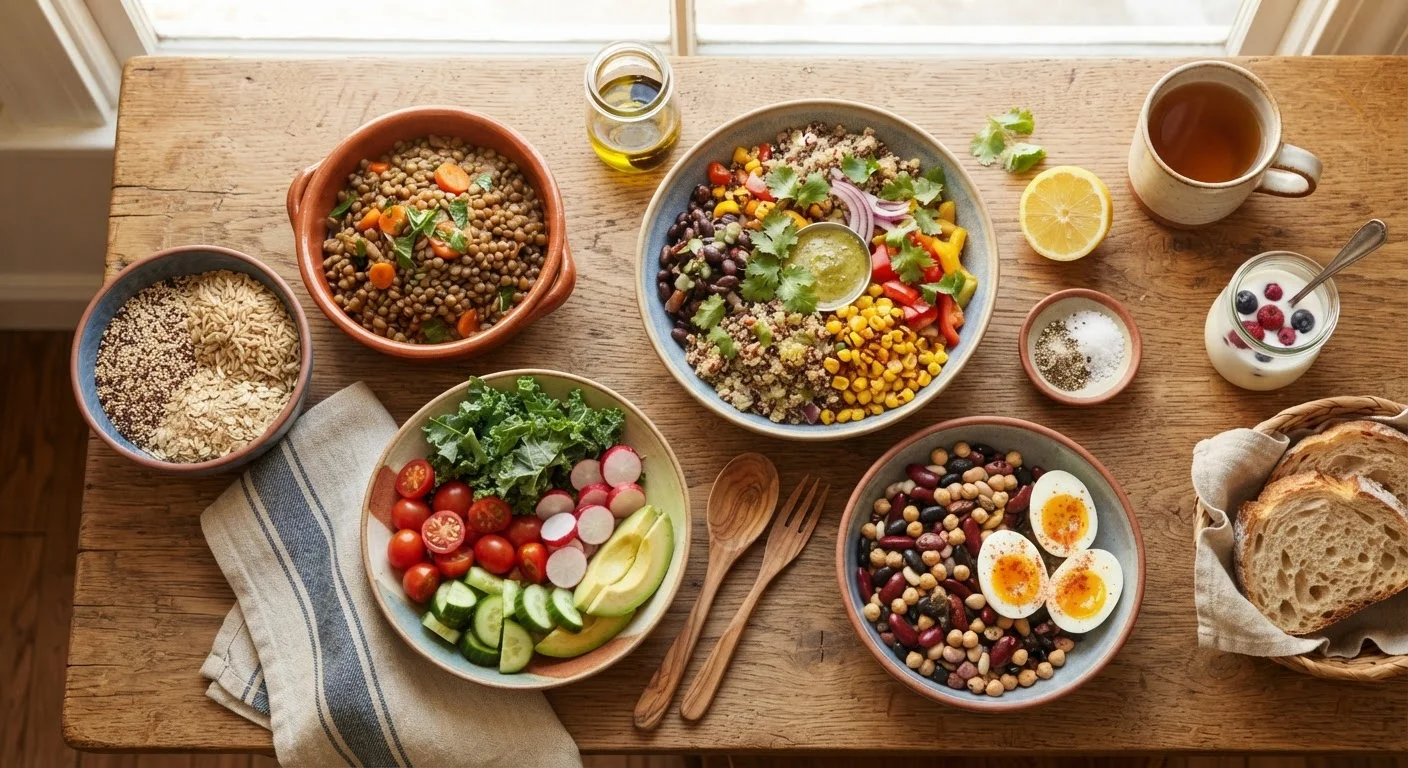
Dried or canned beans, lentils, chickpeas, oats, brown rice, and barley are calorie-dense, high in fiber and protein, and cost a fraction of meat-centered alternatives. The USDA's dietary guidelines recognize legumes as both a protein and vegetable source — making them one of the highest-value foods per dollar. Choosing these as meal anchors rather than side dishes stretches your budget significantly.
Plan your meals before you shop — even loosely.
Unplanned grocery shopping is one of the primary drivers of food waste and overspending. Even a rough five-day meal sketch prevents impulse purchases and ensures you buy only what you'll use. You don't need a rigid plan — just a general framework of proteins, starches, and vegetables for the week.
Swap expensive proteins for plant-based alternatives several times a week.
Meat is typically the most expensive line item in a food budget. Plant proteins — beans, lentils, tofu, tempeh, eggs, and canned fish — deliver comparable or superior nutritional profiles at significantly lower cost. For households not ready to eliminate meat, even two or three plant-forward dinners per week produce meaningful savings. See how these options compare in our overview of protein sources across different dietary patterns.
Rely on frozen and canned produce rather than fresh when it makes sense.
Frozen vegetables are harvested and flash-frozen at peak ripeness, which preserves most of their nutritional content. For vegetables like spinach, peas, corn, and edamame — where texture after freezing isn't a concern — frozen is nutritionally equivalent to fresh and often cheaper. Canned tomatoes, beans, and fish are similarly dependable pantry staples.
Shop seasonally and consider store-brand staples without hesitation.
In-season produce is cheaper, tastes better, and is often more nutritious because it hasn't traveled as far. Store-brand dry goods — flour, oats, canned goods, spices — are produced to the same regulatory food safety standards as name brands, with the same nutritional profiles. The price difference is primarily marketing.
The Core Practices Worth Committing To
These aren't hacks or temporary workarounds — they're durable behaviors that consistently result in better nutrition at lower cost. Adopted gradually, they become automatic.
Putting It Into Practice
Knowing what to do and actually doing it are different problems. The most common barrier isn't motivation — it's friction. When healthy, affordable food is harder to prepare than the alternative, the alternative wins.
Reducing that friction starts with prep. Rather than cooking complete meals in advance (which can feel monotonous by day three), consider cooking components: a batch of cooked grains, a pot of beans, roasted or steamed vegetables. Mix and match throughout the week for variety without extra effort. Our component prep guide shows how this approach works in practice.
For nutrition principles to pair with your budget approach, building a balanced plate offers a visual, non-obsessive method that doesn't require calorie tracking. And if you're just getting started with eating better overall, your first steps toward eating more nutritiously is a low-pressure starting point.
$1.74
Average cost per serving of dried beans
USDA Economic Research Service data indicates dried legumes are consistently among the least expensive per-serving protein sources available in US grocery stores.
30–40%
Estimated share of food purchased but wasted
The USDA estimates that roughly 30–40% of the US food supply is wasted, much of it at the household level due to unplanned purchasing and improper storage.
This article is for general informational purposes only and is not a substitute for personalized nutritional or medical advice. Consult a qualified healthcare professional for guidance specific to your health needs.