

Key Takeaways
Why the Nutrition Label Looks More Complicated Than It Is
The Nutrition Facts label on packaged food in the US is standardized and regulated by the Food and Drug Administration (FDA). The current format — updated in 2020 — was redesigned to make key information more prominent. Despite that, many people skip past it entirely, find it confusing, or focus only on calories while ignoring equally important details.
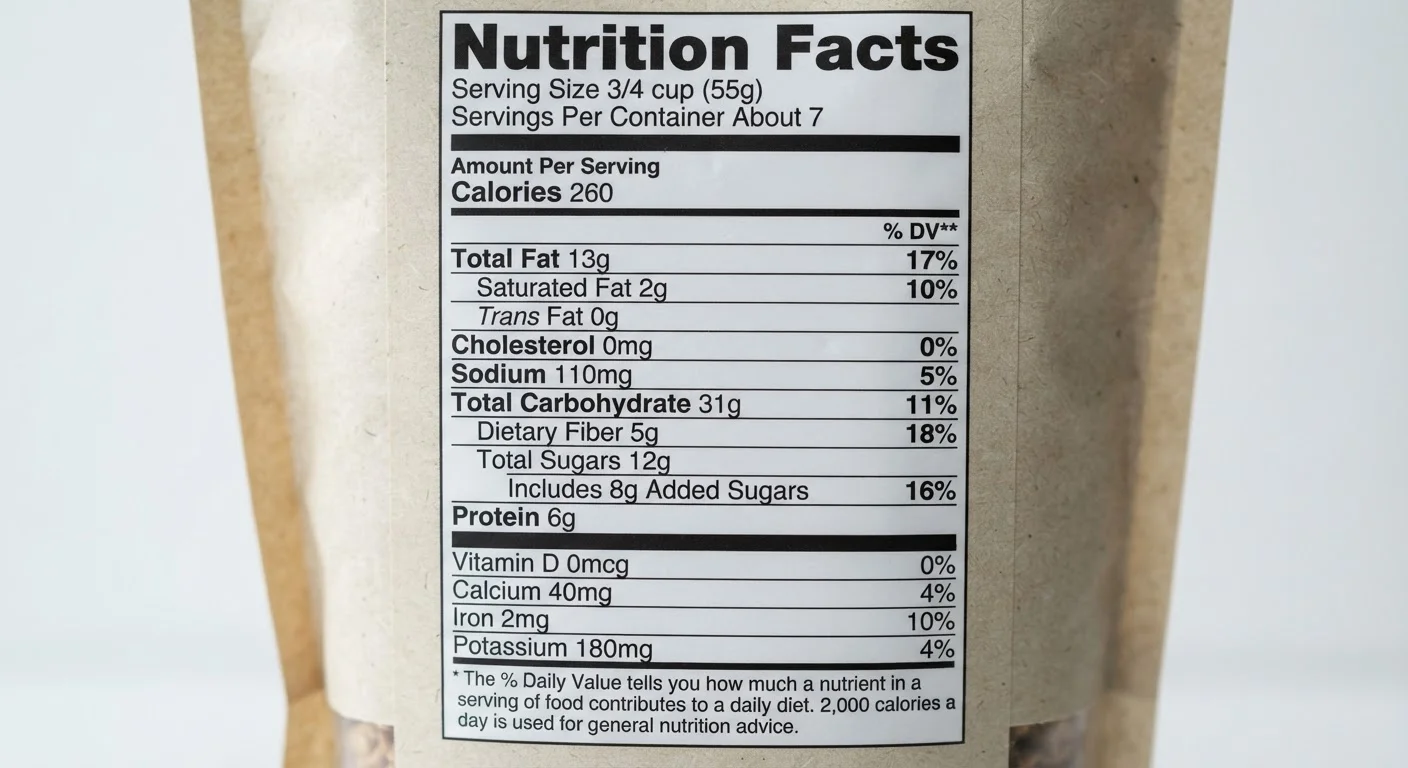
The label is structured logically: it moves from serving information at the top, through calorie content, to a breakdown of specific nutrients, and finishes with a %Daily Value guide at the bottom. Reading it in order — rather than jumping to the numbers that stand out — gives you a much clearer picture of what you're actually eating.
This skill pairs well with broader nutrition habits. Once you're comfortable with labels, resources like building a balanced plate without counting every calorie can help you put that knowledge into everyday practice without turning every meal into a math exercise.
Labels Reflect One Serving, Not the Whole Package
Every calorie count and nutrient value on a Nutrition Facts label applies to a single serving — not necessarily the entire container. A bag of chips may list 150 calories per serving, but if the bag contains three servings and you eat it all, you've consumed 450 calories. Always multiply by the number of servings you actually eat.
How to Read Each Section — Step by Step
Work through the label from top to bottom using the steps below. Having an actual food package in hand makes this much easier to follow in real time.
What you will need
Packaged food with a Nutrition Facts label
The primary item you will practice reading and interpreting throughout these steps.
Pen and notepad (or notes app)
Useful for jotting down serving sizes and nutrient totals when comparing multiple products.
Start with the Serving Size
Find the Serving Size line at the very top of the label, just below the bold "Nutrition Facts" heading. This number — expressed in a common household measure plus grams — is the reference unit for everything else on the label. Also note the Servings Per Container line directly below it, which tells you how many portions the package is intended to contain.
Check the Calorie Count
Calories appear in large, bold type directly below the serving information. This figure represents the total energy provided by one serving. Calories alone don't define whether a food is nutritious, but they're a useful reference point when you're managing your overall energy intake.
Identify Nutrients to Limit
The next section lists nutrients that many Americans consume in excess. Look for:
- Total Fat — broken down into saturated fat and trans fat. Saturated fat is linked to cardiovascular risk when consumed in excess; trans fat should be as close to zero as possible.
- Sodium — relevant for blood pressure management. A value above 20% DV per serving is considered high.
- Added Sugars — distinct from naturally occurring sugars (like those in fruit or milk), added sugars contribute calories with little nutritional benefit.
Look for Nutrients to Prioritize
Lower on the label, you'll find nutrients that most people benefit from getting enough of:
- Dietary Fiber — supports digestion and helps you feel full. Aim for foods with 10% DV or more per serving.
- Potassium — important for heart and muscle function.
- Calcium, Iron, Vitamin D — nutrients commonly under-consumed in the US diet.
For a deeper look at what these nutrients actually do in the body, the Vitamins and Minerals: A Plain-Language Reference is a helpful companion resource.
Understand % Daily Value
% Daily Value (%DV) appears to the right of most nutrient amounts. It shows how much of a nutrient one serving contributes toward a standard daily intake goal, based on a 2,000-calorie diet. Use it as a directional signal: a high %DV means a serving delivers a lot of that nutrient; a low %DV means it delivers very little.
Scan the Ingredients List
The ingredients list appears below the Nutrition Facts panel and follows a simple rule: ingredients are listed in descending order by weight. Whatever appears first makes up the largest proportion of the product. A long list isn't automatically a red flag, but if added sugars, refined flours, or sodium appear within the first few ingredients, that's worth noting.
Use the 5% and 20% Rule as a Quick Guide
The FDA suggests that 5% DV or less of a nutrient per serving is considered low, while 20% DV or more is considered high. Use this shortcut when scanning labels quickly — it helps you spot nutrient-dense foods and flag high-sodium or high-sugar items without doing mental math.
% Daily Values Are Based on a 2,000-Calorie Diet
The Daily Value percentages on labels use a 2,000-calorie reference diet set by the FDA. Your actual needs may be higher or lower depending on your age, size, sex, and activity level. Use %DV as a general directional guide, not a precise personal prescription. Consult a registered dietitian for advice tailored to your health situation.
When you're ready to move from label-reading to broader eating habits, your first steps toward eating more nutritiously offers a practical, non-restrictive starting point. And if you're curious about the difference between minimally processed and heavily processed foods — a topic labels only partially reveal — whole foods vs. processed foods covers that distinction clearly.
This article is for general informational purposes only and is not a substitute for advice from a registered dietitian or qualified healthcare professional. Individual nutrition needs vary. Consult a professional for guidance tailored to your health circumstances.