

Food & Cooking

Things Every Kitchen Should Have Before You Start Cooking Seriously

Share
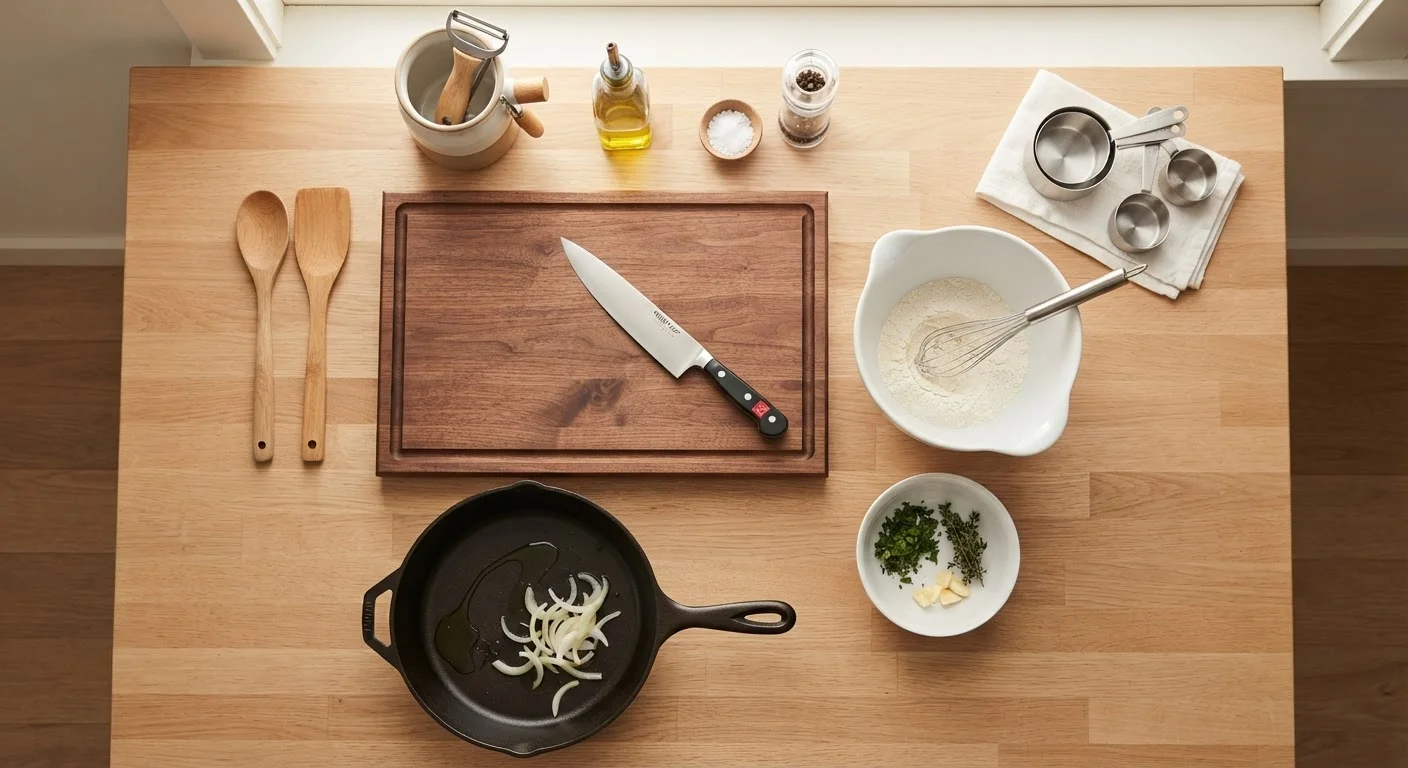
Overhead view of essential kitchen tools arranged neatly on a clean countertop

Key Takeaways

A functional kitchen needs fewer tools than most people think — quality over quantity matters most.
A sharp chef's knife and sturdy cutting board are the single most impactful investments you can make.
Cookware doesn't need to be expensive — a few versatile pieces outperform a full set of mediocre ones.
Pantry staples and basic measuring tools eliminate the most common causes of recipe failure.
Organizing what you have before buying more often solves most kitchen frustrations immediately.
20–40 min

Summary

22 items · 20–40 minutes

Why Your Tool List Matters More Than Your Recipe Collection

Most cooking frustration doesn't come from complicated recipes — it comes from reaching for a tool that isn't there, or using the wrong one and getting unpredictable results. Before you dive into serious cooking, it pays to audit what's actually in your kitchen against what you genuinely need.

This checklist is built around tools that earn their space every day. Nothing here is a novelty gadget. If you're just getting started in the kitchen, see our beginner's cooking guide for context on the fundamentals before you shop. And once your kitchen is stocked, the professional habit of mise en place will help you use everything more efficiently.

Cutting & Prep

Own at least one sharp, well-balanced chef's knife (8-inch is the most versatile size for most tasks). Must
Keep a sturdy cutting board large enough that food doesn't fall off the edges — wood or thick plastic both work. Must
Have a vegetable peeler on hand for peeling root vegetables, potatoes, and tough-skinned produce. Must
Include a box grater or microplane for cheese, citrus zest, garlic, and ginger. Should
Consider a paring knife for detailed work like trimming, peeling, and scoring. Should

Cookware Essentials

Keep a 10- or 12-inch skillet available — stainless steel or cast iron handles most stovetop tasks reliably. Must
Have at least one medium saucepan (2–3 quart) for sauces, grains, and boiling eggs. Must
Own a large pot (6–8 quart) for pasta, soups, stocks, and batch cooking. Must
Include a rimmed baking sheet for roasting vegetables, sheet-pan meals, and baked goods. Should
Keep a lid that fits your skillet — useful for steaming and simmering without a dedicated pot lid. Nice to have

Measuring & Heat Control

Have a set of dry measuring cups (1 cup, ½ cup, ⅓ cup, ¼ cup) for baking and portioning. Must
Keep liquid measuring cups (at least a 2-cup capacity) separate from dry ones for accuracy. Must
Own a set of measuring spoons — teaspoon and tablespoon accuracy matters especially for seasoning and leavening. Must
Use an instant-read thermometer to check meat doneness and avoid undercooked or overcooked results. Should

Mixing, Straining & Serving

Keep at least two mixing bowls in different sizes — nesting sets save storage space. Must
Have a colander or fine mesh strainer for draining pasta, rinsing produce, and straining stocks. Must
Own a sturdy wooden spoon or heat-safe silicone spatula for stirring without scratching cookware. Must
Include a whisk for sauces, eggs, and combining dry ingredients smoothly. Should
Keep a ladle on hand for portioning soups, stews, and sauces without mess. Should

Pantry Staples

Stock kosher salt and black pepper — these two seasonings underpin almost every savory dish. Must
Keep a neutral cooking oil (such as canola or vegetable oil) and a flavorful oil like olive oil in your pantry. Must
Maintain a small rotation of dried aromatics — garlic powder, onion powder, cumin, and paprika cover a wide range of recipes. Should

How to Use This Checklist

Walk through your kitchen with this list in hand. Check off what you already own in good working condition, flag what's damaged or missing, and note any items you regularly work around by improvising. That last category is your real shopping list.

Condition Matters as Much as Ownership

A dull knife is more dangerous than a sharp one — it requires more force and slips unpredictably. Before buying anything new, check that what you already own is in working condition. A knife sharpener or whetstone costs far less than a new knife and can restore a blade that feels useless. Similarly, warped pans that rock on the burner are a real safety hazard and should be replaced.

Resist the urge to replace everything at once. Start with the must-priority items — particularly a reliable chef's knife and a stable cutting board — before adding anything else. A sharp knife alone will change how cooking feels more than any other single purchase.

Once your tools are sorted, consider setting up your kitchen before each prep session as a consistent habit. And a well-stocked pantry to go alongside your tools makes weeknight cooking dramatically easier — see our guide on organizing a functional pantry for a practical framework.

Required

Chef's Knife

Handles the majority of cutting, chopping, slicing, and dicing tasks in everyday cooking.

Required

Cutting Board

Provides a stable, sanitary surface for all prep work and protects countertops.

Required

Instant-Read Thermometer

Confirms safe internal temperatures for meat and poultry, removing guesswork from doneness.

Required

Rimmed Baking Sheet

Enables oven roasting, sheet-pan dinners, and baking with even heat distribution.

Required

Fine Mesh Strainer

Drains pasta, rinses beans and grains, and strains sauces or stocks smoothly.

Optional

Box Grater

Grates cheese, vegetables, and citrus zest quickly without extra equipment.

Food & Cooking Editorial Team is the collective byline for our editorial team and contributor network. Articles published under this byline or an editorial pen name are researched, written, and reviewed according to our editorial standards for clarity, consistency, and independence before publication.

View all articles by Food & Cooking Editorial Team →
Disclaimer: The content on this site is for informational purposes only and is not a substitute for professional advice. Always consult a qualified professional for guidance specific to your situation.