

Key Takeaways
Choosing the Right Cage and Setup
Cage size is the single most consequential housing decision you will make. A cage should be wide enough for your bird to fully extend and flap both wings without touching the bars. For budgerigars, this typically means a minimum of 18 inches wide; cockatiels need at least 24 inches; larger parrots such as African greys or Amazon parrots require substantially more space. Horizontal width takes priority over height, since most birds fly laterally rather than vertically.
Bar spacing is equally important. Bars that are too wide allow a bird's head to become trapped; bars too narrow give small species insufficient grip. Species-specific guidance from an avian veterinarian or a reputable aviculture organization is the safest reference point.
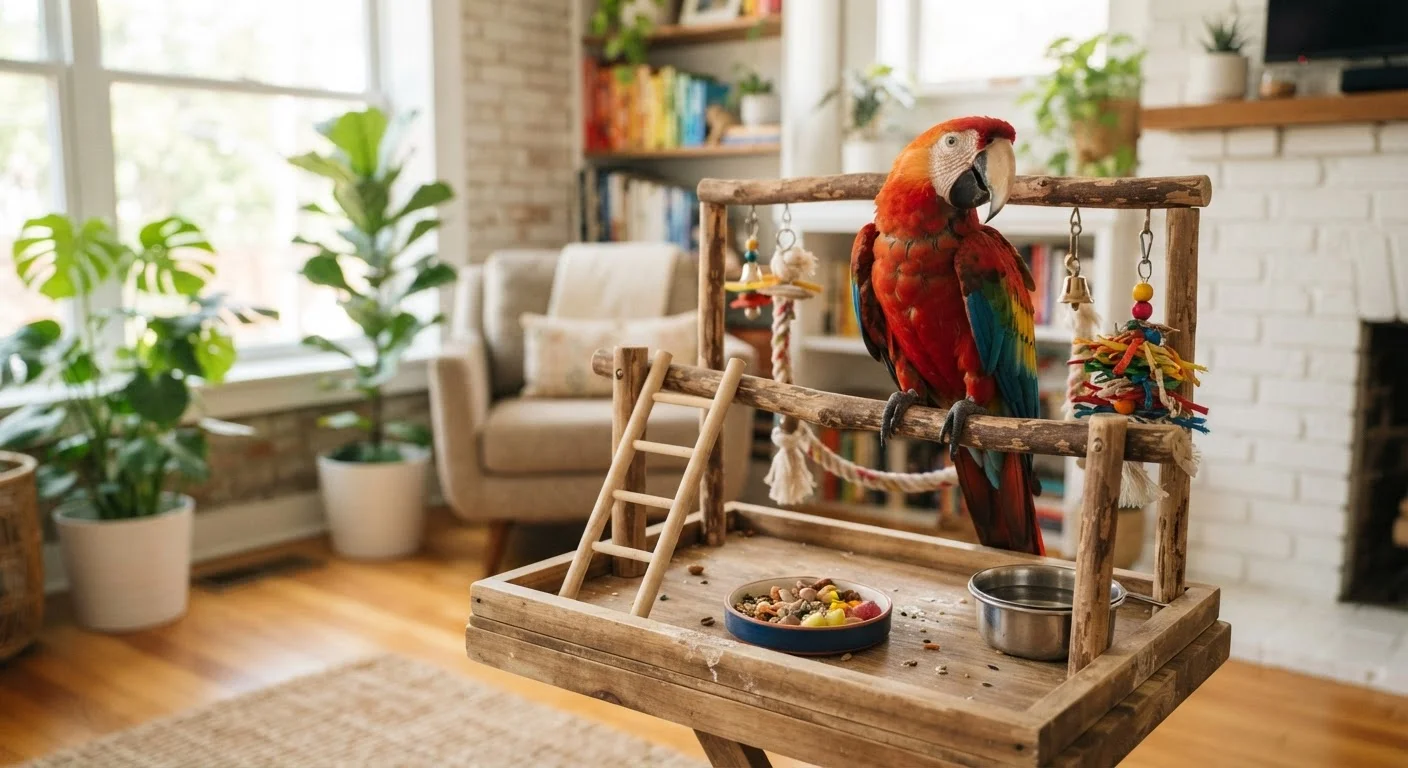
Place the cage in a room where your household spends time — birds are social and benefit from observing family activity — but away from kitchens, drafty windows, and direct all-day sun. A stable temperature between 65°F and 80°F suits most common species. Provide natural, non-toxic wooden perches of varying diameters to support foot health, alongside at least two or three enrichment items such as foraging toys or swings.
Rotate your bird's toys on a weekly schedule rather than leaving the same items in the cage permanently. Novel objects stimulate curiosity and prevent the habituation that leads to boredom.
Behavioural research on psittacines consistently shows that environmental novelty is a key driver of foraging behaviour and psychological wellbeing.
Weigh your bird on a small gram scale weekly and keep a log. A loss of even 5–10% of body weight can signal illness before any visible symptoms appear.
Because birds mask deterioration so effectively, weight tracking is one of the most reliable early-warning tools available to owners without clinical equipment.
If you are deciding between popular starter species, our guide on budgerigars versus cockatiels walks through the practical differences in care demands.
What to Feed Your Pet Bird
A seed-only diet is one of the most common nutritional mistakes in pet bird care. Seeds are high in fat and deficient in vitamins A, D3, and several amino acids. Most avian veterinarians and organisations such as the Association of Avian Veterinarians recommend a formulated pellet diet as the foundation — typically comprising 60–70% of daily intake for many parrot species — supplemented with a variety of fresh foods.
Safe fresh foods include leafy greens (kale, romaine, spinach in moderation), carrots, bell peppers, broccoli, cooked legumes, and small amounts of fruit. Foods that are toxic to birds and must be strictly avoided include avocado, onion, garlic, chocolate, caffeine, and alcohol.
Foods That Are Toxic to Pet Birds
Avocado, onion, garlic, chocolate, caffeine, and alcohol should never be offered to any pet bird species. Even small amounts of some of these can cause serious organ damage or death. When introducing any new food, verify it is species-safe with an avian veterinarian first.
Fresh water must be changed daily, as bacteria proliferate rapidly in water dishes. Grit is not necessary — and can be harmful — for most hookbill species such as parrots and cockatiels, though it is appropriate for some softbill and finch species. Always confirm dietary specifics with an avian veterinarian for your particular species.
Socialisation and Mental Stimulation
Birds are cognitively complex animals. Species such as African greys, cockatoos, and Amazon parrots have intelligence levels compared by researchers to those of young children. Even smaller species like budgerigars and cockatiels require daily interaction and mental engagement to remain psychologically healthy.
Aim for a minimum of one to two hours of out-of-cage time and direct interaction each day for social parrot species. Supervised free-flight within a bird-safe room is ideal. Foraging toys — devices that require the bird to work for food — replicate natural behaviour and reduce boredom-linked problems such as feather plucking or excessive screaming.
Birds that are kept alone bond closely to their human caregivers and may show signs of separation distress if routines change suddenly. Keeping two compatible birds of the same species can help, though this requires careful introduction and does not eliminate the need for human interaction. Consistent daily routines, varied enrichment, and calm, predictable handling build trust over time.
Routine Health and Veterinary Care
Find an avian veterinarian — a vet with specific training or experience in bird medicine — before you bring your bird home. General-practice vets may lack the specialist knowledge required to assess avian health accurately. A baseline wellness examination within the first weeks of ownership establishes normal values for your individual bird.
Annual or biannual wellness checks are generally recommended for most pet bird species. These typically include a physical examination, assessment of feather condition and beak, and fecal testing for parasites or yeast. Blood panels may be recommended depending on species and age.
Birds are prey animals and instinctively mask signs of illness. By the time a bird appears overtly unwell, the condition may be advanced. Learn your bird's normal weight, posture, droppings, and daily activity pattern so that subtle deviations become apparent early. Our overview of signs a small pet is unwell covers species-specific warning indicators in more detail.
~20%
Pet birds fed seeds-only diets estimated to be deficient in vitamin A
Vitamin A deficiency is one of the most commonly diagnosed nutritional problems in pet parrots seen by avian veterinarians in the US.
2–3 hrs
Recommended daily interaction time for social parrot species
Avian welfare guidelines from organisations such as the World Parrot Trust suggest meaningful daily social engagement as a baseline for psychological health.
Indoor Safety Essentials
The domestic environment contains several hazards that are uniquely dangerous to birds. Polytetrafluoroethylene (PTFE), the coating used in many non-stick cookware products, releases fumes when overheated that can be rapidly fatal to birds due to their highly efficient respiratory systems. This applies to some self-cleaning ovens, certain drip pans, and PTFE-coated appliances as well.
Additional hazards include open water containers (drowning risk), ceiling fans during free-flight, toxic houseplants (philodendron, poinsettia, and lilies among others), and fumes from aerosols, air fresheners, scented candles, and cleaning products. Lead and zinc — found in some older cage hardware, costume jewellery, and certain paints — are also serious toxicity risks if ingested.
For a room-by-room walkthrough of risks that are easy to overlook, see our guide to indoor bird hazards. If you are weighing whether a bird fits your home and lifestyle, small pets that suit different living situations offers a broader comparison.
This article is for general informational and educational purposes only. It does not constitute veterinary advice. Always consult a qualified avian veterinarian for guidance specific to your bird's species, age, and health status.