

Key Takeaways
Why Mental Stimulation Matters for Indoor Cats
Indoor cats live longer, safer lives than their outdoor counterparts — but the controlled environment that protects them can also leave their minds underengaged. In the wild, cats spend a significant portion of their waking hours hunting, exploring, and solving problems. Without structured enrichment at home, that same cognitive energy can turn inward, leading to stress, boredom-related behaviors, and even physical health problems.
Veterinary behaviorists recognize environmental enrichment as a cornerstone of indoor cat welfare. A mentally stimulated cat is generally calmer, more social, and less likely to develop compulsive behaviors such as over-grooming or excessive vocalization. This article outlines practical, research-informed practices to keep your cat's mind active and their quality of life high.
For a broader look at your cat's overall care needs, see The Complete Picture of Cat Ownership.
Best Practices for Enriching Your Indoor Cat's Environment
The following approaches are grounded in feline behavioral science and widely recommended by veterinary professionals. Implementing even a few of them consistently can make a meaningful difference.
Schedule two structured interactive play sessions daily, each lasting 10–15 minutes.
Cats are crepuscular hunters — most active at dawn and dusk. Consistent play at these times aligns with their natural activity cycle, helping to burn energy and reduce nighttime restlessness. Regular sessions also strengthen the human-cat bond, which itself contributes to emotional security.
Introduce food puzzle feeders or slow feeders to replace at least one standard meal daily.
Foraging for food engages problem-solving circuits that are rarely used when cats eat from a standard bowl. Puzzle feeding has been associated with reduced anxiety and increased activity in domestic cats, according to feline enrichment research.
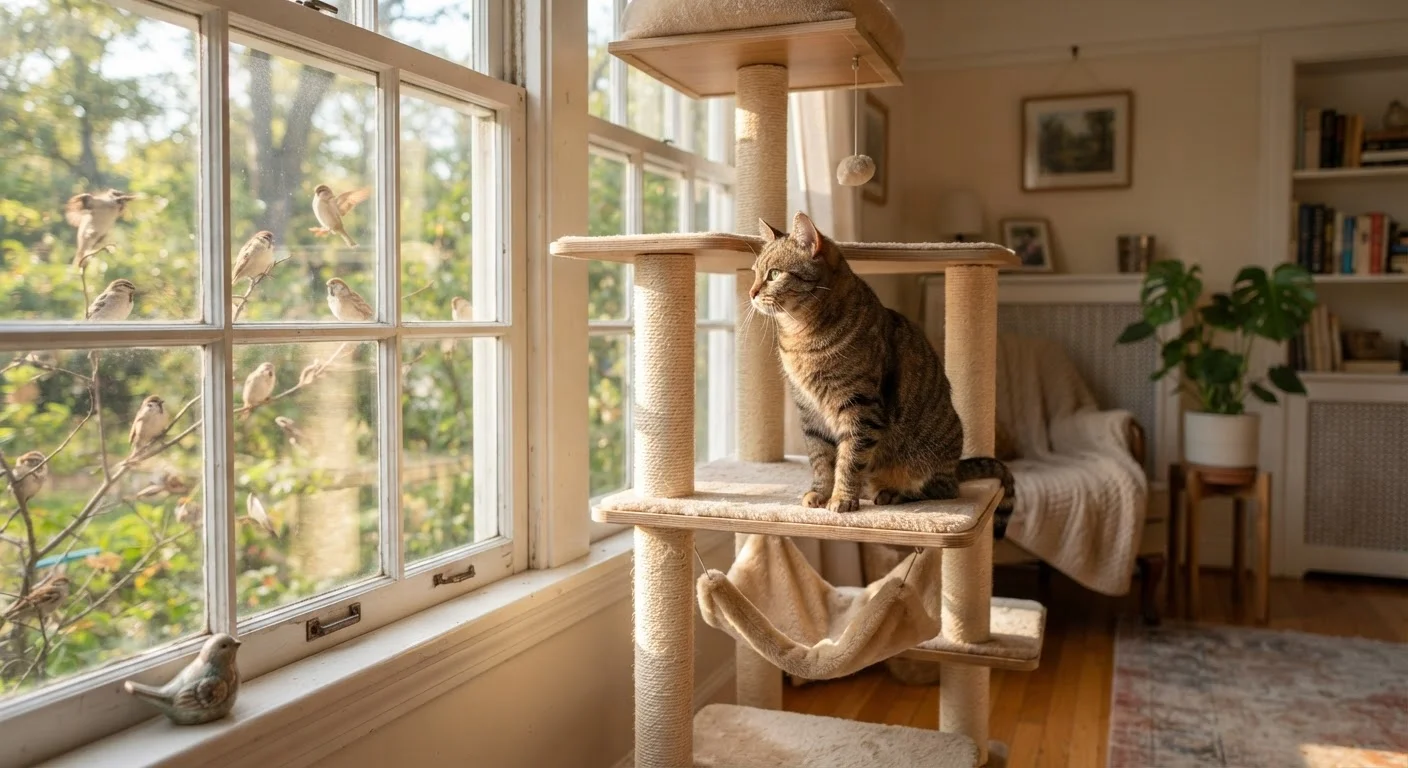
Add vertical space — cat trees, shelves, or window perches — at multiple heights.
Cats instinctively seek elevated vantage points to survey their territory and feel secure. Vertical space effectively expands a cat's perceived territory without requiring more floor area, which is particularly valuable in apartments or smaller homes.
Rotate toys every few days rather than leaving the same ones out permanently.
Cats habituate quickly to static objects — a toy left out constantly loses novelty within days. Rotating a selection keeps items feeling new and triggers investigative behavior each time a familiar toy reappears.
Create sensory variety by introducing safe scents, textures, and sounds.
A cat's olfactory system is far more sensitive than a human's, and scent exploration is a significant part of how cats understand and interact with their environment. Novel textures and occasional nature sounds add stimulation that purely visual enrichment misses.
Consider a second compatible cat if your household and lifestyle can support it.
Social play between cats provides a form of stimulation that humans cannot fully replicate — mutual grooming, chase games, and companionship during the owner's absence all contribute to long-term wellbeing. That said, not all cats are suited to cohabitation, and a poor pairing can increase stress rather than reduce it.
Quick Wins You Can Start Today
You don't need to overhaul your home overnight. These small, immediate actions can begin improving your cat's mental environment right away.
~40%
Indoor cats showing signs of boredom or stress
Feline welfare researchers estimate a substantial proportion of indoor-only cats display behavioral signs consistent with understimulation, including over-grooming and repetitive behaviors.
2x
Increase in activity with puzzle feeding vs. bowl feeding
Studies on environmental enrichment in companion animals suggest food puzzles can roughly double the time cats spend in active engagement around mealtimes.
Reading Your Cat's Signals
Enrichment isn't one-size-fits-all. Pay attention to how your cat responds to each new addition or activity. A cat that walks away from a puzzle feeder after thirty seconds may prefer vertical exploration; one that ignores a window perch might be energized by a wand toy session instead.
Signs that your current enrichment strategy is working include: relaxed posture after play, voluntary grooming (not stress-related), a healthy sleep-wake cycle, and willingness to engage with toys or food puzzles on their own. Signs that more stimulation may be needed include restlessness, furniture scratching in unusual spots, attention-demanding behavior, or weight gain from inactivity.
When to Involve a Professional
If your cat's behavioral changes are sudden, severe, or accompanied by physical symptoms — such as hair loss from over-grooming, significant weight change, or elimination outside the litter box — schedule a veterinary appointment rather than attributing the issue solely to boredom. Medical conditions can present as behavioral problems, and a vet can help rule out underlying causes before focusing on enrichment solutions.
Nutrition also plays a role in your cat's energy and engagement levels. See our guide on wet food vs. dry food for cats to make sure your enrichment efforts are supported by a balanced diet. And don't overlook scheduled vet visits — routine wellness checks are a good time to discuss behavioral concerns with a professional. Review the preventive care checklist for cats to stay on track.
This article is for general informational purposes only. If your cat shows sudden or severe behavioral changes, consult a licensed veterinarian or certified veterinary behaviorist.