

Key Takeaways
The Sunday Setup That Unravels by Midweek
Meal prep has a convincing reputation as a time-saver — and it genuinely can be. But a surprising number of people spend two hours in the kitchen every Sunday only to find themselves ordering takeout by Wednesday, watching containers of soggy rice and grey-tinged chicken go to waste in the refrigerator. The problem usually isn't motivation or effort. It's avoidable mistakes baked into the process itself.
Understanding why meal prep fails mid-week is the first step to making it actually work. For a broader foundation, the complete weekly meal prep playbook covers every stage from planning to storage. The mistakes below are the most common culprits — and each one has a straightforward fix.
Prepping five full days of identical meals in one session.
Why it happens: The appeal of 'set it and forget it' is real — but cooking one enormous batch feels efficient in the moment, even if it backfires by Thursday.
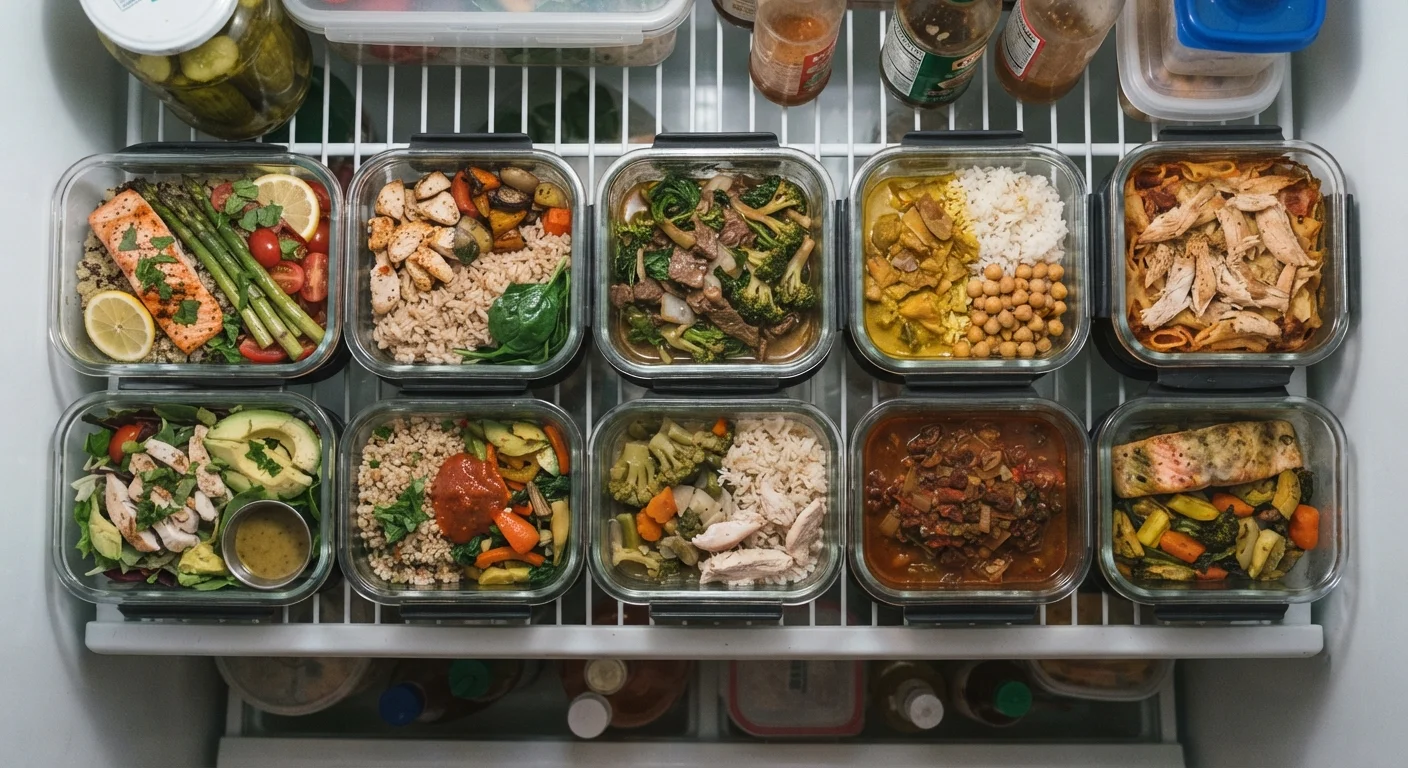
Assembling complete meals — sauce, starch, and protein together — before storing.
Why it happens: It feels convenient to open a container and have everything ready, but moisture migrates between components, turning grains mushy and proteins rubbery.
Dressing salads or mixing wet and dry ingredients ahead of time.
Why it happens: People assume a 'ready to grab' salad saves time in the morning rush — and it does, until the greens collapse into a soggy mess overnight.
Choosing recipes that simply don't reheat well.
Why it happens: Enthusiasm at the planning stage often outpaces practical knowledge — not every dish you'd make for a dinner party translates to a microwave-friendly container four days later.
Ignoring your actual week when planning portion counts.
Why it happens: Optimism takes over on Sunday — you plan for six home-cooked lunches but forget you have a team lunch on Tuesday and dinner plans Thursday.
Skipping proper airtight storage in favor of loosely wrapped bowls or inadequate containers.
Why it happens: Grabbing whatever container is handy feels fine in the moment, but exposure to air accelerates moisture loss and flavor degradation.
How to Keep Your Prep Working All Week
Fixing mid-week meal prep failures doesn't require spending more time in the kitchen — it mostly requires shifting a few habits. Store components separately, choose recipes that reheat well, and plan your portions against your real schedule rather than an idealized one.
Food Safety Comes First
Cooked foods should be cooled and refrigerated within two hours of cooking. Most prepped meals are safe in the refrigerator for three to four days — not the full week. If you're prepping for five or more days, freeze portions beyond day four rather than risking spoilage. When in doubt, trust your senses and discard anything that smells off.
It's also worth questioning whether the all-or-nothing approach to meal prep is the right fit for your lifestyle. A balanced look at the real pros and cons can help you decide what level of prep actually suits your routine. And if the idea of eating the same thing repeatedly is part of what's putting you off, that's a solvable problem — many common meal prep assumptions simply aren't true.
Don't Skip the Cool-Down Step
Placing large pots of hot food directly into the refrigerator raises the internal temperature, which can push nearby foods into the danger zone (between 40°F and 140°F). Divide food into shallow containers and let it cool on the counter for no more than two hours before refrigerating. This protects both your prepped meals and everything else in your fridge.
Small adjustments — a mid-week refresh, keeping dressings separate, labeling containers with dates — add up to a system that holds together all week instead of falling apart by day three. Prep smarter, not more.
3–4 days
Safe fridge life for most cooked meals
According to the USDA, most cooked leftovers and prepped dishes remain safe to eat when refrigerated at or below 40°F for three to four days.
2 hours
Maximum time cooked food can sit at room temperature
The USDA recommends refrigerating cooked food within two hours to prevent bacterial growth in the temperature danger zone.