

Key Takeaways
Why Meal Prep Myths Stick Around
Scroll through social media long enough and you'll see the same image: a spotless kitchen, a dozen identical containers, and a seemingly superhuman cook who apparently spent six hours producing the same lunch for five days straight. That image has done more to discourage meal prepping than almost anything else.
The reality is far more flexible. Meal prep covers a wide range of habits, from washing and chopping produce on a Sunday afternoon to batch-cooking a big pot of grains that anchors meals all week. The version that works for you probably looks nothing like the version that goes viral — and that's completely fine.
Below, we address the most persistent myths that make beginners quit before they start, or prevent curious home cooks from ever trying.
Myth
Meal prep takes at least three or four hours every single week.
Fact
Most practical meal prep sessions run 30–90 minutes, especially once you have a simple system in place.
The marathon prep sessions you see on social media are the exception, not the standard. Prepping a week's worth of lunches or dinners typically means cooking one or two proteins, boiling a pot of grains, and chopping a few vegetables — tasks that can overlap on the stove and in the oven simultaneously. Choosing recipes that share cooking methods and temperatures cuts total time significantly. A confident beginner can prep five days of workday lunches in under an hour once they drop the idea that everything must be made from scratch.
Myth
Meal prep means eating the same bland meal every day.
Fact
Prepping flexible components — rather than complete dishes — creates variety throughout the week from the same session.
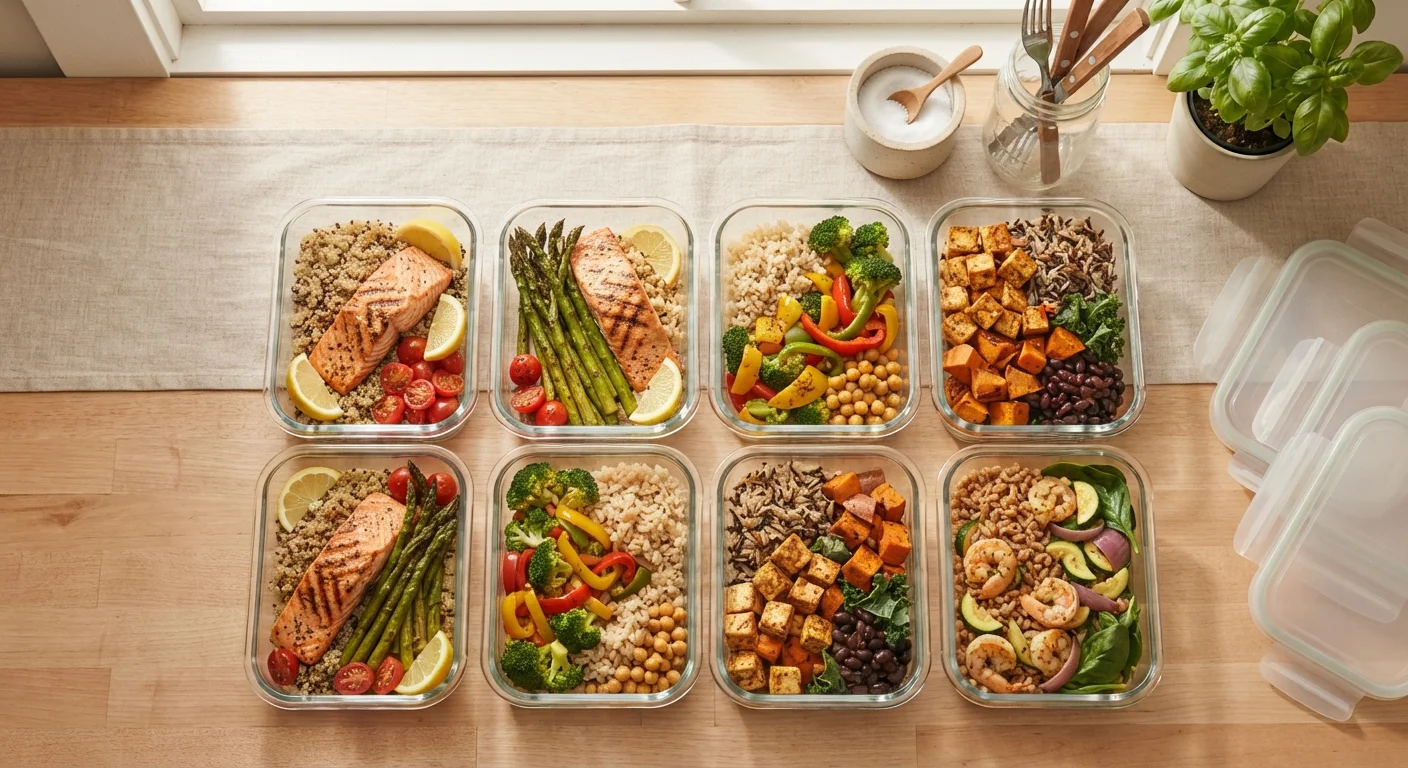
The monotony problem usually comes from prepping full identical meals (Tuesday's lunch looks exactly like Friday's) rather than building blocks. Cook a batch of farro or brown rice and it can become a grain bowl on Monday, a side dish on Wednesday, and a stir-fry base on Friday. Roasted vegetables work in wraps, on top of eggs, or tossed with pasta. Keeping sauces and seasonings separate rather than locking everything in at prep time also keeps flavors fresh and flexible. Many nutrition myths around food variety stem from similar all-or-nothing thinking worth questioning.
Myth
You need special containers, appliances, or a well-equipped kitchen to start.
Fact
Standard containers, a sheet pan, and a pot are all that most effective meal prep requires.
There's a whole industry of meal prep products — divided containers, vacuum sealers, instant pots — that are genuinely useful but entirely optional. Airtight containers you already own work fine for storing most prepped foods. A rimmed baking sheet handles roasting vegetables and proteins at the same time. A lidded pot handles soups, grains, and legumes. Gear should solve a problem you've actually encountered, not become a barrier before you've tried a single session.
Myth
Prepped food goes bad or tastes terrible by Wednesday.
Fact
Most cooked proteins, grains, and vegetables stay safe and palatable for 3–5 days when stored correctly.
According to food safety guidance from the USDA, most cooked foods can be safely refrigerated for three to four days. Some components — hard-boiled eggs, cooked grains, roasted root vegetables — hold up particularly well. The quality decline many people notice mid-week is usually a storage issue rather than a timing one: wet ingredients stored with dry ones cause sogginess, and airtight containers make a real difference. Meal types that genuinely don't keep well (dressed salads, delicate fish) are better prepped fresh or reserved for early in the week.
Myth
Meal prep only works if you cook for a family.
Fact
Prep strategies for solo cooks differ from family cooking, but are equally practical with the right approach.
Most meal prep content does default to serving sizes of four or more, which can make solo cooks feel like they're constantly doing awkward math or generating more food than they can eat. The fix isn't to skip prepping — it's to adjust the scale and format. Cooking smaller batches of two or three proteins rather than one large one adds variety without waste. Prepping ingredients rather than complete meals also reduces the risk of eating the same thing four times before it goes bad.
Building a Realistic Prep Routine
Once the myths are out of the way, the practical question becomes: what does a sustainable routine actually look like? The answer depends heavily on your schedule, household size, and eating preferences — but a few principles apply broadly.
Start smaller than you think you need to. Prepping just two or three components — a cooked grain, a protein, and a washed vegetable — gives you building blocks for multiple meals without committing hours. From there, you can expand based on what actually helped. Structuring a manageable prep session is a skill that develops quickly with practice.
If you cook for one, the math changes significantly. Scaling meal prep for a solo household requires different strategies than cooking for a family — smaller batches, more variety, and smarter storage. And if consistency has been a problem, it's worth understanding why prepped meals often fall apart mid-week so you can plan around those pitfalls from the start.
Don't Let Perfect Planning Stall You
Waiting until you have the right containers, the perfect menu, or a fully free weekend before starting is one of the most common reasons people never begin. A single prepped component — one batch of cooked grains, one washed bag of salad greens — is a genuine starting point. Complexity can come later, once you know what actually helps your week.
Meal prep isn't a perfect system for everyone. A balanced look at the real trade-offs can help you decide whether a full weekly prep routine, a lighter approach, or something in between makes sense for your life.
3–4 days
Safe refrigerator life for most cooked foods
The USDA recommends consuming most cooked leftovers within three to four days when stored properly in the refrigerator at or below 40°F.
~35%
Reduction in daily food decision fatigue
Research on decision fatigue suggests that pre-planning meals reduces the number of daily food choices, which many nutrition researchers associate with more consistent eating habits.