

Key Takeaways
Meal Prep
Meal prep — short for meal preparation — is the practice of planning and preparing some or all of your meals in advance, usually for the week ahead. It can mean anything from washing and chopping vegetables to fully cooking and portioning complete dishes into individual containers. The goal is to reduce the daily effort required to eat well by doing the heavy lifting on a single, dedicated day.
Meal prep exists on a spectrum: ingredient prep (mise en place), component cooking, and fully assembled meals are all valid forms of the practice, and most people blend approaches depending on their week.
What Meal Prep Actually Means
The phrase "meal prep" gets used loosely, which is one reason it confuses people. At its core, meal prep means doing cooking-related work ahead of time so that eating during the week requires less effort. That work can look very different from person to person.
There are three broad levels of meal prep:
- Ingredient prep: Washing produce, chopping vegetables, cooking grains, or marinating proteins so they're ready to be assembled quickly.
- Component cooking: Preparing individual building blocks — a batch of roasted sweet potatoes, a pot of quinoa, a sheet pan of chicken thighs — that can be combined in different ways across multiple meals.
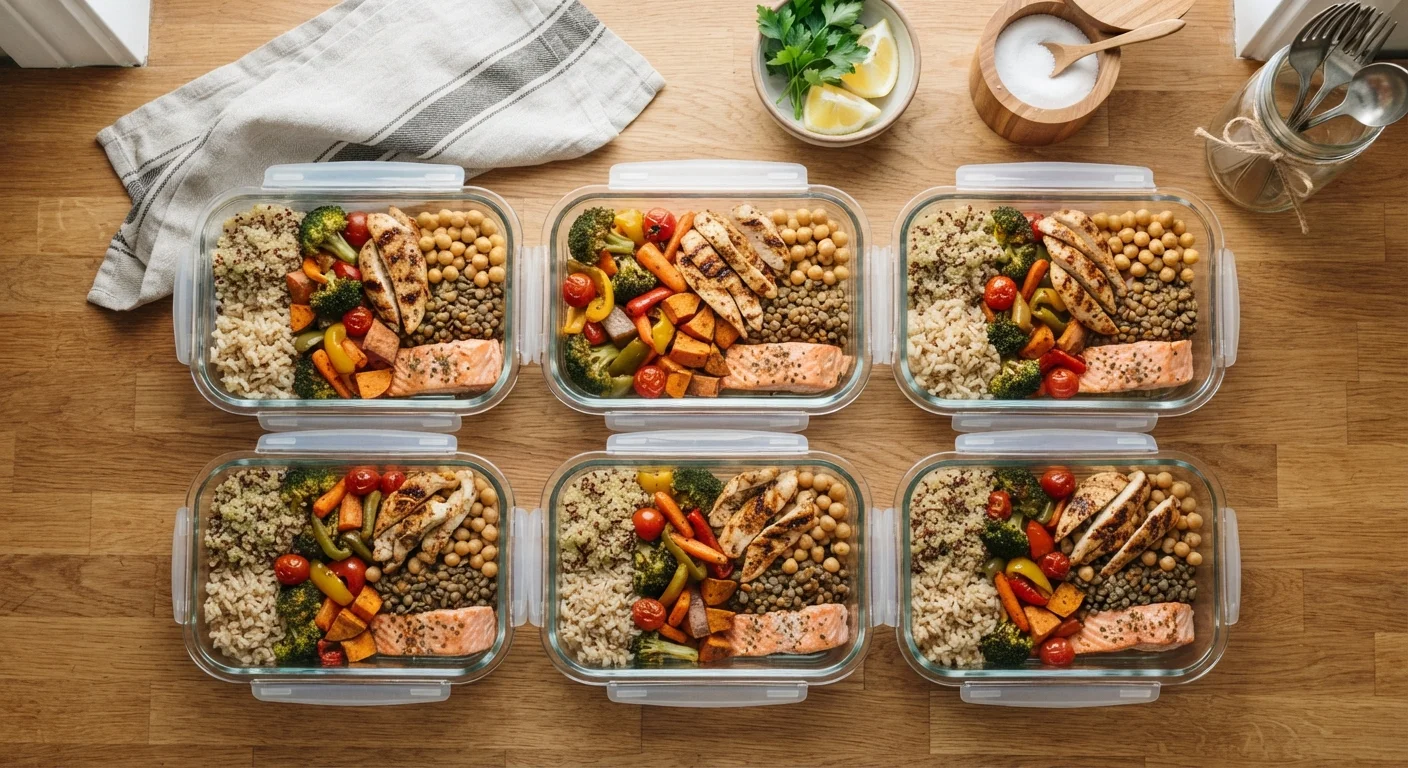
- Full meal assembly: Cooking and portioning complete meals into individual containers, so each serving just needs to be reheated.
Most people use a mix of all three depending on the week. There's no single correct version, and common meal prep myths often suggest otherwise — which discourages beginners before they start.
Meal Prep Looks Different for Everyone
There's no single "right" way to meal prep. Some people dedicate a few hours on Sunday; others do small, daily tasks like chopping vegetables while dinner cooks. The most effective approach is the one you'll actually stick to consistently. Don't let idealized versions of meal prep you see online set an unrealistic standard.
How Meal Prep Differs From Batch Cooking
Batch cooking — making a large quantity of one dish — is a popular strategy that often gets treated as synonymous with meal prep. They overlap, but they're not the same thing.
Batch cooking is a tool. Meal prep is the broader practice that may or may not use that tool. Someone who batch cooks a big pot of chili is doing batch cooking. Someone who plans the week's lunches, preps ingredients for three dinners, and portions snacks into grab-and-go containers is doing meal prep — and might not be batch cooking at all.
Understanding the distinction helps you choose the approach that fits your actual week. Our article on batch cooking vs. full meal prep walks through the differences in detail so you can decide what works best for your schedule and cooking style.
~$3,000
Annual savings from cooking at home vs. eating out
The Bureau of Labor Statistics consistently reports that households that cook at home spend significantly less on food annually than those who rely heavily on food service.
~30–40%
Reduction in weeknight cooking time with meal prep
Culinary educators and registered dietitians commonly cite this range as a realistic time savings when basic ingredient prep has been completed in advance.
40%
Of U.S. food supply wasted annually
According to the USDA Economic Research Service, approximately 30–40% of the U.S. food supply is wasted — structured meal planning is one practical way to reduce household food waste.
Why Meal Prep Works: The Practical Case
Meal prep's effectiveness comes down to a simple idea: removing friction. When a nutritious meal is already made and waiting in the refrigerator, the decision to eat it requires almost no effort. When nothing is prepared, even a simple dinner involves planning, shopping, cooking, and cleaning — a chain of tasks that's easy to bypass with a takeout order after a long day.
Research published in the International Journal of Behavioral Nutrition and Physical Activity has found an association between meal planning habits and healthier dietary patterns, including greater diet variety and lower rates of obesity. While planning alone doesn't guarantee better eating, the structure it creates supports more intentional food choices.
Beyond nutrition, the practical benefits are real:
- Less daily decision-making — Deciding what to eat five times a day is mentally tiring. Prepping removes most of those micro-decisions.
- Reduced food waste — Buying ingredients with a plan means they're more likely to be used before they spoil.
- Lower cost per meal — Cooking at home is generally less expensive than eating out regularly, and prepped meals reduce the temptation to order food impulsively.
The quality of what you prep also matters. Understanding the difference between whole and processed foods can help you make prep sessions count even more from a nutritional standpoint.
“People who plan their meals tend to have better diet quality and are less likely to be overweight. The act of planning creates a structure that supports healthier choices throughout the week.”
— Marlene Schwartz, Director, Rudd Center for Food Policy and Health, University of Connecticut
Getting Started Without Overcomplicating It
The most common mistake beginners make is trying to prep everything at once. A more sustainable approach is to start with one meal category — most people choose weekday lunches — and build from there.
A practical first prep session might look like this:
- Choose two recipes that use overlapping ingredients (for example, roasted chicken and a grain salad that both use the same vegetables).
- Shop with a focused list covering only those recipes.
- Block off 60–90 minutes on a Sunday afternoon.
- Cook, portion, and store. Label containers with the date.
From there, you can scale up gradually as the habit becomes routine. The goal isn't a perfectly optimized system — it's a consistent practice that makes your week easier and your eating more intentional. That's what meal prep actually involves, and why it works for so many people.