

Key Takeaways
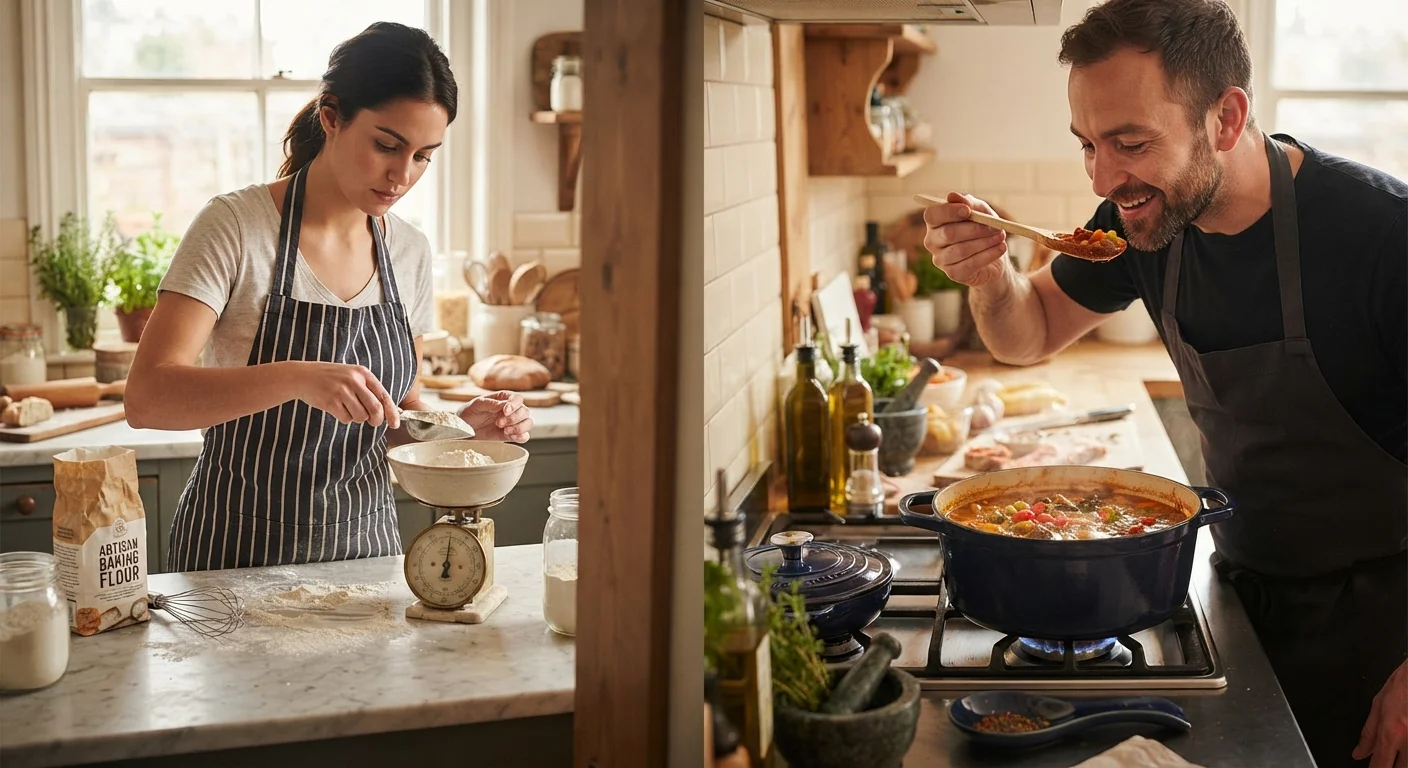
Option A
Baking
The precise, chemistry-driven discipline.
Best for: Anyone who appreciates structured recipes, predictable outcomes, and the satisfaction of following a process to the letter.
Option B
Cooking
The intuitive, adaptable everyday skill.
Best for: Anyone who enjoys flexibility, improvisation, and adjusting flavors on the fly based on what's available.
If you prefer structure and love following a process step-by-step
Baking
Baking's precise nature suits methodical thinkers who find satisfaction in a recipe that produces the same result every time.
If you want flexibility to use what's in your fridge without a strict recipe
Cooking
Stovetop and oven-based cooking allows you to swap ingredients, adjust seasoning, and taste as you go — skills that develop quickly with practice.
If you're a complete beginner trying to build kitchen confidence
Cooking
Cooking offers immediate, adjustable feedback through tasting and smelling, making mistakes easier to catch and correct before serving.
If you want to understand food science and improve your consistency
Baking
Baking teaches how heat, fat, liquid, and leavening interact — knowledge that deepens your overall understanding of how food transforms.
The Core Difference: Chemistry vs. Intuition
Baking is, at its foundation, applied chemistry. When you combine flour, fat, liquid, and a leavening agent like baking soda or yeast, you're setting off a series of reactions that depend entirely on the correct ratios. Too much flour makes a cake dense; too little baking powder leaves it flat. The oven locks in your decisions — there's no tasting halfway through and adding more salt.
Cooking on the stovetop or in a roasting pan operates differently. If a soup tastes flat, you add a pinch of salt. If a sauce reduces too fast, you splash in more stock. The dish remains malleable until the moment it's plated. This is why tasting as you cook is such a transformative habit — it gives you real-time information that baking simply cannot offer.
Neither approach is superior. They're just governed by different rules, and recognizing that upfront saves a lot of frustration.
| Criterion | Baking | Cooking |
|---|---|---|
| Measurement approach | Precise — weight and volume critical | Flexible — estimates often work fine |
| Mid-process adjustments | Very limited once in the oven | Easy — taste and adjust throughout |
| Ingredient substitution | Risky — can disrupt chemistry | Usually manageable with judgment |
| Temperature sensitivity | High — ingredient and oven temps matter | Moderate — more forgiving range |
| Learning curve | Steeper for beginners | Gentler with faster feedback loops |
| Skill driver | Precision and preparation | Intuition and sensory awareness |
Why Baking Punishes Improvisation
Experienced bakers don't eyeball their flour — they weigh it. A cup of flour scooped directly from a bag can weigh anywhere from 120 to 160 grams depending on how packed it is. That 30% variance is the difference between a tender crumb and a brick. Professional bakers use kitchen scales as standard practice because the margin for error is genuinely slim.
This also applies to temperature. Butter that's too warm makes cookies spread into flat puddles; cold eggs added to a batter can cause the mixture to seize and curdle. Baking rewards the kind of preparation described in the mise en place approach — having every ingredient measured and at the right temperature before you begin.
~30%
Variation in a cup of flour by weight
Culinary educators commonly note that scooped flour can range from 120–160 grams per cup depending on packing — a variance significant enough to alter baked goods.
325°F–375°F
Most common home baking temperature range
The majority of home baking recipes specify oven temperatures in this range, where precise calibration of the oven itself also affects outcomes.
If you're newer to the kitchen, this doesn't mean baking is off-limits. It means approaching it with more preparation and less improvisation than you might bring to a weeknight stir-fry.
Where Cooking Gives You Room to Grow
One of cooking's great advantages for beginners is that most mistakes are correctable. Over-salted? Add an acid like lemon juice or a starch to absorb some of it. Underseasoned? Taste and adjust before serving. Vegetables cut unevenly? They'll still cook — though developing consistent knife skills will improve both texture and presentation over time.
This flexibility also makes cooking more adaptable to real life. When a recipe calls for thyme and you only have rosemary, you can make a reasonable substitution. When you're scaling a dish for two instead of four, the adjustments are usually straightforward. These aren't liberties you can take as freely in baking, where scaling recipes involves recalculating leavening ratios carefully.
For those just starting out, cooking fundamentals are a practical entry point — building heat control and flavor awareness before tackling the stricter world of baking.
How the Two Disciplines Reinforce Each Other
Separating baking and cooking into opposing camps misses an important truth: skills transfer. A baker who learns to taste and adjust — testing a pastry cream for sweetness, for instance — becomes a better cook. A cook who practices precise prep and timing brings that discipline into baking with real benefit.
Understanding how heat affects protein (think egg proteins setting in a custard versus proteins firming in a seared steak) bridges both worlds. So does learning how fat carries flavor, how salt enhances rather than just seasons, and how resting time affects texture. These are kitchen-wide principles, not discipline-specific ones.
Whether you're drawn to the meditative precision of bread-making or the improvisational freedom of weeknight cooking, both reward practice. The key is entering each with the right expectations — and not judging a soufflé by a soup's standard.
This article is for general informational and educational purposes. Always use appropriate food safety practices when preparing and storing food.