

Key Takeaways
Circling Behavior in Hamsters
Circling behavior refers to when a hamster repeatedly runs or walks in tight circles, either inside or outside of its exercise wheel. This can be a normal outlet for energy and curiosity, or it may signal stress, boredom, or an underlying health issue. Understanding the context — including how often it happens, how the hamster otherwise acts, and what its environment looks like — helps owners determine whether a vet visit is needed.
In veterinary contexts, persistent involuntary circling in small mammals may be associated with vestibular dysfunction, inner ear infection, or neurological conditions such as stroke — distinct from voluntary, repetitive circling linked to stereotypic behavior.
Two Very Different Reasons a Hamster Circles
When owners notice a hamster running tight, repeated loops around its cage, the instinct is often to assume something is wrong. The reality is more nuanced: circling in hamsters falls into two broad categories — behavioral and medical — and distinguishing between them is the critical first step.
Behavioral circling is a voluntary, often repetitive action the hamster has learned as a way to cope with an under-stimulating environment. Medical circling, by contrast, tends to be involuntary, may worsen over time, and is typically accompanied by other physical signs such as a tilted head, stumbling, or reduced appetite. Watching your hamster closely — without intervening immediately — helps you gather the information a vet will need if a consultation becomes necessary.
Observing Before Acting Helps
Before calling the vet or rearranging the habitat, spend a few minutes simply watching your hamster without disturbing it. Note whether the circling is continuous or episodic, which direction it tends to go, and whether it happens on or off the wheel. This information is genuinely useful to a veterinarian trying to assess the cause.
Boredom, Stress, and Stereotypic Behavior
The most common driver of repetitive circling is inadequate enrichment or space. Hamsters are crepuscular (most active at dusk and dawn) and naturally travel several miles per night in the wild. When a cage is too small or offers little to explore, the brain seeks stimulation in other ways — often through repetitive movements called stereotypies.
Stereotypic behavior is well-documented in captive small mammals and is considered a welfare concern. It can include bar-chewing, backflipping, and compulsive circling. The behavior is not dangerous in isolation, but it signals that something in the animal's environment needs to change.
Common environmental triggers include:
- An enclosure smaller than the commonly recommended minimum floor space for the species
- An exercise wheel that is too small, causing an arched back during running
- Lack of nesting material, hides, or foraging opportunities
- Excessive noise, bright light, or other environmental stressors
- Inconsistent sleep disruption (hamsters handled too frequently during the day)
For practical ideas on giving your hamster a richer life within a limited space, see our guide to keeping a hamster happy in a small home.
Choosing the Right Wheel Matters
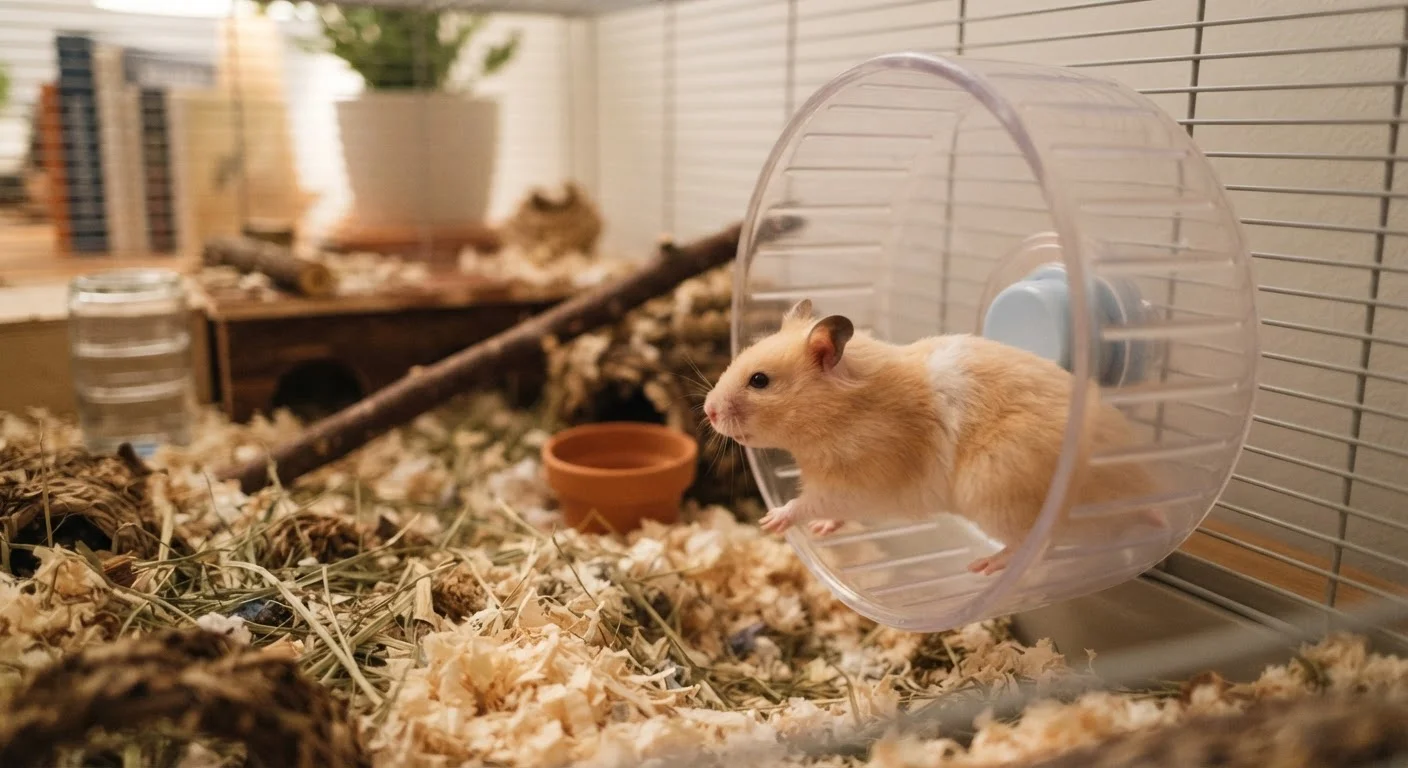
A wheel that forces your hamster to arch its back during running is too small — and an incorrect wheel can contribute to repetitive movement patterns both on and off the wheel. Look for a solid-surface, appropriately sized wheel that allows your hamster to run with a flat or gently curved back. Mesh or barred wheels can injure small feet and should be avoided.
When Circling Is a Medical Warning Sign
If your hamster's circling appears involuntary — meaning the animal seems unable to walk in a straight line even when it appears to be trying — a medical cause is more likely. Several conditions can produce this pattern:
- Vestibular disease
- Affects balance and spatial orientation. Symptoms include head tilt, rolling, and loss of coordination alongside circling.
- Inner or middle ear infection
- Bacterial infections in the ear canal can disrupt the vestibular system. Circling will typically be consistently in one direction.
- Stroke or neurological event
- More common in older hamsters. Can cause sudden-onset circling, weakness, and changes in posture or facial symmetry.
- Brain tumor
- Uncommon but possible; symptoms often progress gradually over days or weeks.
None of these conditions can be reliably diagnosed at home. If you observe any combination of circling, head tilt, loss of balance, lethargy, or appetite changes, contact a veterinarian experienced with exotic or small mammals as soon as possible. For a broader look at how hamsters signal illness, our species-by-species overview of small pet illness signs covers additional warning indicators to watch for.
~5 miles
Distance wild hamsters travel nightly
Research on wild European hamsters has documented nightly travel distances of several miles, underscoring how much natural movement captive hamsters require.
80%+
Cages undersized per welfare guidelines
Animal welfare assessments in multiple European countries have found the majority of commercially sold hamster cages fall below recommended minimum floor space standards.
What to Do Next
Start by honestly assessing the environment. Is the wheel appropriately sized — typically 8–12 inches in diameter for Syrian hamsters and 6–8 inches for dwarf species, allowing a flat back while running? Does the enclosure offer sufficient floor space, burrowing depth, and opportunities for foraging? If the answer to any of these is no, environmental improvement is the logical first step for behavioral circling.
However, if the circling began suddenly, is happening off the wheel (not just during running), worsens progressively, or is paired with any physical symptom, prioritize a vet visit over habitat changes. A veterinarian can examine the ears, assess neurological function, and advise on appropriate next steps. Trying to treat a medical cause at home can delay care and allow conditions to worsen.
This article is for general informational purposes only and is not a substitute for professional veterinary advice. Always consult a qualified veterinarian for concerns about your pet's health.