

Key Takeaways
Your Cat Isn't Weird — It's Wired
If you've ever watched your cat knock a full glass of water off the counter with deliberate calm, chatter at a bird through the window, or suddenly sprint across the room at 2 a.m., you've likely wondered what on earth is going on inside that small, inscrutable head. The good news: researchers and veterinary behaviourists have pieced together reasonable, science-backed explanations for nearly all of it.
Cats are still relatively recent companions in human history compared to dogs, and their behaviour reflects a species that has retained strong wild instincts even in domestic settings. Understanding those instincts makes cats far less mysterious — and far easier to live with. For a deeper look at how behaviour connects to overall wellbeing, the complete picture of cat ownership is a useful companion resource.
Kneading with their paws
Cats push their paws rhythmically against soft surfaces — blankets, laps, even other animals. This behaviour originates in kittenhood, when nursing kittens knead their mother's belly to stimulate milk flow. In adult cats, it's widely understood as a self-soothing behaviour associated with contentment and security. The presence of scent glands in the paw pads also means kneading may carry a territorial or bonding dimension.
Kneading is a lifelong comfort behaviour rooted in early nursing instincts.
Chattering at birds and squirrels
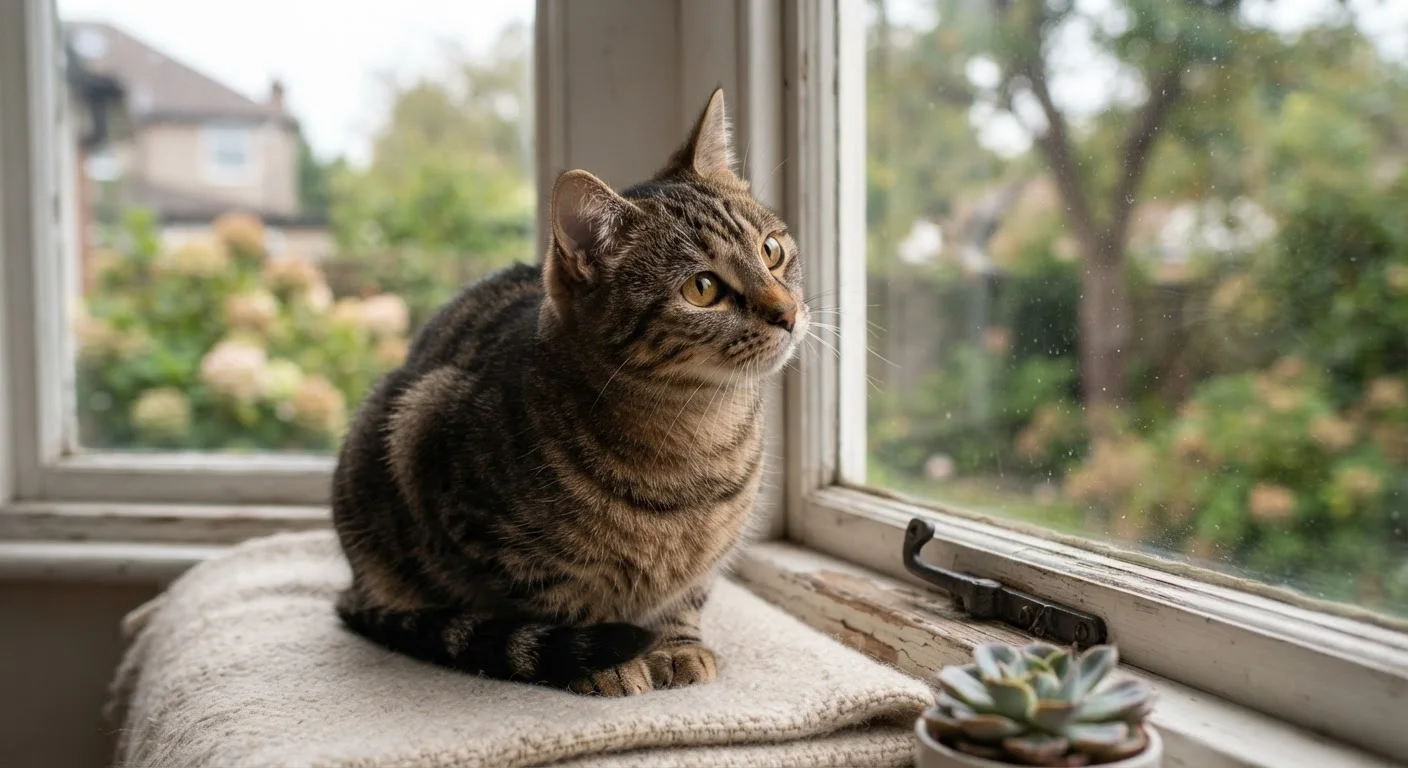
That rapid jaw-clicking sound cats make while watching prey through a window is called chattering or chittering. One widely cited hypothesis is that it mimics the killing bite used on prey — a kind of frustrated motor rehearsal when a cat can see prey it cannot reach. Some researchers have also suggested it may function as a prey-luring vocalization, though this remains debated among animal behaviourists.
Chattering at prey may be a frustrated rehearsal of the predatory killing bite.
Knocking objects off surfaces
Yes, cats really do seem to do this on purpose. From a behavioural standpoint, pawing at objects is an extension of investigative and predatory behaviour — testing whether something moves, responds, or is worth pursuing. Cats that knock things off counters are often under-stimulated or seeking interaction. Providing adequate play and environmental enrichment tends to reduce the frequency significantly.
Knocking things over is investigative behaviour — a sign your cat needs more stimulation.
The slow blink
A slow, deliberate blink directed at you is one of the clearest positive signals in feline body language. Research, including a 2020 study published in Scientific Reports, found that cats respond to slow blinking from humans with slow blinks of their own, and are more likely to approach a person after a slow-blink exchange. It functions as a relaxed, non-threatening social signal — essentially a visual form of trust. Decoding your cat's body language explains many more of these subtle cues.
A slow blink is one of the clearest trust signals a cat can offer a human.
Bringing you 'gifts'
A cat depositing a dead mouse or bird at your feet isn't being gruesome — it's expressing a deeply embedded maternal and social instinct. Mother cats bring prey to their kittens to teach hunting. Domestic cats, particularly those that spend time outdoors, may extend this behaviour to their human companions as part of their social group. It signals that your cat regards you as part of its inner circle.
Gift-giving behaviour reflects a cat's instinct to provision members of its social group.
Rubbing their face on everything
Bunting — the act of pressing the cheeks, chin, or forehead against objects and people — is how cats deposit facial pheromones. These scent markers communicate territory, familiarity, and comfort. When a cat rubs its face on you, it is, in a meaningful sense, claiming you as part of its safe social environment. It's a form of affiliation, not ownership in an aggressive sense.
Facial rubbing deposits pheromones that mark people and spaces as safe and familiar.
Zoomies — the sudden sprint at 2 a.m.
Frenetic random activity periods (FRAPs), colloquially called zoomies, are bursts of intense physical activity with no obvious trigger. Cats are crepuscular by nature — most active around dawn and dusk — and indoor cats in particular may accumulate pent-up predatory energy throughout the day. The late-night sprint is often a release of that energy. Regular interactive play sessions earlier in the evening can help moderate the timing.
Zoomies are a natural release of pent-up predatory energy in crepuscular animals.
Sitting in boxes and tight spaces
Cats gravitate toward enclosed spaces because they offer a sense of security — a position from which they can observe their surroundings without being easily approached from behind. In the wild, small enclosed spots serve as shelter and hunting vantage points. A 2014 study involving shelter cats found that those given boxes to hide in showed lower stress indicators than those without access to one, suggesting this behaviour has genuine welfare implications.
Enclosed spaces reduce feline stress by providing a secure, controllable vantage point.
Excessive grooming or grooming you
Cats spend a significant portion of their waking hours grooming — it regulates body temperature, distributes skin oils, and removes parasites. When cats groom their owners or other cats (allogrooming), it reinforces social bonds and signals affiliation. However, over-grooming to the point of hair loss can indicate stress, skin conditions, or allergies, and warrants a veterinary evaluation. Understanding what normal grooming looks like is part of avoiding common health oversights.
Grooming is both functional and social — but compulsive over-grooming is a red flag.
Meowing — almost exclusively at humans
Adult cats rarely meow at other cats; they hiss, trill, chirp, and yowl. Meowing as a sustained communication tool appears to be a behaviour cats have adapted specifically for interacting with humans. Researchers believe domestic cats have effectively learned to vocalise in ways that elicit human responses — food, attention, door-opening. Different cats develop individualised 'vocabularies' with their owners over time, making meowing a genuinely evolved interspecies communication strategy.
Meowing at humans is an adaptive communication strategy cats have refined for domestic life.
When to Take Behaviour Seriously
Most of the behaviours above are normal expressions of feline biology. But context matters. A cat that suddenly stops grooming, begins hiding constantly, or starts vocalising far more than usual may be signalling discomfort or illness rather than simply acting on instinct. Unusual behaviour shifts often carry meaning worth investigating. Similarly, common owner misconceptions about feline health — like assuming a purring cat is always content — can delay recognising a genuine problem.
Pairing a solid grasp of normal feline behaviour with regular veterinary check-ups gives you the clearest possible picture of your cat's wellbeing. When in doubt about any behaviour change, a consultation with your vet or a certified veterinary behaviourist is always the right first step.
Behaviour and nutrition are connected
A cat's diet can influence energy levels, mood, and even grooming habits. Nutritional deficiencies or sensitivities sometimes manifest as behavioural changes before more obvious physical symptoms appear. If you notice unexplained behaviour shifts alongside changes in appetite or coat condition, it's worth reviewing both factors. See our overview of feline nutritional needs for context.