

Key Takeaways
Flexibility vs. Mobility
Flexibility refers to how far a muscle can lengthen or stretch. Mobility is your ability to actively move a joint through its full range of motion with control. You can be flexible without being mobile — and limited mobility can affect daily life even if your muscles feel loose.
In exercise science, flexibility is often described as a passive quality (how far a muscle stretches under external force), while mobility involves active neuromuscular control throughout the movement range.
Why the Confusion Exists
Walk into any gym or scroll through a wellness article and you'll likely see "flexibility" and "mobility" used as if they mean the same thing. It's an easy mistake — both involve how your body moves, and both matter for staying comfortable and active. But treating them as identical can leave gaps in your physical health that you might not notice until they start causing problems.
Understanding the real distinction helps you make smarter choices about how you move and exercise — whether you're easing back pain, staying active as you age, or just trying to feel less stiff getting out of bed in the morning. Much like how mindfulness and meditation are often conflated despite being genuinely different practices, flexibility and mobility each have their own role in your well-being.
What Flexibility Actually Means
Flexibility is a property of your muscles and connective tissue. It describes how far a muscle can be stretched or lengthened — often with outside assistance. When you sit on the floor and reach for your toes, the distance your hamstrings allow is a measure of flexibility.
Crucially, flexibility is largely passive. Your muscles are being elongated, but you're not necessarily in control of what's happening. A massage therapist stretching your leg, gravity pulling you into a forward fold, or a static stretch held after a workout — these all test or improve flexibility, but they don't automatically translate into control over how your joints move.
~80%
Adults who experience back pain at some point
According to the National Institute of Neurological Disorders and Stroke, lower back pain is one of the most common physical complaints among adults in the U.S., often linked to limited core and hip mobility.
1 in 4
U.S. adults reporting joint pain
CDC data indicates that arthritis and joint discomfort affect a substantial portion of American adults, making functional mobility a key health concern across age groups.
This distinction matters more than it might seem. Muscles that can stretch a long way don't automatically support balanced, stable movement. Think of flexibility as the raw potential — and mobility as whether you can actually use it.
What Mobility Really Involves
Mobility goes a step further. It describes your ability to actively move a joint through its full range of motion — with control and intention. It involves not just muscle length, but also joint health, neuromuscular coordination (the communication between your nervous system and muscles), and strength throughout the range of motion.
If you can touch your toes passively but can't hold a deep squat with good posture, you may have decent hamstring flexibility but limited hip mobility. The muscle can stretch, but the joint system can't actively control that range when it's needed.
A Simple Way to Tell the Difference
Try this informal check: can you perform a movement passively (with assistance or gravity) that you struggle to do on your own? If so, you likely have the flexibility but not yet the mobility for that range. Focus your training on actively moving through ranges — not just holding static stretches — to close that gap.
Mobility is what lets you reach a high shelf comfortably, lower yourself onto the floor without gripping the furniture, or walk uphill without your knees aching. It has a more direct relationship with how you function day-to-day.
How to Work on Each — and Why Both Matter
Improving flexibility typically involves regular stretching — holding a position for a sustained period to encourage muscle lengthening over time. This is a valuable practice and shouldn't be dismissed, but it's only part of the picture.
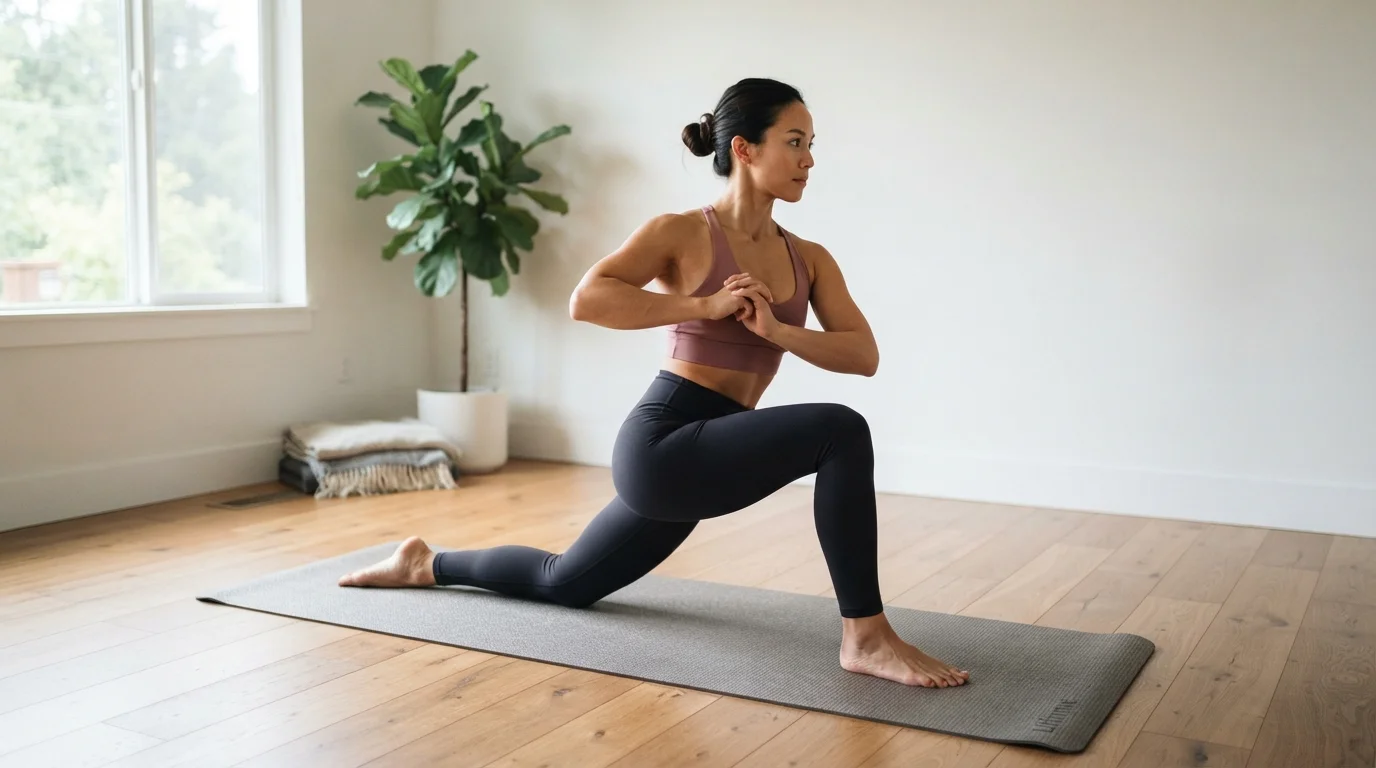
Building mobility requires something more active: moving through a range of motion under your own power, often against light resistance. Exercises like controlled leg swings, deep bodyweight squats, or rotational movements train the joint to work confidently across its full range. Strength work that takes joints through full movement — rather than partial ranges — is particularly effective.
The good news is that both can be improved at any age. Consistency matters more than intensity, and even short daily sessions can produce meaningful results over weeks and months. If you're unsure where to start, or if you have existing joint issues, a physical therapist or certified fitness professional can provide guidance tailored to your situation.
This article is for general informational purposes only and is not a substitute for professional medical or fitness advice. Consult a qualified healthcare provider before starting any new exercise program.