

Key Takeaways
Why Sitting All Day Is Worth Taking Seriously
Most desk workers spend six to nine hours a day seated — and public health researchers have flagged prolonged sitting as a genuine concern, independent of whether someone exercises outside of work. Extended sedentary periods are associated with reduced circulation, muscle stiffness, and over time, elevated risk for a range of chronic health concerns.
The reassuring truth, though, is that you don't need to overhaul your life to make a meaningful difference. Research suggests that breaking up long periods of sitting with even brief bouts of light movement — standing, stretching, a short walk — can support better blood flow, energy levels, and concentration. Whether you work at home or in an office, the strategies below are designed to fit within a real workday. For a broader look at how your work environment shapes your health habits, see our comparison of remote and office work.
Small Breaks Add Up More Than You Think
You don't need 30 uninterrupted minutes to benefit from movement. Five 5-minute walks spread through the day deliver meaningful cardiovascular and metabolic benefits. Think of movement as something you accumulate, not something you schedule in one block.
What You'll Need Before You Start
The good news: almost none of this requires special equipment. A few optional additions can help, but the fundamentals are free.
What you will need
Step-by-Step: Building Movement Into Your Workday
Follow these steps to create a realistic, low-friction movement routine around your existing schedule. You don't need to do all of them at once — start with one or two and build gradually. For guidance on making habits stick long-term, our article on what a sustainable exercise habit actually looks like offers a helpful framework.
Set a movement reminder every 45 to 60 minutes
Use your phone, a smartwatch, or a free timer app to alert you when you've been seated too long. The goal isn't a full workout — just a prompt to stand up, take a few steps, or do a quick stretch. Consistency matters far more than intensity here.
Stand or walk during low-focus tasks
Phone calls, listening to recorded meetings, or thinking through a problem are ideal moments to get on your feet. Pace around the room, stand at a counter, or step outside briefly. You'll often find your thinking is sharper when you're moving.
Add micro-stretches targeting desk-related tension
Focus on areas that tighten during desk work: the hip flexors, chest, shoulders, and neck. Simple stretches — a seated figure-four stretch for hips, a doorframe chest opener, or slow neck rolls — take under two minutes and can meaningfully ease accumulated tension.
Rethink how you take breaks
Instead of scrolling through your phone during breaks, use that time to walk — even just to a different room, down a hallway, or outside for a few minutes. A 5-minute walk breaks up sedentary time and also gives your eyes a rest from screens.
Adjust your workspace to encourage natural movement
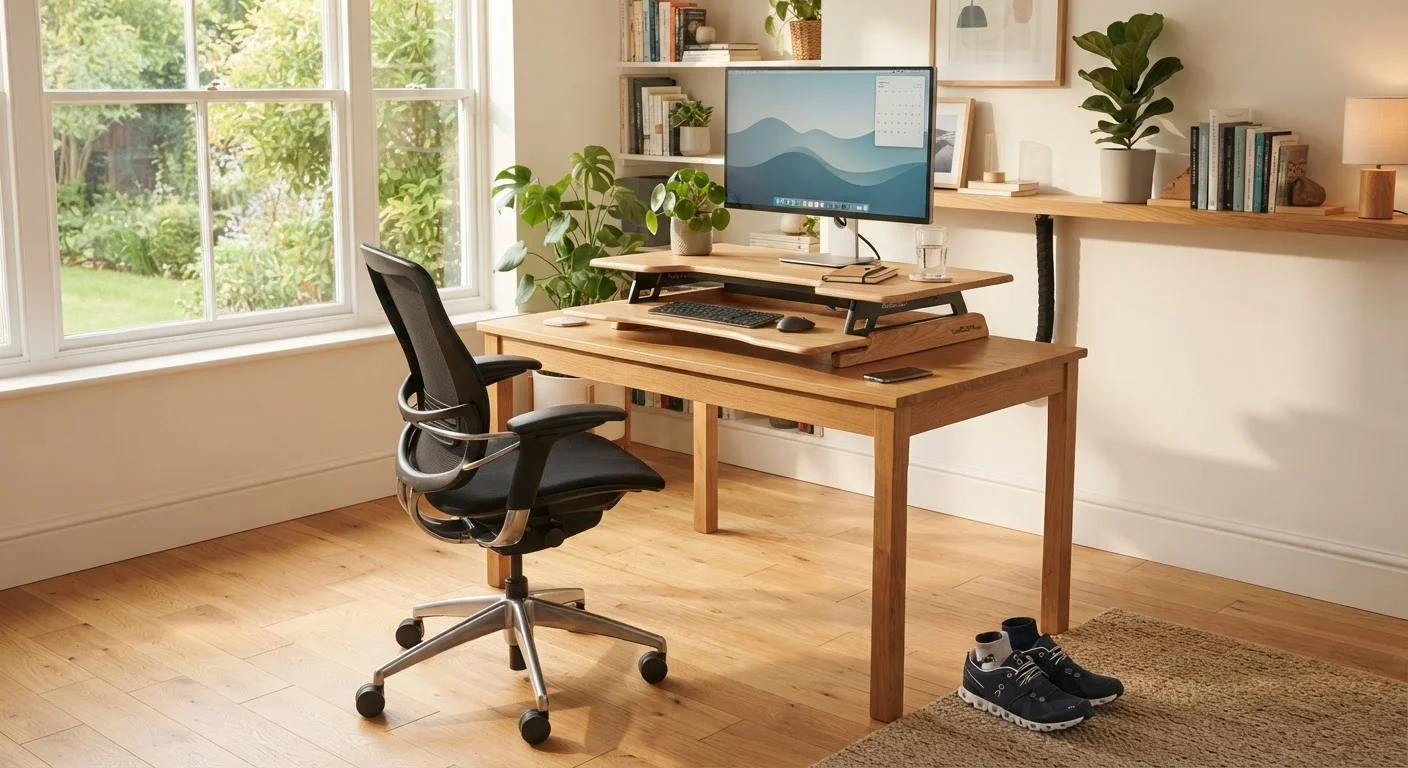
Place frequently used items — your water bottle, a notebook, your printer — slightly out of arm's reach so you have to stand or shift to get them. If a height-adjustable desk is available to you, alternate between sitting and standing positions throughout the day. Small environmental nudges reduce the effort required to move.
Supporting Your Body Beyond the Workday
Movement during work hours is a powerful foundation, but what you do at the edges of the day matters too. Good posture habits, a consistent end-of-day wind-down, and attention to back health all compound over time. Our guide to daily habits that support a healthy back covers simple practices that pair well with the strategies here. And if your workday bleeds into your personal time, exploring how to reclaim your evenings can help protect the recovery time your body needs.
Don't Rely on Exercise Alone to Offset Sitting
A common misconception is that an evening workout cancels out a full day of sitting. While regular exercise is unquestionably valuable, current health guidance suggests that breaking up sedentary time throughout the day provides benefits that are separate from — and complementary to — planned exercise sessions. Both matter.
This article is for general informational purposes only and is not a substitute for professional medical advice. If you have a health condition that affects your ability to move or exercise, please consult a qualified healthcare professional before making changes to your activity levels.