

| Total essential vitamins | 13 (National Institutes of Health, Office of Dietary Supplements) |
| Fat-soluble vitamins | 4 (A, D, E, K) |
| Water-soluble vitamins | 9 (C + 8 B vitamins) |
| Essential dietary minerals | 16 recognized (National Academies of Sciences, Engineering, and Medicine) |
| Most common U.S. deficiencies | Vitamin D, calcium, potassium, dietary fiber (Dietary Guidelines for Americans, 2020–2025) |
| Vitamin B12 — key concern for | Adults over 50, vegans, and vegetarians (NIH Office of Dietary Supplements) |
What Vitamins and Minerals Actually Are
Vitamins and minerals are micronutrients — nutrients your body needs in relatively small amounts to function properly. Unlike carbohydrates, proteins, and fats (the macronutrients), they don't supply calories directly. Instead, they act as the machinery that keeps your metabolism, immune system, bones, and cells running. See our macronutrient overview to understand how micronutrients work alongside the big three.
There are two main classes of vitamins:
- Fat-soluble vitamins (A, D, E, K) — stored in body fat and the liver; possible to accumulate to excess over time.
- Water-soluble vitamins (C and all eight B vitamins) — not stored long-term; excreted in urine, so regular dietary intake matters more.
Minerals are naturally occurring elements — things like calcium, iron, and magnesium — that the body cannot make on its own. Most healthy adults can meet their needs through a varied diet rather than supplements, though individual circumstances vary. Always consult a qualified healthcare professional before adding supplements to your routine.
Micronutrient
A vitamin or mineral that the body requires in small quantities to support normal function. Unlike macronutrients, micronutrients do not supply energy (calories) directly.
Fat-soluble vitamin
A vitamin (A, D, E, or K) that dissolves in fat and can be stored in the body's fatty tissues and liver. Because they accumulate, very high doses over time may pose health risks.
Water-soluble vitamin
A vitamin (C or any of the eight B vitamins) that dissolves in water and is not stored long-term. Excess amounts are typically excreted in urine, making regular dietary intake important.
Dietary Reference Intake (DRI)
A set of nutritional reference values developed by the National Academies of Sciences, Engineering, and Medicine to guide how much of each nutrient different population groups should aim to consume.
Antioxidant
A compound — including certain vitamins like C and E — that helps neutralize unstable molecules called free radicals, which can damage cells over time.
Fortified food
A food product that has had one or more nutrients added to it during processing, such as calcium added to orange juice or vitamin D added to milk, often to address common dietary gaps.
Key Vitamins: What They Do and Where to Find Them
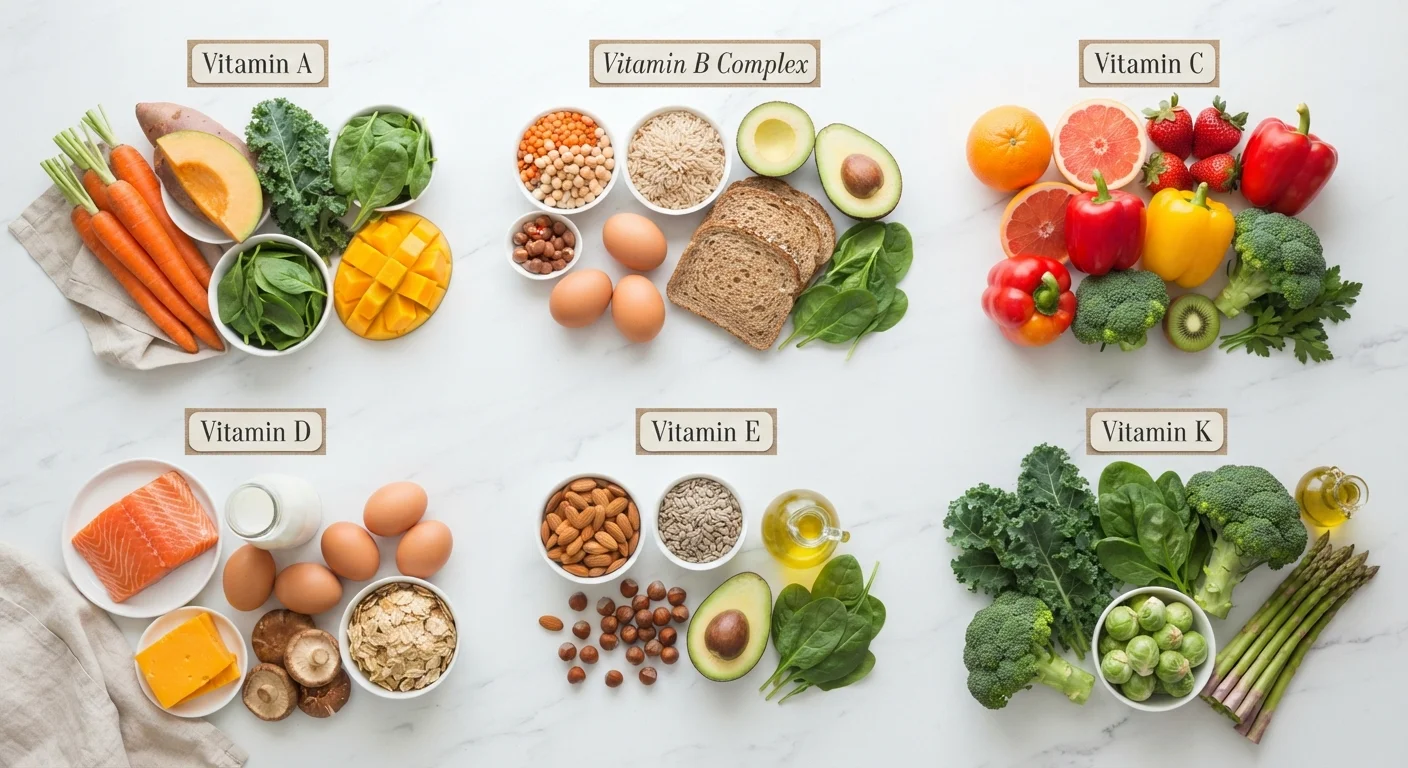
The table below summarizes the most commonly discussed vitamins, their primary roles, and reliable food sources. Amounts needed vary by age, sex, and life stage — the figures referenced here reflect general adult guidance from the National Institutes of Health Office of Dietary Supplements.
| Vitamin | Primary Role | Common Food Sources |
|---|---|---|
| A | Vision, immune defense, cell growth | Liver, eggs, dairy, sweet potato, carrots, leafy greens |
| D | Calcium absorption, bone health, immune function | Fatty fish, egg yolks, fortified milk; skin also synthesizes it from sunlight |
| E | Antioxidant protection, immune support | Nuts, seeds, vegetable oils, spinach, broccoli |
| K | Blood clotting, bone metabolism | Kale, spinach, broccoli, Brussels sprouts, fermented foods |
| C | Collagen production, antioxidant, iron absorption | Citrus fruits, bell peppers, strawberries, kiwi, tomatoes |
| B1 (Thiamin) | Energy metabolism, nerve function | Whole grains, pork, legumes, nuts |
| B2 (Riboflavin) | Energy production, cellular function | Dairy, eggs, lean meats, almonds, leafy greens |
| B3 (Niacin) | DNA repair, energy metabolism | Poultry, fish, peanuts, whole grains |
| B6 | Protein metabolism, neurotransmitter synthesis | Chickpeas, poultry, fish, potatoes, bananas |
| B9 (Folate) | DNA synthesis, red blood cell formation | Leafy greens, legumes, fortified cereals, avocado |
| B12 | Nerve function, red blood cell formation | Meat, fish, dairy, eggs; fortified foods for plant-based diets |
This article is for general informational purposes only and does not constitute medical advice. Speak with a qualified healthcare professional about your individual nutrient needs.
Essential Minerals and Their Food Sources
| Total essential vitamins | 13 (National Institutes of Health, Office of Dietary Supplements) |
| Fat-soluble vitamins | 4 (A, D, E, K) |
| Water-soluble vitamins | 9 (C + 8 B vitamins) |
| Essential dietary minerals | 16 recognized (National Academies of Sciences, Engineering, and Medicine) |
| Most common U.S. deficiencies | Vitamin D, calcium, potassium, dietary fiber (Dietary Guidelines for Americans, 2020–2025) |
| Vitamin B12 — key concern for | Adults over 50, vegans, and vegetarians (NIH Office of Dietary Supplements) |
Beyond vitamins, several minerals are especially important for everyday health. Here's a concise look at the ones that appear most often on nutrition labels and in public health guidance:
- Calcium
- Supports bone and tooth strength, muscle contraction, and nerve signaling. Found in dairy products, fortified plant milks, sardines, tofu, and leafy greens like bok choy and kale.
- Iron
- Carries oxygen through the bloodstream as part of hemoglobin. Sources include red meat, poultry, beans, lentils, and fortified cereals. Pairing plant-based iron with vitamin C-rich foods improves absorption.
- Magnesium
- Involved in hundreds of enzyme reactions, including energy production and muscle function. Found in nuts, seeds, whole grains, leafy greens, and dark chocolate.
- Potassium
- Regulates fluid balance and supports normal blood pressure and heart rhythm. Rich sources include bananas, potatoes, avocados, beans, and dairy.
- Zinc
- Supports immune function, wound healing, and taste and smell. Found in meat, shellfish, legumes, seeds, and whole grains.
- Sodium
- Essential for fluid balance and nerve signaling, but most US adults consume more than recommended. Whole, minimally processed foods tend to be naturally lower in sodium.
If you'd like to understand how these nutrients appear on product packaging, our guide to reading nutrition labels walks through exactly what each section means.
Putting It Into Practice
No single food contains every nutrient you need — which is why dietary variety is the most practical goal. Meals that include a range of colors, food groups, and preparation methods tend to cover the micronutrient spectrum naturally.
A few grounding principles:
- Eat the rainbow. Different pigments in fruits and vegetables often signal different vitamins and antioxidants.
- Don't skip the fat with fat-soluble vitamins. Vitamins A, D, E, and K are better absorbed when eaten alongside a small amount of healthy fat.
- Watch for gaps in restricted diets. Vegetarian and vegan diets may need attention around B12, iron, zinc, calcium, and vitamin D. Fortified foods and professional guidance can help fill those gaps.
- Supplements are not a substitute for food. Whole foods deliver vitamins alongside fiber, phytonutrients, and other compounds that work together. If you think you have a deficiency, a healthcare provider can test for it and recommend an appropriate approach.
For a broader starting point on building a nutritious plate, see your first steps toward eating more nutritiously. And if you're thinking about how hydration fits into the picture, the role of hydration in nutrition explains why water is just as essential as any micronutrient.
This article is for general informational purposes only and is not a substitute for personalized medical or dietary advice. Consult a qualified healthcare professional for guidance specific to your health needs.