

Key Takeaways
Our Verdict
Mediterranean, low-carb, and plant-based diets each have meaningful evidence behind them, but they serve different priorities. The Mediterranean pattern tends to offer the broadest research base for long-term health; low-carb approaches suit those seeking structured carbohydrate reduction; and plant-based eating appeals to those prioritising environmental values alongside nutrition. The 'right' diet is ultimately the one a person can sustain.
| Best for | Recommended |
|---|---|
| Those wanting a flexible, well-researched long-term eating pattern | Mediterranean Diet |
| Those who do better limiting grains, starches, and sugars | Low-Carb Diet |
| Those motivated by environmental or ethical values alongside health | Plant-Based Diet |
| Those managing a health condition requiring a tailored approach | Consult a registered dietitian |
What Each Dietary Pattern Actually Involves
Before comparing outcomes, it helps to understand what each approach genuinely looks like day to day.
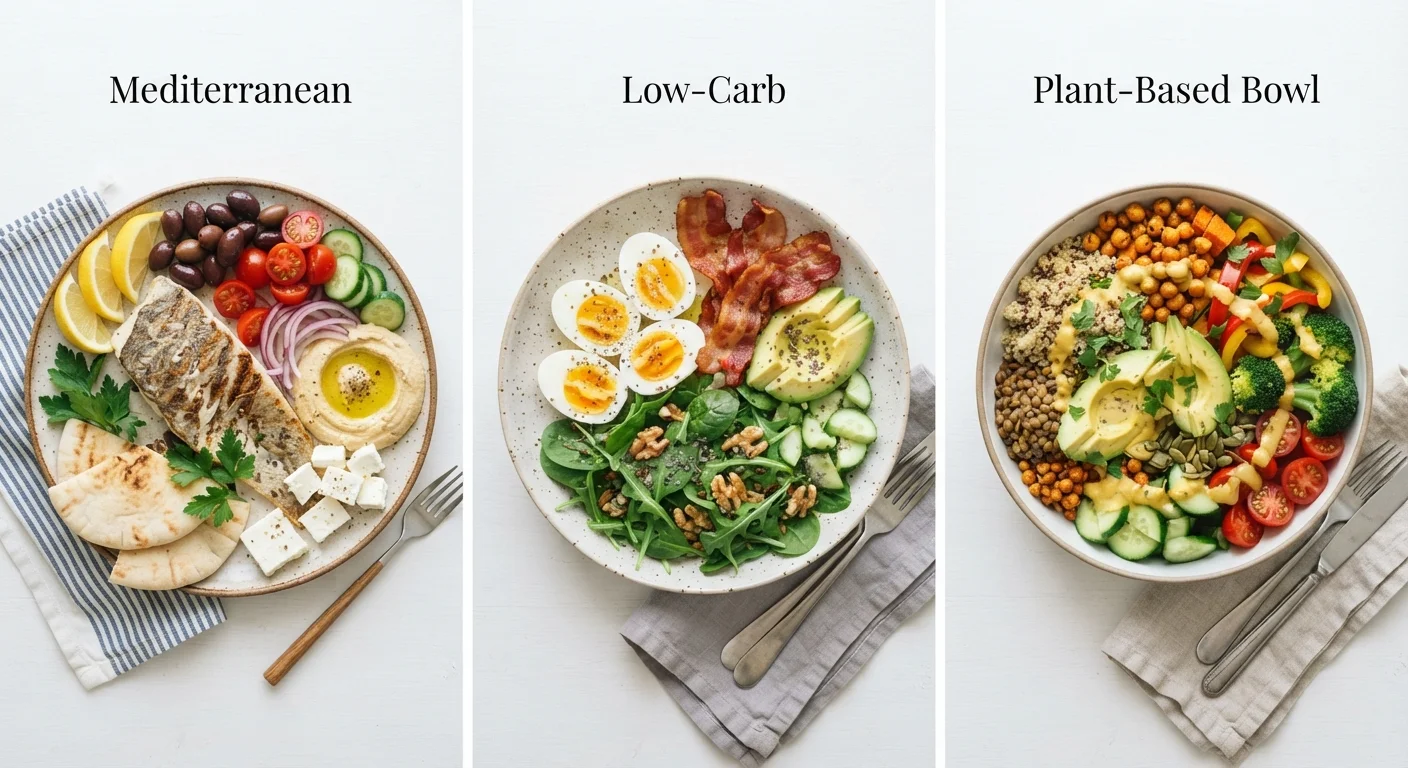
Mediterranean diet: Modeled on traditional eating patterns from countries bordering the Mediterranean Sea, this approach emphasizes vegetables, fruits, legumes, whole grains, olive oil, nuts, and fish. Red meat appears infrequently, and dairy is consumed in moderate amounts. It is not a rigid calorie-counting plan — more a framework of food priorities.
Low-carb diet: This category spans a wide spectrum, from moderately reduced carbohydrate intake (roughly under 130 grams per day) to very low-carb or ketogenic eating (under 50 grams daily). The focus shifts calories toward protein and fat while limiting bread, pasta, rice, starchy vegetables, and sugar. There is no single universal low-carb protocol.
Plant-based diet: Often misread as synonymous with veganism, plant-based eating simply means centering meals on plant foods — vegetables, fruits, legumes, whole grains, nuts, and seeds. Some practitioners include small amounts of animal products; others exclude them entirely. The defining feature is plants taking the primary role, not the complete absence of animal foods. For a deeper look at meeting protein needs across these patterns, see our guide to protein sources.
What the Evidence Shows
Research quality varies across these three approaches, so it's worth being honest about what is well-established and what remains less certain.
The Mediterranean diet has one of the strongest bodies of long-term research in nutrition science. Large studies, including the PREDIMED trial published in the New England Journal of Medicine, have associated it with reduced cardiovascular risk. It is consistently recognized by dietitians and public health bodies as a sustainable, broadly health-supportive pattern.
The low-carb diet has solid short-to-medium-term evidence, particularly for blood sugar management and weight loss in controlled trials. Research on very long-term outcomes (beyond two to three years) is thinner, and some studies suggest adherence tends to decline over time. It remains a reasonable option for certain individuals, especially under professional guidance.
Plant-based diets are associated with lower rates of heart disease, type 2 diabetes, and certain cancers in large observational studies. However, observational research can reflect lifestyle factors beyond diet alone. Nutrient gaps — particularly vitamin B12, iron, omega-3 fatty acids, and zinc — are real considerations, especially for fully vegan patterns. Supplementation or careful food planning is typically needed.
| Mediterranean | Low-Carb | Plant-Based | |
|---|---|---|---|
| Core foods | Fish, veg, olive oil, legumes, grains | Meat, eggs, non-starchy veg, fats | Legumes, grains, veg, fruits, nuts |
| Foods limited | Red meat, added sugar, processed food | Bread, pasta, rice, sugar, starches | Meat, dairy (varies by practitioner) |
| Research depth | Extensive long-term evidence | Strong short-term; longer-term thinner | Strong observational; some gaps |
| Nutrient watch-outs | Generally well-rounded | Fibre, certain micronutrients | B12, iron, zinc, omega-3s |
| Flexibility | High — broad food variety | Moderate — carb limits are strict | Moderate — plant focus required |
| Typical cost | Moderate to high | Moderate to high | Low to moderate |
| Environmental impact | Moderate (lower than typical Western diet) | Varies — higher if red meat heavy | Generally lower |
It's also worth separating evidence from myth — our article on nutrition myths addresses several misconceptions that circle all three of these eating patterns.
Practical Considerations Before Choosing
Evidence alone doesn't determine whether a diet works in real life. Several practical factors matter just as much.
- Sustainability: Research consistently shows that the diet a person can maintain long-term outperforms a theoretically superior one abandoned after a few months. Crash diets tend to backfire precisely because short-term restriction rarely translates to lasting change.
- Food access and budget: Fresh fish and quality olive oil can be expensive. Plant-based eating built around dried legumes and seasonal produce can be highly economical. Low-carb eating can range widely in cost depending on protein choices.
- Social and cultural fit: A diet that creates friction at family meals or social events becomes harder to sustain. Flexibility matters.
- Individual health context: Kidney disease, diabetes, disordered eating history, pregnancy, and other conditions all affect which approach is appropriate — and which may cause harm without supervision.
Start With One Change, Not a Complete Overhaul
Switching dietary patterns all at once can feel overwhelming and often leads to abandoning the effort early. A more durable approach is to identify two or three specific changes — adding a serving of legumes, swapping refined grains for whole grains, or reducing sugary drinks — and build consistency before layering on more. Small shifts compounded over months produce meaningful results without the burnout that comes from drastic restriction.
For practical help translating any of these patterns into weekly meals, our meal prep hub offers structured planning guidance that works across dietary styles.
Building a Realistic Starting Point
Whichever pattern appeals most, a few principles hold across all three.
First, whole and minimally processed foods outperform their ultra-processed counterparts in virtually every dietary framework. A low-carb diet built on processed meats and cheese is nutritionally different from one centered on eggs, fish, non-starchy vegetables, and nuts.
Second, no single meal needs to be perfect. Building a balanced plate doesn't require tracking apps — visual portion approaches and varied food choices are practical and evidence-informed. Third, major dietary changes deserve professional input when health conditions are involved. A registered dietitian can tailor guidance to individual circumstances in ways a general framework cannot.
For those curious about other eating structures beyond the three covered here, intermittent fasting is another widely discussed approach with its own distinct evidence base and trade-offs worth understanding before committing.
This article is for general informational and educational purposes only. It is not a substitute for personalised advice from a registered dietitian or qualified healthcare professional. If you have a medical condition or specific health concerns, please consult a professional before making significant dietary changes.