

Key Takeaways
Why Standard Meal Prep Advice Falls Short for Solo Households
Most meal prep content is built around families of four, which means the default recipe yields four to six servings. For someone cooking for one, following that advice without adjustment leads to a predictable problem: too much food, flavor fatigue by day three, and produce that quietly spoils in the back of the fridge.
Scaling down isn't just arithmetic — it requires rethinking which foods you prep, how you store them, and how much variety you build in from the start. If you're new to the whole process, the practical first-timer's roadmap is a solid foundation before layering in these solo-specific strategies.
The good news: cooking for one is actually an advantage in some ways. You have total control over what gets made, nothing is wasted on picky eaters, and your storage needs are modest. The key is building a system designed around your scale from the beginning.
Best Practices for Scaling Meal Prep as a Solo Cook
These strategies are drawn from established cooking principles and are organized around the most common friction points solo preppers face: portion math, ingredient waste, and variety fatigue.
Prep components, not complete meals
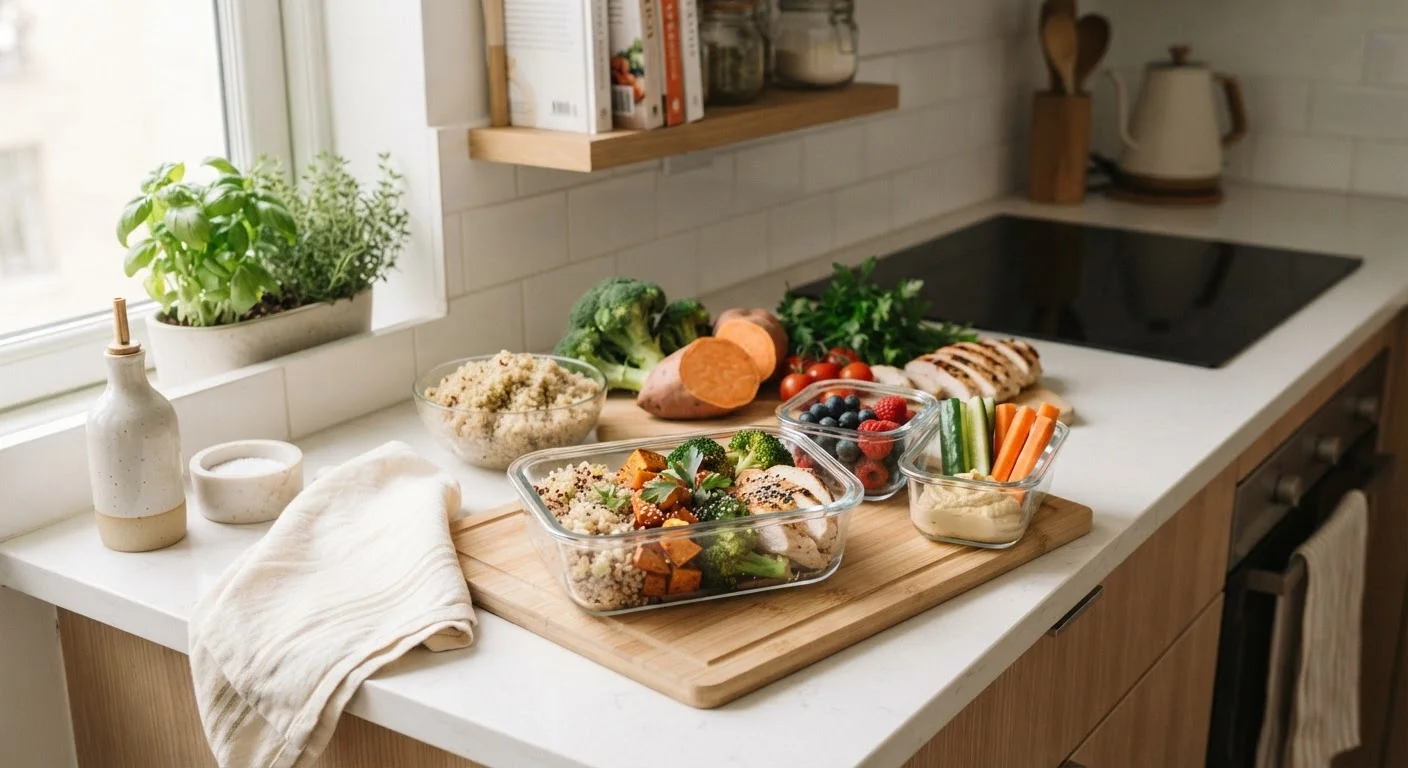
Cooking full meals in advance locks you into eating the same dish repeatedly, which accelerates flavor fatigue and increases the chance of skipping your prepped food entirely. Prepping individual components — a cooked grain, a roasted vegetable, a portioned protein — gives you the flexibility to combine them differently each day. This approach also keeps ingredients fresher longer because they haven't been mixed with sauces or dressings that can break down texture.
Use a kitchen scale to halve or quarter recipes accurately
Volume measurements like cups and tablespoons don't always scale cleanly, especially for baked goods or spice-forward dishes. A kitchen scale lets you divide any recipe by exact weight, removing the guesswork that leads to over-seasoned or unbalanced results. It's also faster than hunting for the right measuring spoon for an odd fraction.
Shop from bulk bins and choose smaller produce
Buying a full bunch of kale when you only need two cups is a classic solo-cook waste trap. Bulk bins let you purchase exactly the quantity of grains, legumes, nuts, and spices you need for the week. Similarly, choosing smaller heads of cabbage, single bell peppers, or a small bunch of herbs rather than a large package prevents spoilage before you can use everything.
Freeze single-portion meals proactively, not as an afterthought
Freezing isn't just for managing surplus — it's a planning tool. When you intentionally cook a slightly larger batch and freeze half in single-serving portions, you build a personal rotation of ready meals without repetition. This is especially useful for soups, stews, and grain dishes that freeze well and reheat reliably.
Split your prep into two smaller sessions per week
A single large prep session on Sunday means your food is at its oldest — and least appealing — by Thursday or Friday. Splitting into two lighter sessions, one over the weekend and one mid-week, keeps everything fresher and reduces the volume you need to cook and store at once. It also makes the task feel less daunting and easier to sustain as a habit.
Plan for intentional ingredient overlap across meals
Random ingredient selection leads to buying partial amounts of many things, most of which don't get fully used. Instead, choose two or three anchor ingredients each week and plan all your meals around them. This keeps your shopping list short, your fridge manageable, and your waste minimal — without making every meal identical.
Start This Week: Quick Wins for Solo Prep
You don't need to overhaul everything at once. Pick one or two of the actions below and build from there. Small adjustments made consistently will reduce your food waste and save time more reliably than a perfect plan executed once.
For a deeper look at how to keep your prep session from eating your entire Sunday, see building a prep routine that fits your weekend. And if you're weighing whether weekly prepping is even the right habit for your lifestyle, the honest case for and against meal prepping lays out the trade-offs clearly.
This article is for informational purposes only. Nutritional needs vary by individual — consult a registered dietitian or qualified healthcare professional for personalized dietary guidance.