

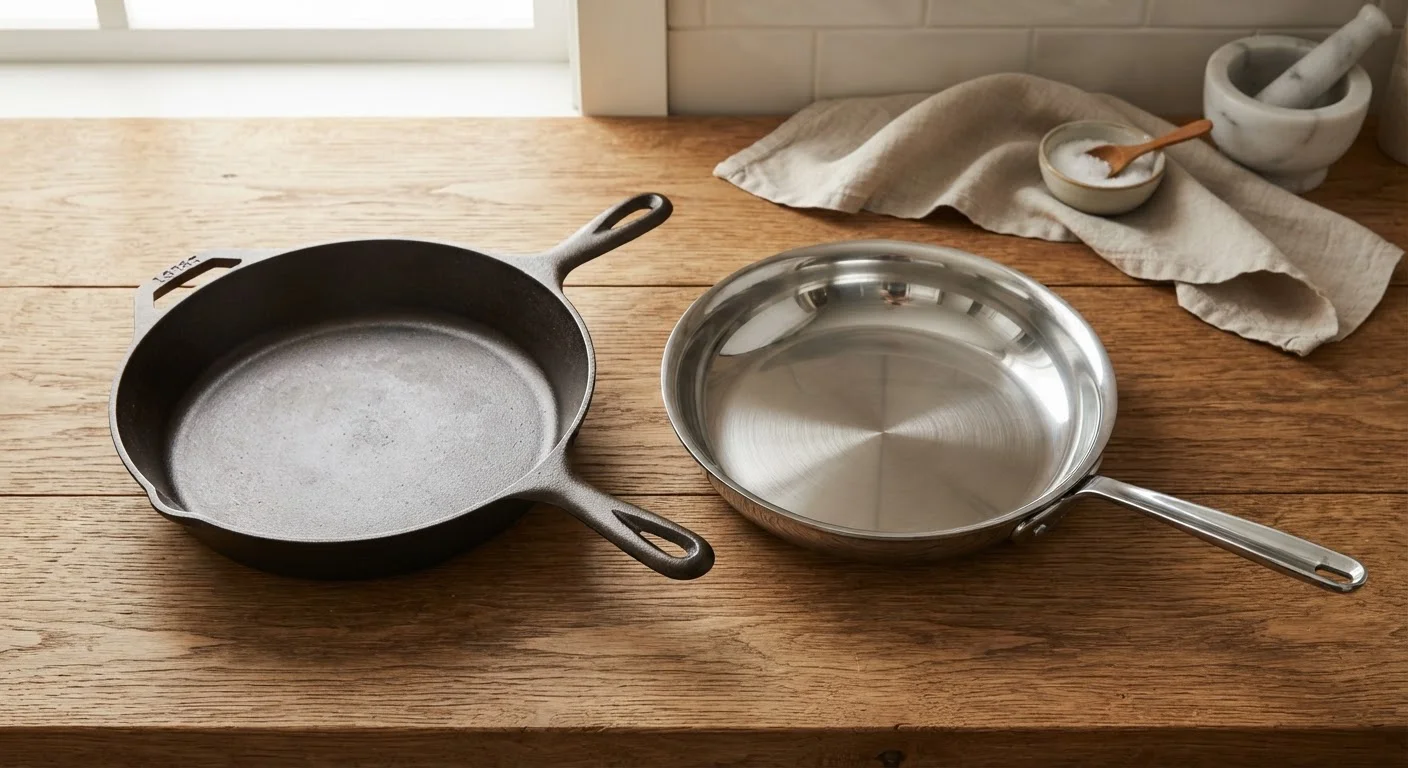
Key Takeaways
Option A
Cast Iron
The heavy-duty, heat-retaining workhorse.
Best for: Cooks who want deep searing capability, oven-to-table versatility, and a pan that improves with age.
Option B
Stainless Steel
The responsive, low-maintenance everyday performer.
Best for: Cooks who want precise heat control, easy cleanup, and a pan that handles acidic ingredients without worry.
If you love searing steaks, roasting in the oven, or cornbread baking
Cast Iron
Cast iron's superior heat retention produces a deep, even crust and transitions seamlessly from stovetop to oven at high temperatures.
If you cook acidic sauces, delicate fish, or quick weeknight meals
Stainless Steel
Stainless steel is non-reactive with acidic ingredients and responds quickly to heat adjustments, making it more forgiving for varied daily cooking.
If you're a beginner building your first kitchen kit
Stainless Steel
Lower maintenance requirements and compatibility with all cooktops — including induction — make stainless steel the more practical starting point.
If you want one pan that does double duty on the stove and in the oven
Cast Iron
Cast iron is oven-safe at virtually any temperature and doubles as a serving vessel, making it genuinely multi-purpose for home cooks.
If you prioritise easy cleaning and grab-and-go convenience
Stainless Steel
Stainless steel can go straight into the dishwasher and doesn't require the drying-and-oiling routine that cast iron demands after every wash.
How Each Pan Actually Works
Understanding what makes each pan different starts with how they manage heat. Cast iron is a dense material that takes longer to heat up but holds that heat powerfully once it gets there. This makes it brilliant for tasks where consistent, sustained high heat matters — searing a thick steak, for example, or baking a skillet cornbread. Because it doesn't shed heat quickly when cold food is added, the pan stays hot throughout cooking.
Stainless steel heats up faster and responds more quickly when you adjust the burner. That responsiveness is a genuine advantage when you're making a pan sauce or sautéing vegetables and need to dial the temperature up or down mid-cook. It won't retain heat as aggressively as cast iron, but for most everyday tasks that's actually a benefit.
One important note: stainless steel alone is not a great conductor of heat, which is why quality stainless pans almost always have an aluminum or copper core bonded between steel layers. This multi-layer construction (often called "clad" or "tri-ply") dramatically improves even heat distribution and is worth understanding when evaluating any pan. See our guide to getting a proper sear for more on how pan heat affects results.
| Criterion | Cast Iron | Stainless Steel |
|---|---|---|
| Heat retention | Excellent — holds heat very well | Moderate — cools faster |
| Heat responsiveness | Slow to adjust | Fast and precise |
| Oven-safe temperature | Virtually unlimited | Up to 500°F (varies by handle) |
| Acidic food compatibility | Poor — strips seasoning | Excellent — non-reactive |
| Maintenance | Requires seasoning and hand-drying | Dishwasher-safe, low maintenance |
| Weight | Heavy (8–12 lbs typical) | Lighter (3–5 lbs typical) |
| Non-stick quality | Good when well-seasoned | Prone to sticking without proper heat |
| Induction compatible | Yes | Yes (most clad versions) |
Care, Maintenance, and Everyday Practicality
This is where the two pans differ most noticeably in real-life use.
Cast iron requires seasoning — a thin layer of polymerized oil baked into the surface that builds up over time and creates natural non-stick properties. After washing (hand-wash only, with minimal soap), you must dry it thoroughly and apply a very light coat of oil before storing. Skipping this step can lead to rust. It's not complicated, but it is a consistent habit you need to build.
Cast iron is also reactive to acidic foods. Cooking a long tomato sauce or a citrus-heavy dish can strip the seasoning and impart a metallic flavor. For those dishes, reach for something else.
Stainless steel needs none of that. It's dishwasher-safe, non-reactive, and can handle anything from a vinegary pan sauce to a braised dish with wine. Food does stick more readily than on a well-seasoned cast iron — the key is preheating properly and using enough fat. The Leidenfrost effect (the point where water droplets bead and skitter across the surface) is a useful indicator that your stainless pan is hot enough to cook without excessive sticking.
~750°F
Max stovetop temp cast iron can sustain
Cast iron's high thermal mass makes it suitable for tasks like pizza stone alternatives and extreme searing that would warp thinner pans.
3–5 min
Typical preheating time for stainless steel
A properly preheated stainless pan reduces sticking significantly; most home cooks skip this step, which causes unnecessary frustration.
Choosing the right cooking fat also matters for both pans. Our guide to cooking oils and smoke points can help you match the right oil to your pan and cooking method.
Which Pan Belongs in Your Kitchen?
For most home cooks, the honest answer is that both pans earn their spot — they cover different ground. If you had to choose just one, it comes down to your cooking habits.
If your repertoire leans toward high-heat searing, oven-finished dishes, and comfort cooking, cast iron will reward you. It's also an exceptional value — a quality cast iron pan can last generations. If you cook a wide variety, want minimal fuss, and frequently make sauces or dishes with acidic ingredients, stainless steel is the more versatile daily driver.
New to the kitchen? Stainless steel is a more forgiving starting point. The beginner's guide to cooking walks through the fundamentals that will help you get the most out of whichever pan you choose.
Whatever you pick, technique matters more than equipment. Learning how to manage heat, use fat correctly, and time your cooking will always outperform having the fanciest pan on the market.
A Note on Induction Cooktops
Both cast iron and most clad stainless steel pans work on induction cooktops, because both are magnetic. If you cook on induction, either option is compatible — but always confirm before purchasing, as some stainless designs use non-magnetic alloys. Aluminum or copper pans without a steel base will not work on induction at all.