

Key Takeaways
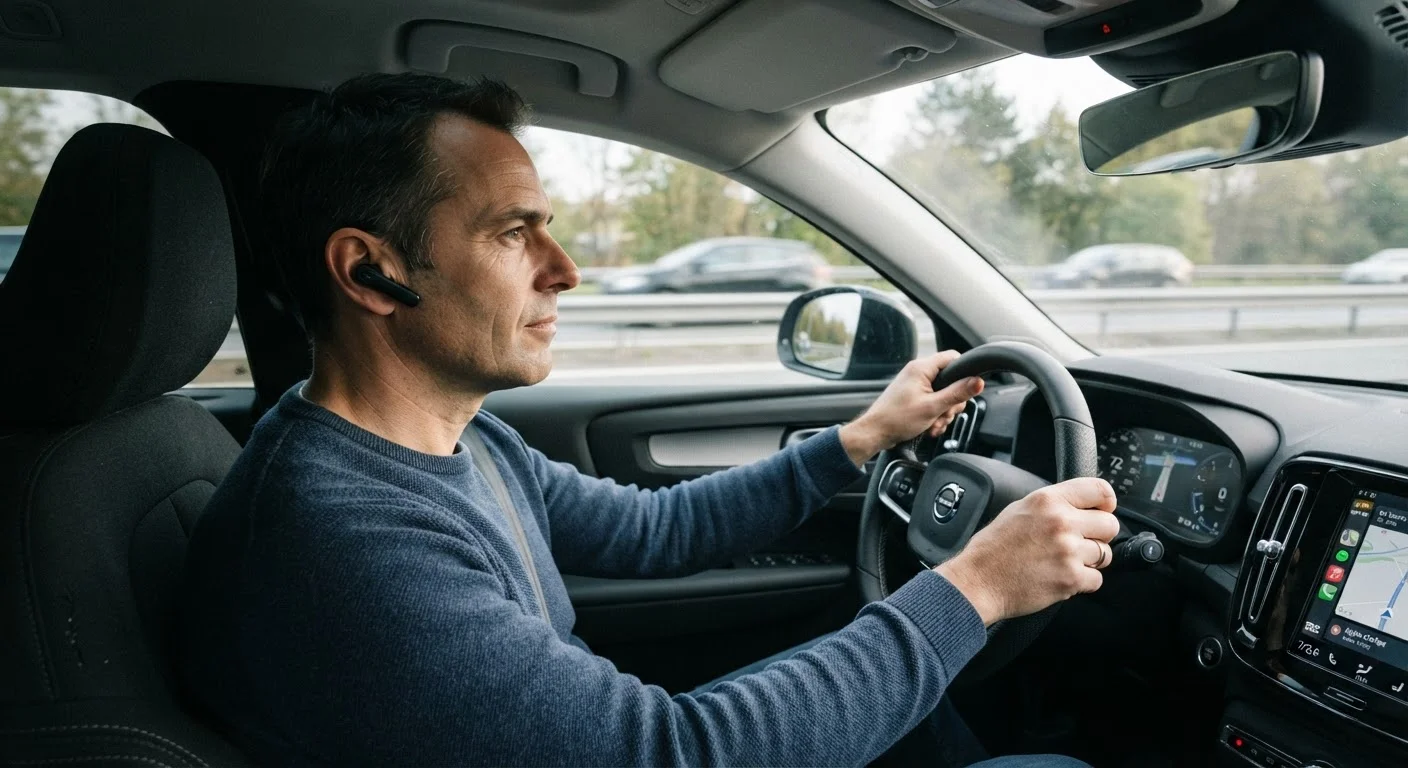
Both hands remain on the steering wheel
Maintaining a proper grip allows for faster, more controlled responses to sudden hazards. This is a meaningful physical safety gain over holding a phone.
Eyes stay directed at the road
Handheld phone use frequently pulls a driver's gaze down to the screen or keypad. Hands-free systems eliminate this visual distraction almost entirely.
Legal in most US states for adult drivers
Using a compliant hands-free device avoids the fines and licence points that handheld phone violations carry in states with active enforcement.
Voice controls reduce interaction steps
Mature voice-command systems allow you to answer, dial, and end calls without touching the phone at all, minimizing the setup distraction.
Safer than handheld use in measurable ways
While not risk-free, hands-free calling does reduce two of the three distraction categories — a real, if partial, safety improvement over holding the device.
Cognitive distraction remains significant
Research from the AAA Foundation for Traffic Safety has found that hands-free phone conversations can meaningfully slow reaction times and narrow the driver's field of attention, even without any visual or manual engagement.
Reaction time to hazards is measurably slower
Studies have observed that drivers engaged in phone conversations — hands-free or otherwise — take longer to respond to brake lights, pedestrians, and sudden lane changes compared to undistracted drivers.
"Inattention blindness" is a documented effect
The brain can fail to fully process what the eyes are seeing when attention is split. Drivers can look directly at an object and still not consciously register it if engaged in a demanding conversation.
Risk increases with conversation complexity
Emotionally loaded, logistically complex, or high-stakes calls demand more mental processing than simple exchanges — precisely the kind of conversations that are hard to cut short.
Gives a false sense of full compliance with safety
Because hands-free use is legal and widely normalized, many drivers assume it is essentially safe — an assumption the research does not fully support.
Setup interaction can itself be a distraction
Fumbling with Bluetooth pairing, adjusting earpiece fit, or navigating an unfamiliar voice command system at the wrong moment creates the distraction it's meant to prevent.
Our Verdict
Hands-free calling is a genuine improvement over holding a phone while driving — it frees your hands and keeps your eyes forward. However, cognitive distraction is real and measurable, and no hands-free call is entirely without risk. Treating it as completely safe is where many drivers go wrong.
Drivers who occasionally need to take or make a brief, low-stakes call during light-traffic driving and who understand the remaining risks involved.
What 'Hands-Free' Actually Means — and What It Doesn't
Hands-free calling covers any method of conducting a phone conversation without physically holding the device: Bluetooth earpieces, speakerphone mounted on a dash cradle, vehicle-integrated infotainment systems, and voice-activated assistants. What they share is that your hands stay on the wheel and your eyes stay on the road.
What they don't eliminate is the mental load of a conversation. Researchers distinguish between three types of distraction — visual (looking away from the road), manual (taking hands off the wheel), and cognitive (diverting mental attention). Hands-free technology addresses the first two. The third remains. Understanding that gap is the core of any honest assessment of this topic. For a broader ranking of how different distractions compare, see our breakdown of driver distractions.
The Pros: Real Advantages Worth Acknowledging
There are legitimate reasons hands-free technology exists and is widely recommended over handheld phone use.
Both hands remain on the steering wheel
Maintaining a proper grip allows for faster, more controlled responses to sudden hazards. This is a meaningful physical safety gain over holding a phone.
Eyes stay directed at the road
Handheld phone use frequently pulls a driver's gaze down to the screen or keypad. Hands-free systems eliminate this visual distraction almost entirely.
Legal in most US states for adult drivers
Using a compliant hands-free device avoids the fines and licence points that handheld phone violations carry in states with active enforcement.
Voice controls reduce interaction steps
Mature voice-command systems allow you to answer, dial, and end calls without touching the phone at all, minimizing the setup distraction.
Safer than handheld use in measurable ways
While not risk-free, hands-free calling does reduce two of the three distraction categories — a real, if partial, safety improvement over holding the device.
4x
Crash risk increase when using a phone while driving
The National Safety Council cites research estimating drivers using any type of phone are roughly four times more likely to be involved in a crash than undistracted drivers.
37%
Reduction in brain activity devoted to driving
Carnegie Mellon University research found that listening to someone speak reduced the amount of parietal lobe activity associated with spatial processing while driving by around 37%.
The Cons: Why 'Hands-Free' Doesn't Mean 'Distraction-Free'
The research picture here is more sobering than most drivers expect. Studies from the AAA Foundation for Traffic Safety and academic institutions have repeatedly shown that cognitive distraction persists even when hands remain on the wheel.
Cognitive distraction remains significant
Research from the AAA Foundation for Traffic Safety has found that hands-free phone conversations can meaningfully slow reaction times and narrow the driver's field of attention, even without any visual or manual engagement.
Reaction time to hazards is measurably slower
Studies have observed that drivers engaged in phone conversations — hands-free or otherwise — take longer to respond to brake lights, pedestrians, and sudden lane changes compared to undistracted drivers.
"Inattention blindness" is a documented effect
The brain can fail to fully process what the eyes are seeing when attention is split. Drivers can look directly at an object and still not consciously register it if engaged in a demanding conversation.
Risk increases with conversation complexity
Emotionally loaded, logistically complex, or high-stakes calls demand more mental processing than simple exchanges — precisely the kind of conversations that are hard to cut short.
Gives a false sense of full compliance with safety
Because hands-free use is legal and widely normalized, many drivers assume it is essentially safe — an assumption the research does not fully support.
Setup interaction can itself be a distraction
Fumbling with Bluetooth pairing, adjusting earpiece fit, or navigating an unfamiliar voice command system at the wrong moment creates the distraction it's meant to prevent.
It's worth noting that conversations with passengers tend to be less impairing than phone calls. A passenger naturally pauses the conversation when traffic gets complex — a phone caller has no way to do that. This distinction matters when assessing actual risk. You can find parallels with how fatigue works in our article on driver fatigue and impaired reaction time.
Passenger Conversations vs. Phone Calls
Studies suggest conversations with passengers in the vehicle tend to be less impairing than phone calls. Passengers can see traffic conditions and naturally pause or moderate the conversation when the driving situation demands it. A phone caller cannot do this, keeping the mental load constant regardless of what's happening on the road.
Legal Status: Permitted Doesn't Mean Safe
Most US states permit hands-free calling while driving and ban handheld phone use. However, laws vary considerably. Several states impose stricter rules on drivers under 18, and a small number restrict hands-free use in school or construction zones. Legality is not a proxy for safety — many activities are legal without being risk-free.
If you're newer to driving, our introduction for new licence holders covers how to build sound habits before situations like this become a routine choice.
Practical Guidelines for Lower-Risk Use
If you choose to use hands-free calling while driving, the following habits reduce — though don't eliminate — the associated risk:
- Keep calls brief and simple. Short exchanges carry far less cognitive load than detailed problem-solving or emotionally charged conversations.
- Use your vehicle's integrated system where possible. Built-in voice controls typically require less manual interaction than pairing an earpiece or adjusting a cradle mount.
- Avoid calling in demanding conditions. Heavy traffic, poor weather, unfamiliar roads, and night driving all raise baseline cognitive demand. Combining them with a phone call compounds the risk. See our guide on night driving hazards for more on elevated-risk conditions.
- Let calls go to voicemail. If a call comes in and conditions are anything other than straightforward, there is no shame in letting it ring.
- Pull over if the conversation gets complex. Any time a call requires your full attention — an emotional discussion, logistical detail, or urgent decision — find a safe place to stop.
Many drivers assume hands-free calling is effectively safe because it's legal and widely accepted. That assumption is one of the common road safety myths worth examining more carefully.