

Key Takeaways
Why Weather Changes Everything Behind the Wheel
Most crashes don't happen in perfect conditions. Rain, snow, ice, and fog each introduce a distinct set of hazards — reduced grip, longer stopping distances, and limited sight lines — that demand real adjustments to how you drive. Yet many drivers simply slow down a little and assume that's enough.
The truth is that adverse weather requires a deliberate, layered response: adjusting speed, spacing, lighting, and decision-making all at once. Understanding what each condition actually does to your vehicle's handling is the first step. Before any bad-weather season arrives, it's also worth reviewing your vehicle's readiness — see our seasonal car maintenance checklist to make sure your tyres, brakes, and lights are up to the task.
This guide walks through the key adjustments for each type of weather condition, in order from most common to most dangerous. Pair these habits with the principles in defensive driving and you'll be better prepared than most drivers on the road.
What you will need
Step-by-Step: Adapting to Rain, Snow, Fog, and Ice
Follow these steps whenever you encounter deteriorating conditions. They build on each other — treat them as a checklist, not a pick-and-choose list.
Turn on your headlights as soon as visibility drops
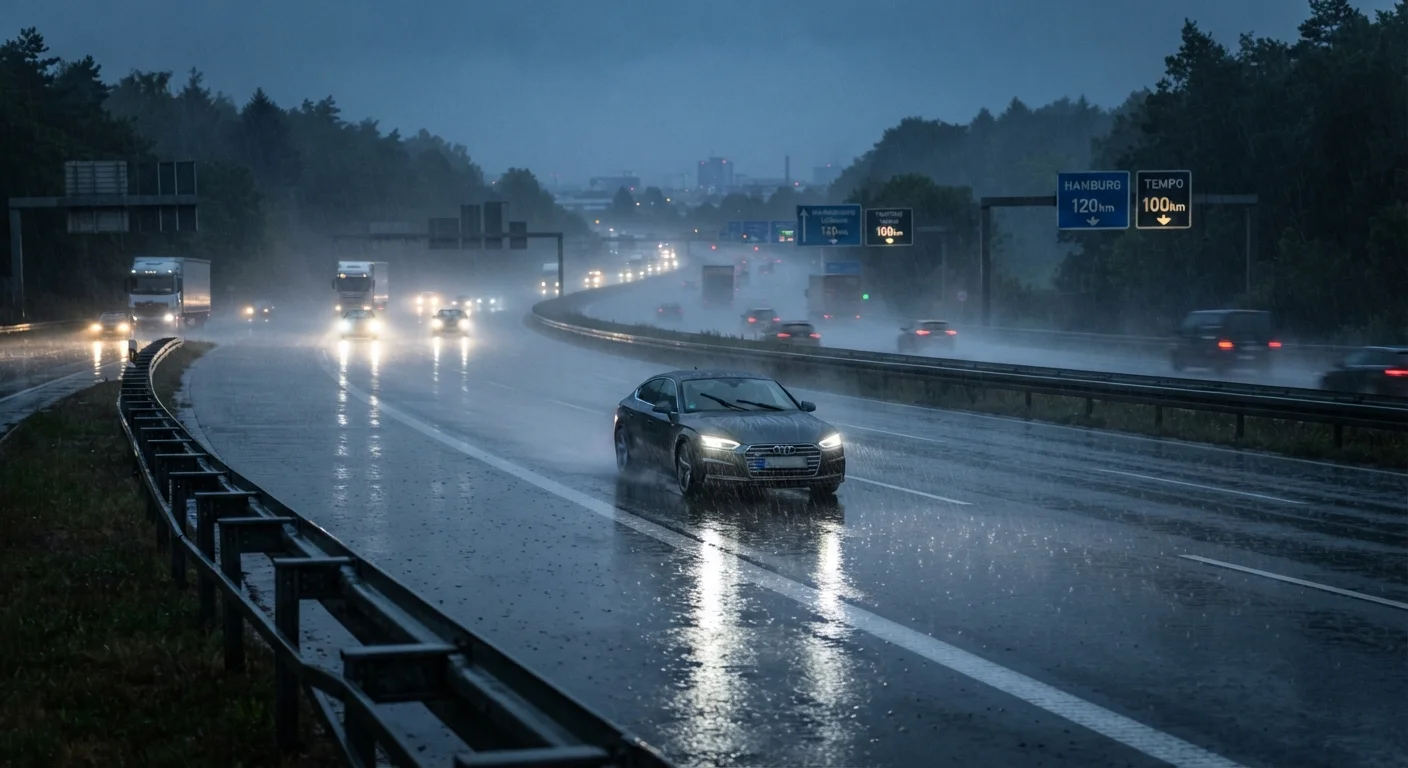
Switch on your headlights at the first sign of rain, fog, or falling snow — even in daylight. This isn't primarily about seeing ahead; it's about being seen by other drivers and by pedestrians. In most US states, the law requires headlights whenever wipers are in use. Use low beams in fog: high beams scatter off water droplets and actually reduce how far you can see.
Reduce your speed meaningfully — not just slightly
A wet road can increase stopping distance by up to 50%. Ice can multiply that several times over. The right speed depends on the condition, your vehicle, and road geometry — but a useful rule of thumb is to reduce speed by at least 10–15 mph below the limit in moderate rain, and significantly more in snow or ice. If traffic is moving faster than feels safe, it's fine to be the slowest car on the road.
Extend your following distance
The standard 3-second following distance assumes dry tarmac and alert driving. In rain, use at least 6 seconds. In snow or ice, extend to 8–10 seconds or more. To measure it: pick a fixed roadside marker, watch when the car ahead passes it, then count the seconds until you reach the same point. If you close in faster than your count allows, back off.
Watch for black ice, especially on bridges and overpasses
Black ice is a thin, nearly transparent layer of ice that looks like wet pavement. It forms when surface temperatures drop to freezing even if air temperatures are slightly above it. Bridges and overpasses are the highest-risk spots because cold air circulates underneath them. If the road ahead looks unusually shiny or other vehicles are moving erratically, treat the surface as potentially icy and reduce speed before you reach it.
In dense fog, use the road edge as your guide and stop if needed
In very thick fog, use the right edge of the road or lane markings as a reference point rather than the taillights of the car ahead — following those lights too closely is a leading cause of multi-vehicle fog pile-ups. If visibility drops below roughly 100 feet and you cannot safely maintain even a slow speed, pull off the road completely at a safe location, turn on your hazard lights, and wait for conditions to improve.
Brake early, gently, and in a straight line
On slippery surfaces, smooth and early braking is essential. Begin slowing well before you need to stop — ideally twice as early as you would in dry conditions. Apply brake pressure gradually. If your vehicle has ABS (anti-lock braking system), apply firm, steady pressure and let the system do its job; you may feel a pulsing sensation, which is normal. Avoid braking while steering sharply, as this greatly increases skid risk.
Know When to Pull Over and Stop
If conditions deteriorate to the point where you cannot see clearly, maintain control, or drive at a safe minimum speed, the right call is to pull off the road at a safe location and wait. Activating your hazard lights signals your position to other drivers. No journey is worth a preventable crash — re-evaluate conditions before continuing.
Troubleshooting Common Mistakes
Even experienced drivers fall into predictable traps in bad weather. Here are the most common errors and how to avoid them.
- Driving at posted speed limits regardless of conditions
- Speed limits apply to ideal conditions. In rain or snow, the appropriate speed may be well below the posted limit. Use judgment, not the sign.
- Tailgating in wet or icy conditions
- The standard 3-second following rule assumes dry pavement. In wet conditions, double it to 6 seconds; on ice or packed snow, allow even more.
- Braking hard mid-corner
- On slippery surfaces, braking while turning dramatically increases the risk of a skid. Slow down before the turn, then ease through it.
- Using cruise control in rain or snow
- Cruise control can cause your vehicle to accelerate to maintain set speed if a wheel loses traction momentarily. Keep it switched off in poor conditions.
- Panicking during a skid
- If you skid, ease off the accelerator and steer gently in the direction you want to go. Do not brake suddenly. Most modern vehicles with stability control will assist, but smooth inputs are still essential.
Bad weather driving is also covered in broader safety guides — new drivers in particular should read up on these fundamentals early.
Practice Makes These Habits Automatic
The adjustments above are most effective when they become reflexive rather than deliberate. Practice extending your following distance and reading road surfaces in mild wet conditions, so the habits are already in place when severe weather hits. For a broader view of hazardous conditions, our guide on night driving hazards covers a related set of visibility and reaction challenges.